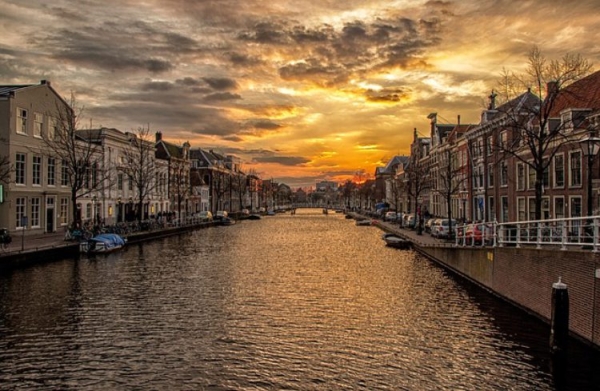
The Western European state of the Netherlands is distinguished by its originality and a lot of unique features. The country of windmills and countless tulips, located on the coast of the North Sea, has a peculiar climate — it is moderately cool in summer and quite warm in winter. This weather is ideal for visiting the numerous Dutch cities full of a wide variety of attractions. A free country with a rich European culture is surprisingly friendly and safe for its guests. Another unusual feature of the Netherlands is that almost half of the state’s area is located below sea level, so numerous structures have been built along the entire coastline, where the land is washed by the North Sea, designed to protect the country’s territories from water. Don’t know what to see in the Netherlands? Especially for you, we have compiled a list of popular places in this country, which includes the most interesting sights of the Netherlands.
What to see in the Netherlands first of all
Every city in this country is unique, so you are guaranteed an exciting trip, and if you want to learn more about the locals and legends, guides in the Netherlands will help you with this. You can, of course, go to the sights yourself, but having appreciated their diversity thanks to the list, you will understand that it is much better to hire a guide.
1. Amsterdam Canals (Amsterdam)
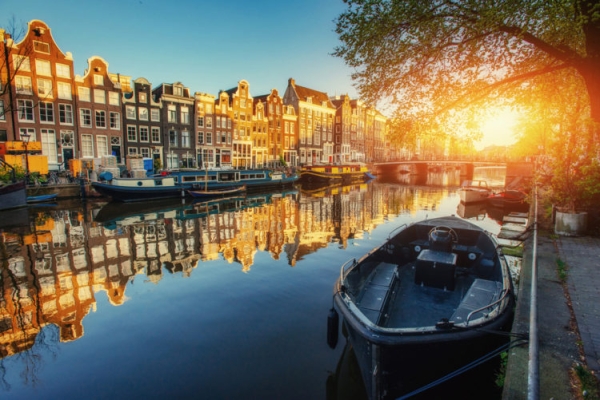
One of Amsterdam’s canals
As a rule, a trip to the Netherlands begins with the capital of the state — Amsterdam. The main attraction of the Netherlands in the capital are the numerous water channels of Amsterdam — there are more than a hundred of them here. Many man-made canals, along with hundreds of intricate bridges and bridges, create a unique picture of the city, making it recognizable among thousands of other cities. You can wander along its endless embankments for hours, admiring the intricate architecture of the city.
The entire Amsterdam canal system is a complex of waterways formed by one large river, the Amstel. The creation of this system began back in 1658 with the “Plan of three canals”, designed by architect Hendrik vann Keiskrom. Nowadays, the number of canals already numbers 165 channels, through which more than one and a half thousand bridges have been laid. If you look at the panorama of the city from above, all these channels form 4 semicircles, as if “nested” into each other and encircling the city.
Due to the large area occupied by reservoirs, water transport is preferred in the city, and bicycles are common for overland travel, which are convenient to overcome numerous bridges. Therefore, if you are looking for something to see in the Netherlands, then, once in Amsterdam, visit one of the excursions along the numerous canals of the city.
Official website: http://www.hetgrachtenhuis.nl/en/
Netherlands | Hotels at competitive prices
Booking.com
2. Nemo Museum (Amsterdam)
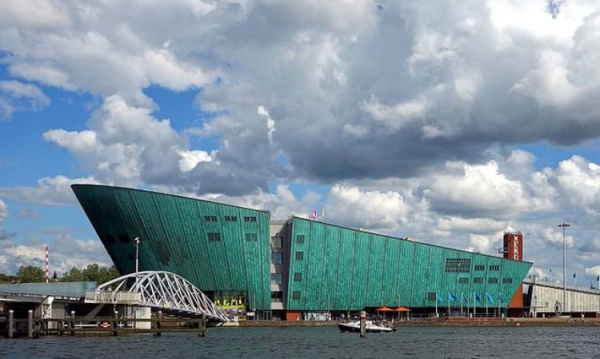
Nemo Science Museum in Amsterdam
Tourists with children have a lot to visit in the Netherlands, namely in their capital. In Amsterdam, about a 15-minute walk from the Central Station, there is an interesting object that looks like a huge green ship, to which two bridges lead. This Nemo Museum is an entertaining attraction in the Netherlands, a visit to which will turn into an educational journey into the world of science, technology, information technology and biomedicine, as well as allow you to learn a lot of interesting things about simple and everyday things.
Entering the lobby of the museum, you can immediately see a cafe and a souvenir shop, which sells many scale models of some of the museum’s attractions. In total, the museum includes 5 floors, each of which represents a specific theme.
- The main theme of the first floor is DNA and molecular chain reactions, which are clearly represented by large intricate structures, including a huge domino, a flying car and a large bell. The second floor is a factory of plastic balls, which the participants sort by color, weight and size. On the third floor there is a large scientific laboratory where visitors can personally conduct and observe some experiments. On the fourth floor, you can attend a lecture on the human brain, take a test of your own memory and evaluate the work of your brain. Finally, on the territory of the fifth floor there is a cafe, a playground, a game room and an observation deck with a view of the urban surroundings.
Official website: https://www.nemosciencemuseum
3. De Hoge Veluwe National Park (Gelderland province)
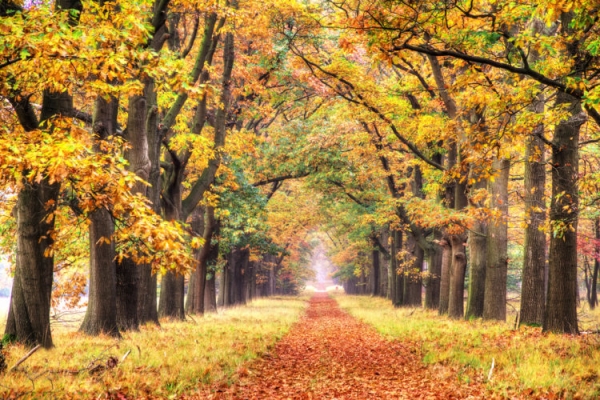
Golden autumn in the Park De Hoge Veluve
There is a lot to see in the Netherlands in the Dutch province of Gelderland — the De Hoge Veluwe National Park offers so many interesting things that sometimes its visitors do not even have a whole day to go around and explore all its interesting places. The founders of this famous landmark of the Netherlands, a married couple of businessmen Kreller, once used these lands for hunting, but over time financial difficulties forced them to sell these lands to the state. Today, on an area of about a thousand square meters, there are many walking routes, horse and bike paths, a sculpture garden, a number of restaurants and three unique museums. So, among them is the one—of-a-kind museum of underground life. Descending deeper and deeper into the earth along its stairs, you can find the root system of an old tree, whose age reaches one and a half hundred years, as well as rare rocks and even bones of animals that died out more than a thousand years ago.
Another museum is located in the northern part of the park — this is the hunting lodge of Hubertus, who, according to legend, after seeing a glowing cross on the forehead of a deer, abandoned the habit of killing animals and went to a monastery.
The landscapes of the park are diverse — wet and dry deserts, flood meadows and sand deposits alternate here. The flat terrain of the park is perfect for cycling, especially since the park provides special, branded white bicycles for this purpose, which are easily adjustable in height and guarantee a comfortable journey. You can also ride a horse in the park or even take a walk in a real horse-drawn carriage.
Official website: https://www.hogeveluwe.nl/en
4. Castle De Haar (Utrecht)
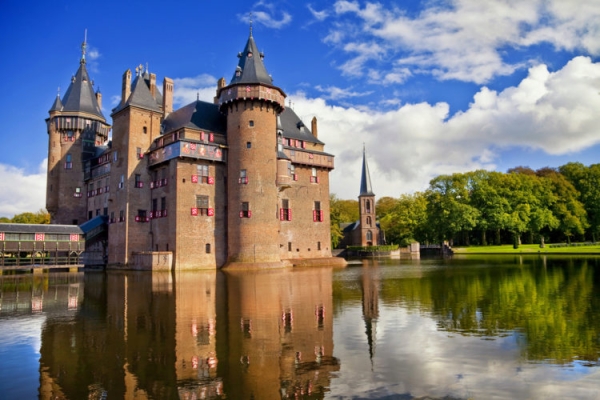
De Haar Castle surrounded by a lake
In one of the oldest and most beautiful cities in Holland, there is a magnificent landmark of the Netherlands — the Castle De Haar. Externally, the castle has the appearance of a historical monument of the Middle Ages, but in fact it is a mansion equipped with the most advanced developments.
More than once, De Haar literally rose from the ashes. In 1391, the stone castle served as the patrimony of the De Haar family. In 1482, the fortress was burned down, leaving only ruins and minor defensive structures. At the beginning of the 16th century, the castle was literally recreated anew, and in 1890 it was inherited by a descendant of the de Haar family. His rich wife put a lot of effort and money into restoring the family nest. Architect Kuipers spent about 20 years restoring the castle: electricity, steam heating, and elevators were installed. But all the technical innovations were skillfully hidden from view, so as not to disturb the external splendor of the medieval interiors. During the restoration of the castle premises, the boundary between the old and new walls was smoothed with the help of colored bricks. The interior is replete with carvings in the Roman Catholic style, even the original design of the dishes has been developed.
The picturesque De Harr gardens, often compared to Versailles, are located near the castle. This is almost 7 thousand trees that were brought here from all over the country. The park is decorated with numerous romantic gazebos, and the nearby village was built in a pseudo-medieval style to complete the picture.
Official website: https://www.kasteeldehaar.nl/
5. Binnenhof Castle (The Hague)
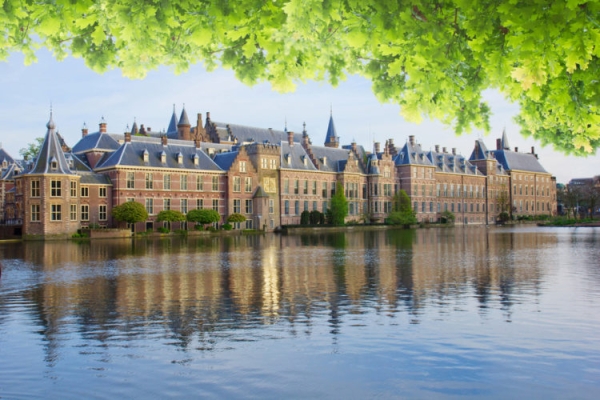
Binnenhof Castle on the shores of Lake Hoffeifer
An amazingly beautiful, ancient castle is located in the very center of The Hague, which has rightfully become one of the most luxurious attractions in the Netherlands. The rigor and at the same time the refinement of its forms, combined with the waters of the lake on the shore of which it is located, leaves a strong and vivid aesthetic impression. If you are staying in one of the hotels in The Hague, you will definitely find something to visit in the Netherlands, because you will definitely be offered an excursion to Binnenhof.
Binnenhof, founded in 1247 as a hunting castle, today is a system of unique buildings and structures decorated in an elegant medieval style.
Ridderzaal is a Gothic—style building with unusual triangular facades and decorated with two towers.
Torentier Tower — 8 is a coal tower that serves as the residence of the Prime Minister, which can be accessed through the Grenadier Gate;
Hoffaver Pond is a palace pond in the courtyard, created back in 1350;
The William II Fountain is a fountain in front of the Knights’ Hall, created in 1885 by architect Capers.
Feel the atmosphere of the Netherlands in this beautiful video!
6. Rijksmuseum (Amsterdam)
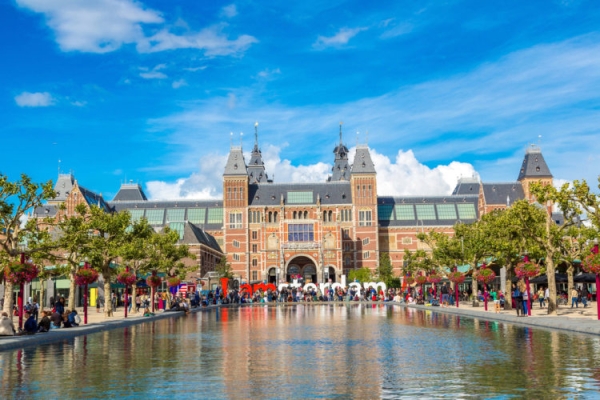
Rijksmuseum in Amsterdam
For more than two hundred years, the Rijksmuseum in Amsterdam has been one of the most visited and interesting museums in the world. Hundreds and thousands of tourists wish to visit this museum every day — every morning the residents of Amsterdam observe a huge queue of those who want to see the famous landmark of the Netherlands firsthand.
Initially, the collection, which became the basis of the exposition of the Rijksmuseum, was located in The Hague until 1800, after which Napoleon’s brother Louis Bonaparte moved it to Amsterdam and placed it in the palace. In 1863, when the collection was significantly expanded, the question of the need to build a museum building finally arose, and only in 1876 the author of the project of the future museum, Petrus Kuipers, was identified.
Since its construction, the museum has been completed many times, restoration work has been carried out, and its collection has been replenished and continues to be replenished. Among his exhibitions are recognized world masterpieces such as:
- a collection of artists of the Golden Age of Dutch painting (17th century) — Vermeer, Jan Steen, Hals and other famous authors; the famous “Night Watch” by Rembrandt, for which an entire museum hall was even allocated; products from Delft porcelain — chic vases, royal sets, statuettes and other utensils; a collection of ship models, which it allows you to comprehend the main moments of the history of shipbuilding in the country; the hall of dollhouses, the oldest of which was made in 1676; the quietest hall of the museum is a library full of ancient folios.
Official website: https://www.rijksmuseum.nl/en
7. Keukenhof Flower Park (Lisse)
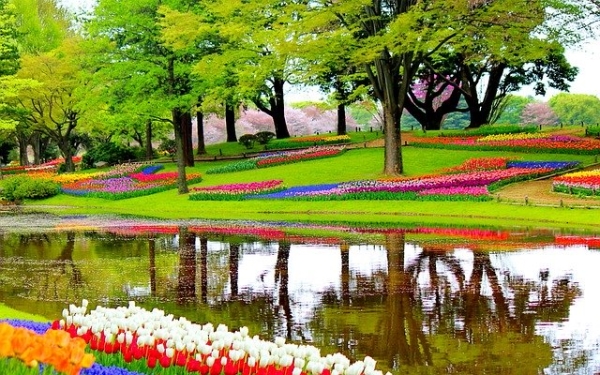
Colorful tulip beds in the Keukenhof Flower Garden in Lissa
Connoisseurs of beauty will definitely find something to see in the Netherlands, because here is one of the most famous flower parks in the whole world — Keukenhof, which means “kitchen park” in Russian. It belongs to the local royal dynasty and also has a second name — the Garden of Europe, which reflects its location, in the heart of the Old World, between The Hague and Amsterdam.
Once there was a count’s estate on the territory of the park, where herbs were grown for court cuisine — hence the origin of the park’s name. The park itself was laid out in 1857, in compliance with the English principles of park construction.
The area of the park is huge — about 32 hectares. Nowhere in the world will you find as many flowers as you will see in this park. The climate here is more favorable than anywhere else for the cultivation of flowers — a large amount of precipitation, small temperature contrasts ideally promote plant growth. A flower show is held here every year. The most common flowers of the park are tulips of the most diverse varieties, in the amount of more than 5 million. There are three huge greenhouses in the park, one of which contains tulips, lilacs and daffodils, the second — orchids, and the third — roses.
In addition to flowers, the park will delight with a variety of picturesque ponds, spreading trees, fountains and canals. There is also a pet farm on the territory of the park, thanks to which a kind of rural environment is created. Cafes and restaurants are open for visitors, and a children’s entertainment world is presented for children.
Official website: https://keukenhof.nl/en/
8. City Hall in Delft (Delft)
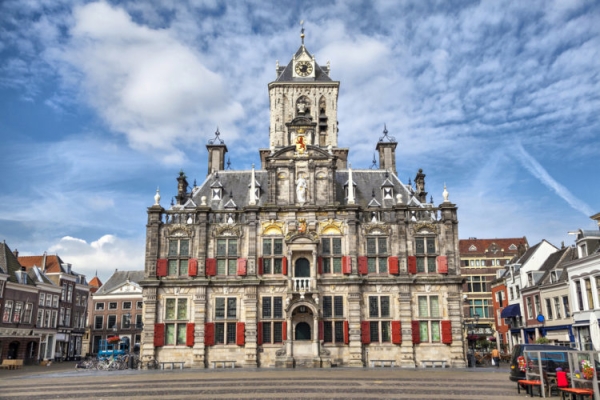
The Town Hall on the Markt Square in Delft
One of the oldest attractions in the Netherlands is located in the ancient Dutch city of Delft. The old Town Hall building, erected in the southwestern part of the Market Square in the 17th century, became the standard of the Dutch Renaissance style. It also included the old prison tower, erected around 1300. This tower, miraculously preserved even after the terrible fire of 1536, has survived to the present day, and today it is considered the oldest surviving building in the city. In the 16th century, the tower was decorated with a clock, four dials of which looked at different sides of the world.
The original city hall building was rebuilt at the beginning of the 13th century, but later, over the centuries, it was repeatedly changed and had to be restored. For example, the building was destroyed in a fire in 1618, and then it was almost rebuilt on the old foundation by 1620 according to the design of the Dutch architect Hendrik de Keyser. For a long time, the appearance of the building changed, and only by the 20th century its original architectural style, inherent in the Renaissance, was completely restored.
Portraits of the Princes of Orange-Nassau have been preserved in the City Hall, and there is also a museum dedicated to medieval torture instruments.
With its appearance, the city hall building stands out vividly against the background of the monotonous brick buildings of the city, the old style of the building’s design and the elegance of architectural forms are pleasing to the eye.
9. The Red Light District (Amsterdam)
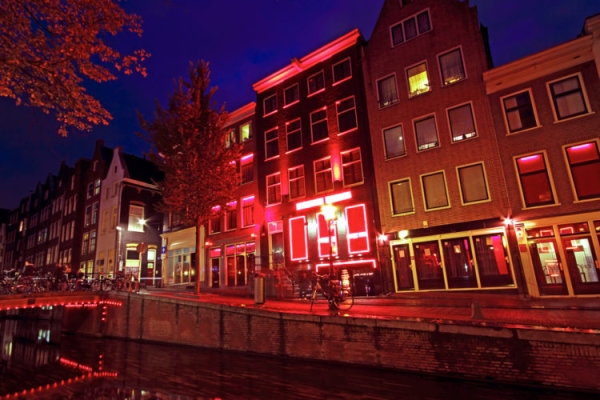
The evening quarter of the “Red Lanterns”
Amsterdam is an amazing city, especially for guests who are not used to so many “forbidden” hot entertainments, which are quite legal here. The Red Light District is a world—famous landmark of the Netherlands, attracting millions of tourists to the Dutch capital. During the daytime, the Red Light District practically does not differ from other quarters of the city — everything here looks casual and ordinary. However, with the onset of darkness, its streets are lit up with vicious lights, and about 900 workers and employees of the bedding business go on a “hunt”. Most of them sell their bodies, while the rest work here as maintenance personnel.
In total, the Red Light District includes about 20 streets. On these streets, the so-called “window prostitution” flourishes at night – along the streets of red lanterns there are strings of glass showcases in which the semi-naked bodies of “priestesses of love” dressed in bold bikinis flash. The windows open for review indicate that the young lady in this window is vacant and waiting for her client. At the same time, while waiting, she can do quite ordinary things — cheer up with a cup of coffee, smoke a cigarette or flirt with passers-by.
Behind the glass, you can meet a girl or a woman of any age and build for every taste. In order to negotiate a deal with a partner you like, it is enough to open the glass door of the showcase and start a dialogue.
The Red Light District is, in fact, the same landmark of Amsterdam as the many cultural and historical monuments of the city. Most of the visitors to this quarter come here simply to contemplate unusual sights, and only a few of them are ready to enter into a deal.
10. Royal Palace (Amsterdam)
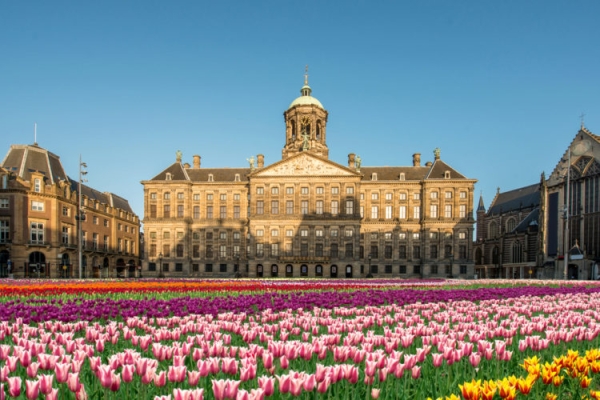
The Royal Palace on Dam Square
The Royal Palace in Amsterdam is what every self—respecting traveler should see in the Netherlands, because even the Dutch themselves respectfully call this building the “eighth wonder of the world”. The monumental building with a huge dome topped with an ancient weather vane has become one of the main and main attractions of the Netherlands, from which it is worth starting an acquaintance with this amazing country.
The first stone of the Royal Palace, once the former city hall, was laid in 1648, and the construction period lasted for 17 years, until 1665. The area where the foundation for the future palace was laid was characterized by unstable muddy lands, so the stability of this majestic building was ensured by the installation of about 14 thousand piles. The building was originally built to house the city hall, and during the period of fulfilling this role, the Amsterdam City Hall was considered the largest in the world.
Today, the Royal Palace is at the disposal of the Dutch rulers — major events are held here, prestigious exhibitions are held.
All interior rooms are richly decorated — marble and gold decoration impresses with its luxury. The interior is complemented by antique antique furniture in an intricately ornate Empire style, massive crystal chandeliers and paintings by famous Dutch painters.
Official website: https://www.paleisamsterdam.nl/en/
Sights of the Netherlands: what else to visit while in the Netherlands
Use all your leisure time by making excursions in the Netherlands on your own or with a professional guide! We have included in the list of the most interesting attractions for travelers, having collected reliable and up-to-date information that will be useful to any tourist when planning a trip.
11. The mill in Haarlem (Haarlem)
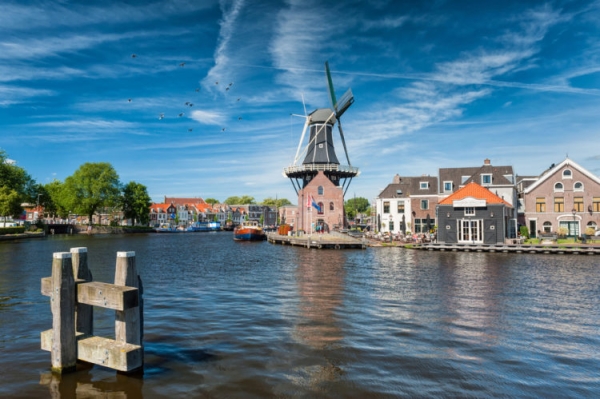
Adrian’s Windmill
True connoisseurs of Gothic medieval architecture have a lot to see in the Netherlands — the small old Dutch town of Haarlem combines modern urban amenities and provincial charm. On the banks of the Sparne River in Haarlem, there is another famous landmark of the Netherlands — the famous Adrian windmill. To date, the mill is a reconstruction of the old structure according to the original drawings. The mill was originally built on the foundation of an old tower, once part of the fortress wall, commissioned by the Dutch entrepreneur Adrian de Boies. It was he who acquired ownership of the old tower and surrounding areas in 1778, and it was in his honor that the mill was named, which began operating in 1779 — a large structure with a height of more than 30 meters was intended mainly for the manufacture of cement.
For 25 years, Adrian de Bois was the leader in cement production in Haarlem, but over time the cement business stopped making enough profit, and in 1802 the entrepreneur sold the mill to Cornelius Kraan, and he placed a tobacco factory in the building. However, this enterprise turned out to be unprofitable, and in 1925 the building of the old mill was acquired by an organization whose purpose was to preserve windmills. In 1932, the building burned down almost to the ground as a result of a severe fire, and only in 2002 the Adrian mill was restored. Since then, this building has been acting as an important historical site and is available for visits on weekends and holidays.
12. Euromast (Rotterdam)
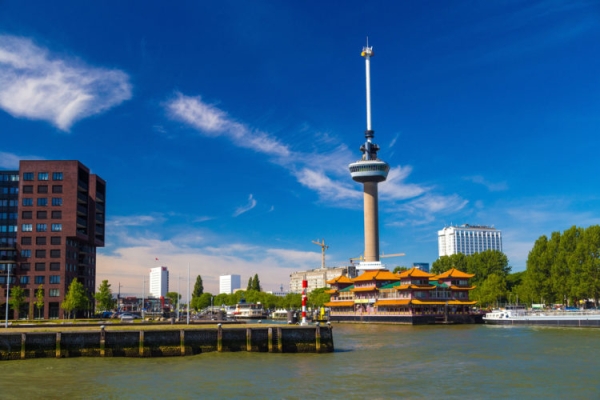
Euromast in Rotterdam
One of the most recognizable symbols of Rotterdam has become a relatively young landmark of the Netherlands — the Euromast, or in Dutch, the Euromast. The huge and tall concrete structure towers over the surroundings of Rotterdam and is visible from almost every corner of the city. The construction of the structure was started in 1958 and was associated with the opening of the Floriade Flower Festival in Rotterdam.
Euromast is a concrete structure with a height of 185 meters and a diameter of 9 meters. Since the thickness of the walls of the tower does not exceed 30 centimeters, it required reliable reinforcement at the very base. Therefore, for stability, 1.9 thousand tons of reinforced concrete were poured into the foundation of the Euromast.
Initially, the height of the Euromast was only 101 meters, but even this figure allowed the tower to lead in height among other structures in Rotterdam. Then, at the very top of the structure, at a height of 100 meters, a huge compartment with a restaurant and an observation deck was created, nicknamed by locals “crow’s nest” because of the visual similarity of this structure to the nest. However, already in 1970, a “Space Tower” was built over this compartment, which increased the height of the Euromast by another 84 meters.
Today, at the very top of the Euromast there is a fascinating attraction — the Euroscope, which is a rotating panoramic booth with transparent walls, which rises from a height of 112 to 185 meters. And in the “crow’s nest” there is also a hotel with dizzying panoramic views of the city.
13. Heineken Beer Museum (Amsterdam)
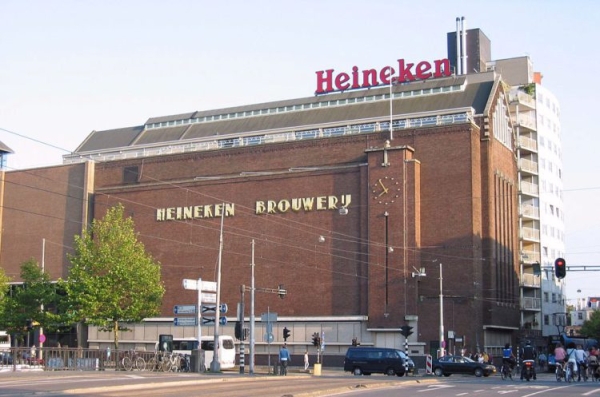
The building of the Heineken Experience Beer Museum in Amsterdam
Beer lovers, as well as anyone who is interested in the history of brewing, will find a fascinating attraction in the Netherlands, because Amsterdam is home to one of the most remarkable places from this point of view — the Heineken Beer Museum. The history of the museum began in the distant 60s of the 19th century, when entrepreneur Gerard Adrian Heineken founded a brewery in this building, which became famous all over the world. Until 1988, excellent beer was produced here, after which a museum was formed from the brewery, which even today, with the help of interactive expositions, reveals the history and subtleties of beer production.
The museum occupies 4 floors with a total area of 3,000 square meters. The tour begins with a story about the Heineken dynasty, which opened its first brewery here in 1864. Along the way, visitors are shown numerous photographs of the family of Gerard Heineken, the founder of the beer corporation. To this day, about 200 types of drinks are produced under the Heineken brand, and the most important branded drink has been following the same recipe for 150 years.
The tour participants are also invited to see the history of advertising the famous beer brand. Sitting in comfortable armchairs, you can watch a video consisting of a slide show and famous promotional videos representing the Heineken trademark.
In one of the halls of the museum, you can trace the evolution of a glass beer bottle, and in the Bottle Ride hall you can even feel yourself in the role of this very bottle, where simultaneously with the green bottle, standing on an interactive podium, you move in unison with the video sequence on the big screen, and the whole process is simultaneously complemented by various special effects.
Official website: https://www.heineken.com/
14. Hashish, Marijuana and Cannabis Museum (Amsterdam)
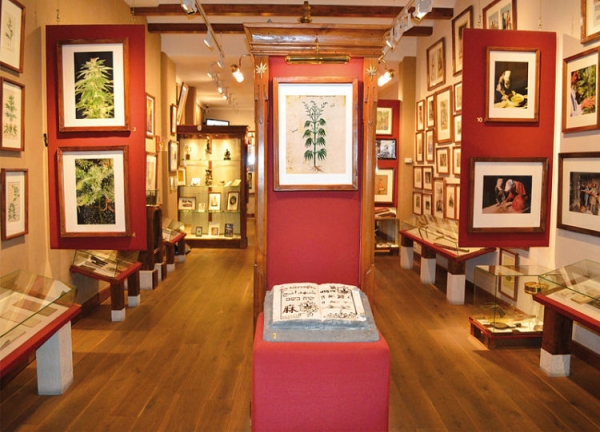
The exposition of the Museum of Marijuana, hashish and cannabis in Amsterdam Didier le Ger
If you are wondering what to visit in the Netherlands to get the most complete picture of these lands, get vivid impressions of unusual places, then you should definitely visit the Hashish, Marijuana and Cannabis Museum in Amsterdam. Of course, no one will provide the opportunity to “taste” the grass here — there are a lot of other establishments for this. But there is a huge variety of smoking devices, pipes, hookahs, bongs. Along the way, you will be told a lot of interesting facts and tips regarding the proper cultivation of cannabis, its beneficial and narcotic properties, and ways to use it for household purposes. You will be introduced to the history of the use of cannabis in various household spheres — for example, since ancient times, hemp fibers have been produced from hemp, which are still considered the most durable in the world.
The Marijuana Museum consists of 2 parts:
- In the first part, visitors are introduced to the ways of using the plant, its main properties and methods of its processing, give specific examples of its use in various fields of production, and present various samples of hemp products. In the second part, the emphasis is on the historical aspect, which tells about the traditions and evolution of the use of cannabis by different peoples at different times.
The museum also has a greenhouse where many varieties of cannabis grow, and at the exit of the museum there is a shop that presents plant seeds for planting and a wide range of goods for the construction of greenhouses.
Official website: http://hashmuseum.com/en
15. Cubic houses (Rotterdam)
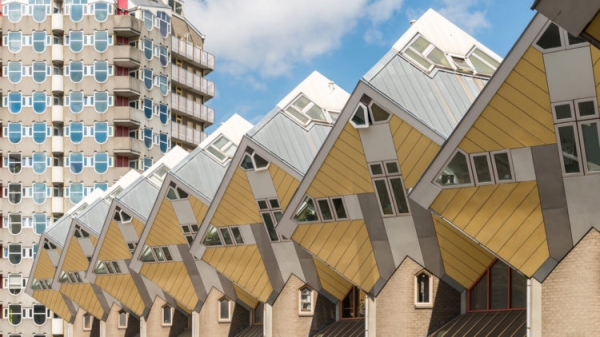
Street of Cubic Houses
In Dutch Rotterdam, unusual houses were built in 1984, which became a bright and creative landmark of the Netherlands. In total, the complex of houses has 38 cubic structures combined with each other and representing the most ordinary living spaces. Their peculiarity is that despite the impressive area of each house — about 100 square meters — only about a third of the free space is actually used here. The reason for this is the strong slope of the walls associated with the unusual shape of the structures.
The project of creative cubic houses was developed by architect Pete Blom. The very idea of the project came to the architect’s mind back in the 70s, when he turned the cube in his hands at an angle of 45 degrees, and then came the idea to substitute a “trunk” to the lower corner of the cube. As a result, a kind of tree with a cubic “crown” appeared, and the architect’s idea grew to the construction of an entire block of “cubic” tree houses resembling a forest.
From the outside, these bright and unusual houses look like a picture. Each of the houses consists of several floors, the first of which are occupied by shops and office space. The interior of such houses is not so easy to think through – there are practically no straight walls, so in order to create a harmonious design, you will have to break your head pretty much.
In total, the cubic “forest” has about 40 houses combined into one large triangle. Thanks to this extraordinary architectural masterpiece, Overblaak Street in Rotterdam has become famous all over the world.
Official website: http://www.kubuswoning.nl/en/
16. Frans Hals Museum (Haarlem)
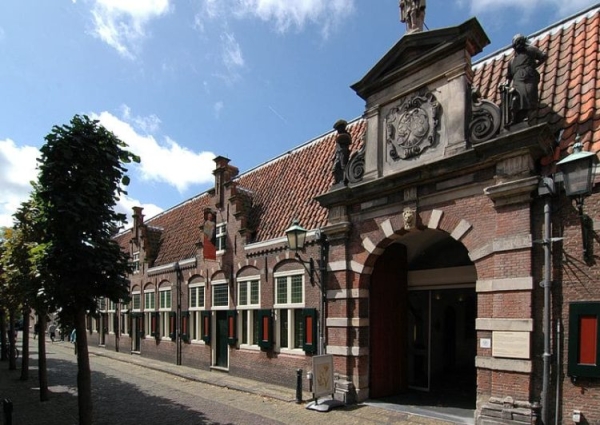
Frans Hals Museum – Art Museum in Haarlem Mcke
Dutch cultural attractions make an important contribution to a trip through the land of tulips. Reviews of excursions to the Frans Hals Museum indicate that visiting it provides an excellent opportunity to get acquainted not only with the work of Hals, but also with the works of other outstanding Dutch painters. It should be noted that Haarlem was a city of painting in the 17th and 18th centuries, so the country’s richest artistic heritage has been preserved here. It is not surprising that in the 19th century it was Haarlem that was awarded the creation of the museum of the Golden Age of Dutch painting. The origins of the collection date back to the end of the 16th century, when, as a result of the Reformation movement, a collection of unique paintings confiscated from Catholic churches and monasteries in Haarlem became the property of the city municipality. Before the opening of the museum, all these works were kept in the city hall and were an integral part of its interior.
17. Vincent Van Gogh Museum (Amsterdam)
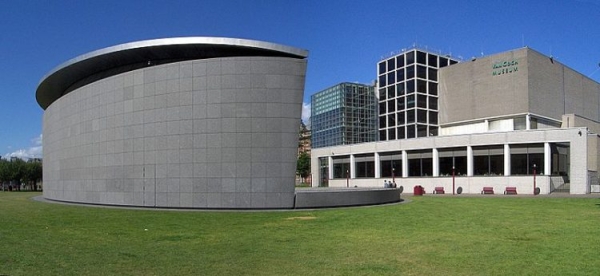
The Vincent Van Gogh Museum building on Museum Square in Amsterdam [– Wladyslaw [Disk.]](https://commons.wikimedia.org/wiki/File:Van
Gogh_Museum_Amsterdam.jpg)_The Van Gogh Museum is one of the most popular and sought—after museums in the Netherlands, and just like Madame Tussauds, it has gained worldwide fame. This cultural monument traces its history back to 1973, when the nephew of the famous artist decided to organize an exhibition of numerous works by his uncle. A spacious building with huge windows designed by architect Rietveld was erected especially for these purposes. The museum exhibits about 2 hundred paintings and 5 hundred drawings by Vincent Van Gogh, collected in chronological order — this is the largest of all collections of his works. The exhibition also features a number of various documents of the master and even personal correspondence. In addition to the works of Van Gogh, the museum contains many paintings by other painters who were contemporaries of the famous artist.
Official website: https://www.vangog
18. Anne Frank House Museum (Amsterdam)
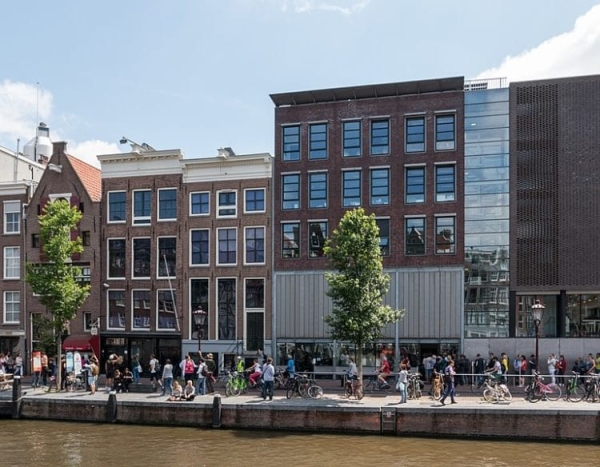
Anne Frank House Museum on the Prinsengracht embankment in Amsterdam Dietmar Rabich
A museum of global importance deserves the status of the most important historical landmark in Amsterdam. The Anne Frank House is a museum dedicated to the memory of a Jewish girl who became a victim of Nazi terror. Her name became known all over the world after her diary “Shelter” was published, which describes how the girl, along with her family, hid from the Nazis — she spent more than two years in the secret rooms of the mansion. The ancient house where the described events took place has existed for almost 3 centuries, and throughout its history it was not only inhabited — there was also a warehouse and production facilities here. Part of the museum’s premises has been recreated in the form in which they were during the war before the Nazi pogrom. There is a small statue in front of the museum, a monument to Anne Frank, and the main exhibit of the museum is the original of her diary.
Official website: https://www.annefrank
19. Madurodam Miniature Park (The Hague)
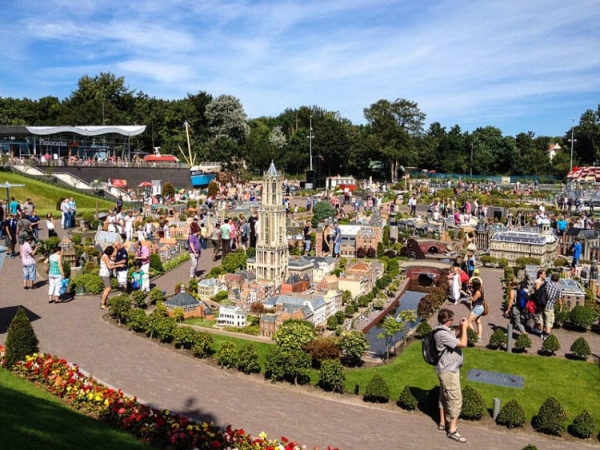
Visitors at the Madurodam Miniature Park in The Hague Michal Osmenda
Amsterdam, of course, is full of beauties and attractions of various kinds, but what to see in Holland besides Amsterdam? If you don’t have a lot of time, but you don’t want to miss anything in the Netherlands, there is one place where you can see the whole country in an area approximately equal to the area of a shopping center. Just about an hour’s drive from Amsterdam, and you find yourself in a kind of miniature country, striking in the elaboration of all the details, where exact copies of many Dutch structures are collected on a scale of 1:25. In total, the Maturodam Park has three thematic parts — a Center telling about the history of the country, a Water World with Rotterdam ports and mills, and an Innovation Island demonstrating the most modern structures of the Netherlands. The miniature park is dedicated to George Maduro, a Jewish student who showed heroism in the battles for his homeland during the Second World War.
Official website: https://www.madurodam
20. Vondel Park (Amsterdam)
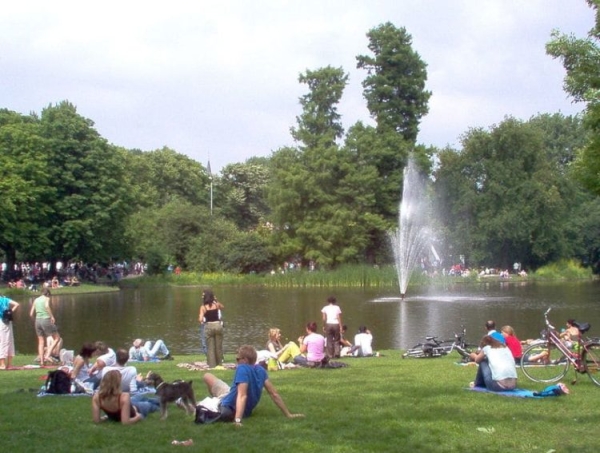
Vacationers on a summer day in the Vondela City Park in the southern part of Amsterdam Shizhao
When planning what to see in Holland in the spring, you can choose several route options. Spring in Holland is a time of riot of colors, the flowering of everything that can bloom. Therefore, when asked what to see in the Netherlands in April, there are different solutions — for example, you can walk through the fascinating fields with blooming tulips. Or you can not go far and visit the Vondela Park in Amsterdam — a place that is not inferior in beauty and diversity. This park perfectly combines wildlife and modern recreation opportunities — not devoid of all the delights of civilization, the park remains an oasis of peace and quiet among lush greenery, bright flowers and ponds. The park also has its own attractions — for example, the Cinema Museum in the pavilion on the outskirts of the park, or the open-air theater, where diverse performances take place.
Official website: https://www.hetvondelpark
21. Freithof Square (Maastricht)
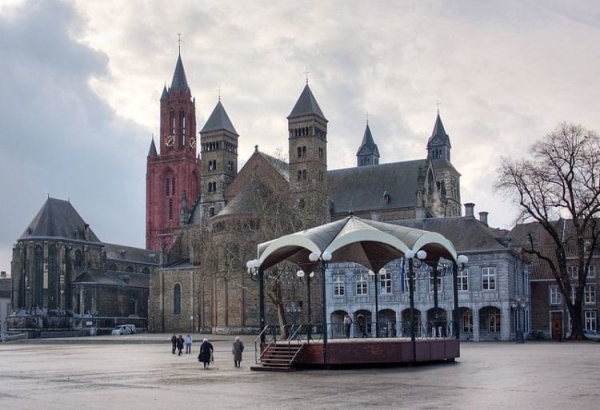
The main city attractions on Freithof Square in Maastricht Sergey Ashmarin
Just 3 kilometers from the border with Belgium and not far from Germany, the town of Maastricht is located, the heart of which is Freithof Square, where all the central city streets converge, a place from which you should start exploring the city. The name “Freithof” itself translates from Dutch as “fenced place” or “courtyard in front of the temple”, but the second name is more applicable: the contrasting and colorful square flaunts the peaks of the main city basilica of St. Servas and the facade of the theater, in which a new repertoire is played every day. Numerous cozy cafes and restaurants are compactly located around the square, where people relax after a busy walk. Also, a special transport starts from the Freithof — the only tram in Maastricht, on which you can make an exciting tour of the historical city center.
22. Jordan district (Amsterdam)
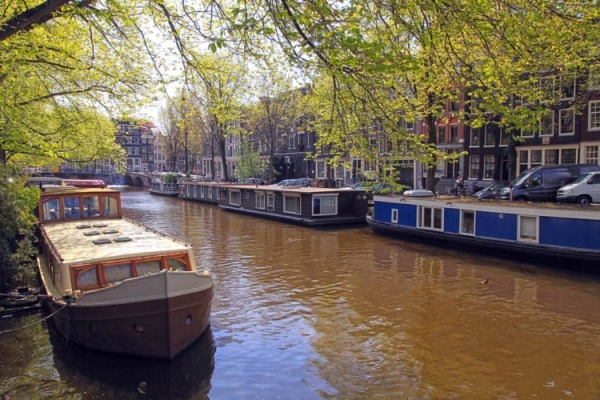
The oldest and most picturesque area of Jordan in the western part of Amsterdam
Whether you are looking for the perfect place to relax, the cultural monuments of the country or the sights of Holland for children, the multifaceted Amsterdam provides opportunities for recreation for every taste and prosperity. Many people who arrive here begin their acquaintance with the city from the “Belly of Amsterdam” — this is sometimes called the authentic Jordan quarter, where the characteristic atmosphere of old Holland still reigns. This picturesque area is located in the western part of the city and accommodates not only charming colored houses, but also prestigious residential complexes, trendy clubs and bars, as well as wide streets and canal embankments, offering romantic measured walks. On the way, you can look into a cozy coffee shop or one of the many shops with an unusual and original assortment. It’s hard to believe that 2 centuries ago it was a typical poor neighborhood, with blacksmith shops, leather shops and tanneries.
23. Museum of the National Heritage of the Netherlands (Arnhem)
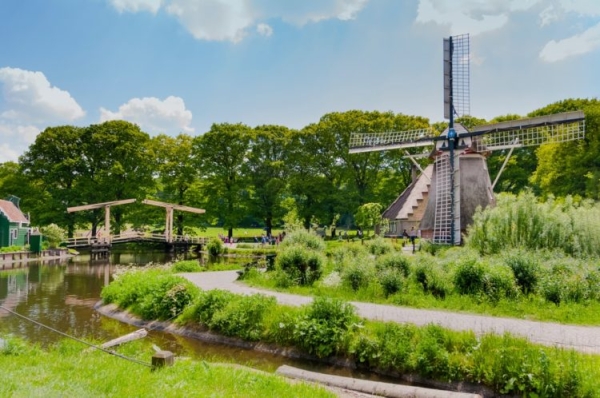
Exhibits of the Dutch National Heritage Museum in the vicinity of Arnhem
In 1912, a well-known Dutch historian initiated the creation of an open-air museum, the purpose of which was to preserve the cultural heritage of his native country. Fears that rapid urbanization would soon leave no trace of the ancient heritage were quite justified, so the idea found wide support from the public and the authorities. Thus, an extensive historical park grew up in the vicinity of Arnhem, which opened in 1918. Today it is one of the most interesting and visited museums in the Netherlands, which contains exhibits testifying to the centuries—old history of the country – authentic houses, farms, ancient workshops, windmills, forges, churches from different parts of Holland. And here you can also learn about how and how the land was once plowed, grain was ground, paper was made, and much more.
Official website: https://openluchtmuseum
24. Zaanse-Schans (Zaandam)
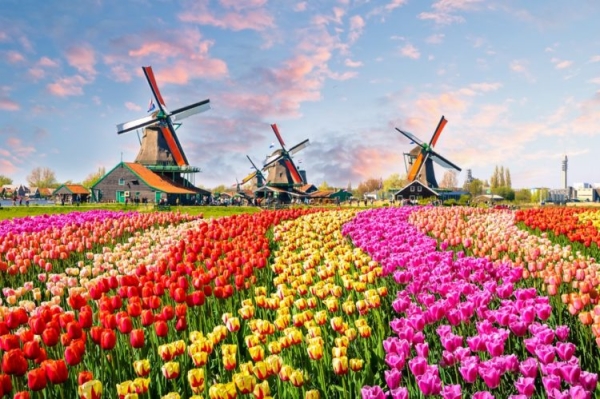
Windmills and houses on the territory of the Zanse Schans Museum in Zaandam
May in Holland is one of the most beautiful periods of the year, when all nature has already woken up from the winter cold, the temperature is rising, but it is not yet exhausting in the summer heat, and the blooming alleys and fields give a touch of romance and charm to rest. The May weather here is ideal for active travel, long walks in parks and forests. Therefore, in search of what to see in the Netherlands in May, you can go to Zaanse Schans – a stunning atmospheric place, which is an open—air museum in the bosom of picturesque nature. About 30 traditional Dutch houses from all over the country are gathered on its territory, as well as museums, farms and a dozen operating mills. Once in Zaanse Schans, visitors have the opportunity to travel back several centuries and plunge into the life of old Holland – to learn how grain is ground in mills, delicious bread is baked, real Dutch cheese is made, klompas are sewn — traditional Dutch shoes.
Official website: https://www.dezaan
25. Delta Project (southwest of the Netherlands)
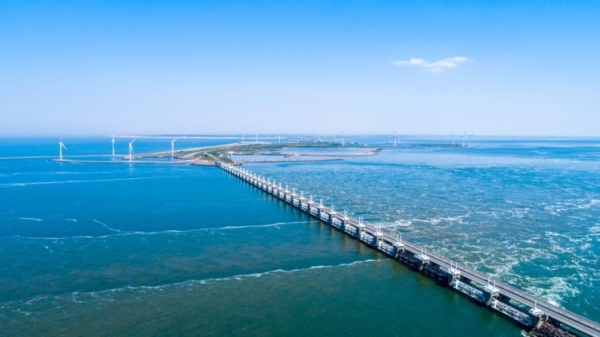
Impressive protective structures of the Delta project in the south-west of the Netherlands
Geographically, Holland is a low—lying country, so its lands are extremely vulnerable to the elements of water. After one of the powerful floods, the government began to develop the Delta project, which took 47 years to implement. This is how two giant storm barriers appeared — in the Nieuwe-Waterveg arm and in the bed of the East Scheldt River. One of the barriers, Maslantkering, is the flaps of a giant gate that block the river in case of a storm, and in the absence of threats are in an open position, hiding on the banks in special docks. The second barrier, Ostersheldekering, is a complex consisting of an artificial island, a storm barrier and side dams. The barrier itself consists of 65 giant concrete columns of 18 thousand tons each, between which steel gates with sluice mechanisms are attached.
Official website: http://www.deltawerken


 English
  Russian
  German
  Polish