Portugal systematically attracts IT startups, as well as advanced specialists from all over the world and is famous for its intellectual community; It is logical to assume that education in the country is at a high level; Let’s look at what it is in detail.
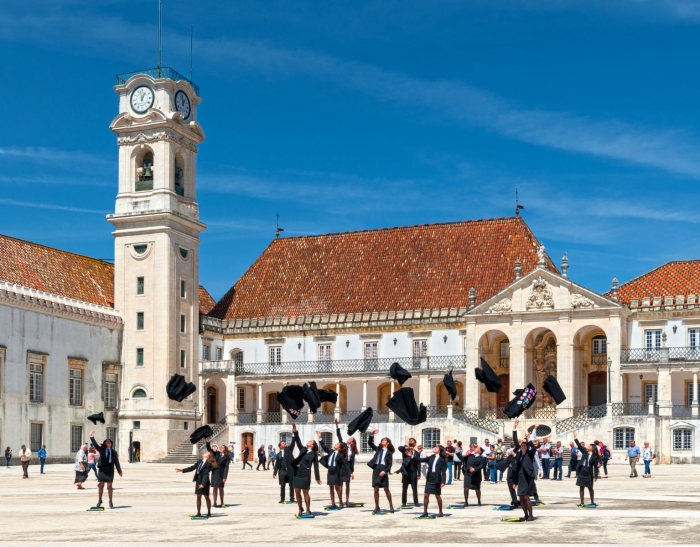
The education system in Portugal
It is divided into 4 stages:
1. Preschool education. Optional, but any child, including a foreigner, has the right to attend kindergarten.
2. Basic school education. Compulsory, consists of 9 classes (from 6 to 15 years old).
3. Average. Students can continue their studies until the 12th grade or enroll in technical colleges and acquire basic qualifications.
4. Higher education. Optional. At the same time, it is allowed to enter the university both after the 12th grade and after college.
Kindergartens
In Portugal, kindergartens accept babies from 3 months to 5 years old, however, it remains at the discretion of the parents to take their child to a group or not.
The gardens are divided into public and private. There are no government fees for visits. The family should only compensate for the cost of meals – an average of 40 euros per month. If the child is brought before 9:00 and picked up after 15:00, additional time (“extension”) must also be paid. It usually costs about 80 euros per month.
To get into a free state kindergarten, you need to book a place for a child nine months before admission!
It is easier to arrange a son or daughter in private gardens, of course, since there is no queue here. Another advantage is that there are no more than 10 children in groups. This is 2 times less than in the state. In addition to the usual teaching of reading and writing, teachers teach children foreign languages.
You can find English-speaking gardens in Portugal, and gardens with Russian-speaking educators in Lisbon.
The monthly fee for a private kindergarten varies from 250 to 500 euros.

School
Children from 6 to 18 years old are required to attend school. You can choose both public – free and private – paid.
Primary education in Portugal covers from 1st to 4th grade. Children study the main subjects: mathematics, Portuguese, history and geography.
Specialized subjects are also added in the following classes.
From 1st to 9th grade, students receive basic education.
After the 9th grade, the stage of full secondary education begins, which takes 3 years. Teaching combines general, technical and professional training.
At the end of the 12th grade, students take exams. Those who have successfully passed the tests can go to university.
Like kindergartens, schools are divided into public and private ones.
In public schools, education is free, parents compensate only for meals and classes during extra time. The teaching is conducted in Portuguese.
All foreigners have every right to study in public schools in Portugal, and there are no restrictions here! The child will be accepted, even if he does not speak Portuguese, and free optional language classes will be offered.
To enroll a son or daughter in school, you must apply. You can fill it out on the website of the educational institution by providing the required documents.
In private schools, lessons are taught in English and other popular languages. Tuition costs from 4,000 to 13,000 euros per year.
There are also several Russian-speaking schools in Portugal, but classes in them are only on Saturdays or remotely.
Some parents prefer international schools. They are selected based on criteria such as location, education system, language of instruction, and price.
The main languages of instruction are English, German, French and Portuguese. Education systems: Portuguese, German, English and American. The payment for the academic year in international schools ranges from 4,000 to 20,000 euros per year.
There are many schools in Portugal that are distinguished by the quality of education and are famous for their reputation. Here are some of them:
Lisbon
1. Colégio Moderno is one of the oldest and most prestigious schools in Portugal.
2. St. John de Brito College (Colégio de São João de Brito) is a Catholic school with a good reputation and an excellent academic program.
3. Saint Julian’s School is an international school offering education in English with an emphasis on the individual development of students.
The port
1. Luso-French College (Colégio Luso-Francês) is a bilingual school with French–Portuguese education and a strong academic program.
2. Escola Secundária Clara de Resende is a public secondary school with a good reputation and diverse educational programs.
3. International School of Porto is an international school with teaching in English, which has high academic standards.
Three examples of decent international schools in Portugal with tuition fees:
1. Luso-French College (Colégio Luso-Francês) in Porto
Cost: from 300 to 450 euros per month.
It occupies the 13th position in the ranking of the best schools in Portugal.
2. Colégio Internacional de Vilamoura in Lola (Algarve region)
Cost: from 400 to 1000 euros per month.
It ranks 34th in the ranking.
3. Nobel-Algarve International School in Lagoa and Almancil (Algarve region)
Cost: from 4,900 to 12,800 euros per year.
It occupies the 98th line of the rating.
Universities
Portugal’s higher education system was ranked 34th in the world last year, according to the Ceoworld magazine ranking. At the same time, the cost of education in the country is one of the most democratic in the European Union.
For EU citizens, it usually amounts to about 2000-3500 euros per year, but for students from other countries it can be noticeably higher – from 5000 to 7000 euros per year, depending on the university and specialty. It should be noted that some universities (especially non-metropolitan ones) provide scholarships to visiting students and can, with a successful combination of circumstances, compensate up to 50% of the cost or more. This also applies to non-EU students. It is also convenient that studies can usually be paid in installments.
In addition to paying directly for education, you will also need to budget for living expenses. The amount of expenses can vary significantly depending on the region, the required level of comfort and lifestyle. On average, it is worth focusing on the amount from 1000 to 2000 euros, including rental housing, utility bills, transport and more. The cost of meals will depend on the habits and preferences of the student. By the way, having received the status of a “working student”, young people can study and earn extra money (but no more than 20 hours a week), while having more flexible deadlines for completing the session.
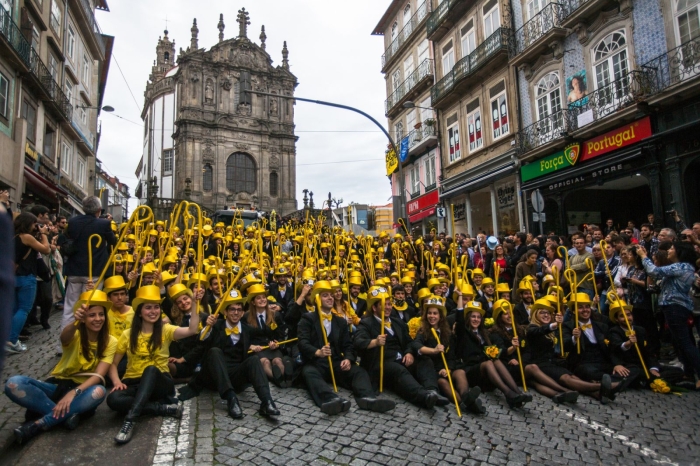
The structure of higher education in the country includes 3 levels: bachelor’s, master’s and doctoral degrees. Universities are divided into private and public, universities and polytechnics (binary system). In some, the teaching is conducted in Portuguese, in others – in English or in both languages.
Does the applicant need to know the language in which he will study? A number of universities have such requirements, while in others it is not necessary to present a certificate of proficiency in Portuguese or English. Accordingly, the language can be tightened either in the specially designated zero year (Foundation Year), or in the first year of the bachelor’s degree. A Foundation Year may be a good option to adapt to the language environment and improve your knowledge, but training usually costs more than a year of the main program and does not involve scholarships.
There are universities in cities such as Lisbon, Porto, Coimbra, Braga, Aveiro, Faro and Evora. They train specialists in many fields. Here are some of them:
- Technical sciences (engineering, information technology, architecture);
- Natural sciences (physics, chemistry, biology);
- social sciences and humanities (history, philosophy, literature);
- medicine and healthcare;
- art and design;
- economics and business;
- right;
- social sciences (sociology, psychology, political science).
In addition, master’s and doctoral degree programs in many fields of knowledge are available in Portugal.
Let’s list the most famous universities in Portugal:
1. University of Coimbra (Universidade de Coimbra). One of the oldest universities in the world, founded in 1290. It is known for its academic reputation and beautiful historical campus. It is recognized by UNESCO as a World Heritage Site. It is among the top 500 best universities in the world.
2. University of Lisbon (Universidade de Lisboa). The largest in Portugal, offers many programs.
3. University of Porto (Universidade do Porto). Another prestigious university that is known for its innovative research and educational programs.
4. Nova University of Lisbon (Universidade Nova de Lisboa). A modern prestigious university that specializes in economics, management and social sciences.
5. Catholic University of Portugal (Universidade Católica Portuguesa). It is located in Lisbon and has an elite status. Recognized as the best university in Portugal by the Times Higher Education World.
6. University of Aveiro (Universidade de Aveiro). A rating university in a small town an hour’s drive from Porto.
7. The University of Minho (Universidade do Minho). The buildings are located in Braga and Guimaraes. Trains specialists in the field of exact sciences, medicine, law, economics and management, engineering, psychology, nursing, social sciences, education, arts, humanities.
8. Lisbon Catholic School of Business and Economics (Católica Lisbon School of Business and Economics). Traditionally included in the list of the most prestigious business schools in Europe according to the Financial Times.
9. University of the Algarve (Universidade do Algarve). A state university located in Faro. One of the youngest in the country. It is among the best in the medical and biological disciplines.
Since the field of information technology is especially developed in Portugal, many companies from this industry cooperate with universities and take students for internships.
The leading universities in Portugal for the training of IT specialists:
1. University of Porto (Universidade do Porto). He provides education in computer science, programming, data analysis and other related disciplines.
2. The Technical University of Lisbon (Instituto Superior Técnico) is a large university offering programs in the field of IT, including computer engineering, network technology, cybersecurity and others.
3. Universidade do Minho is one of the best universities in Portugal for training IT specialists. There are programs in computer science, programming, artificial intelligence and other areas.
4. The National Institute of Information Technology (Instituto Superiorde Engenharia do Porto) is a specialized university. Teaches software development, systems engineering and other disciplines.
In conclusion, a few words about the legalization of students. The applicant can fly to Portugal on a tourist Schengen visa and then apply for a residence permit on the spot. The second option is to apply for a student national D visa at the Portuguese consulate in your country, and then get a residence permit upon arrival. Admission to the zero course also gives the right to legalization.
Tip: if your budget is limited, go to university not in Lisbon or Porto, but in a small city, for example, Aveiro. This way you can save money on tuition and accommodation, but at the same time get a decent higher education.
Thank you for the help in preparing the material from our experts in Portugal:
Evgenia Berezina, General Director of MENU Portugal
Victoria Vdovichenko, Head of Marketing at Amber Star
Sources:
Study and Research in Portugal
Foundation for Science and Technology
Studyportals Report
Photos used: Deposiphotos.com



 English
  Russian
  German
  Polish