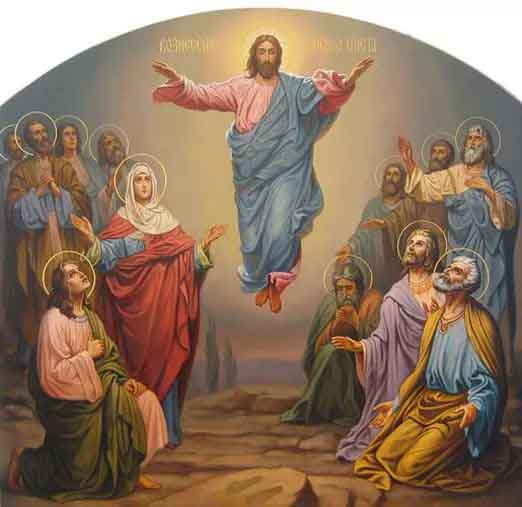
The celebration of Easter in Cyprus is the brightest and most significant annual event. Easter is celebrated according to the Orthodox calendar, accompanied by many local traditions and rituals. Cypriots have been preparing for the holiday for several weeks already. The ceremonial part begins on Thursday (Maundy Thursday) and ends on Sunday. The day after the Easter service, on Easter Sunday, Cypriots gather with their families and friends for a festive dinner. This is a time of family gathering, spiritual enrichment and joy.
Let’s remember what events underlie the Easter holiday. What can we learn about them in the New Testament, and what in historical sources?
Christianity originated in Palestine in the first century.
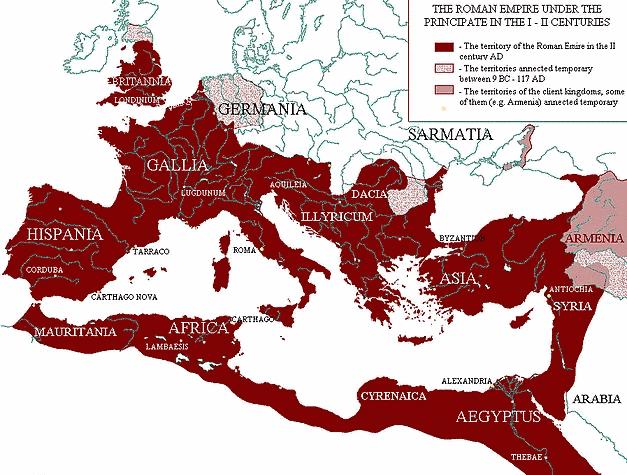
Palestine became part of the Roman Republic in 63 BC. On the map of the Roman Republic corresponding to that era, Palestine is included in the empire and is located south of Syria. In 6 A.D., the regions of Palestine, Judea and Samaria, completely came under the authority of the imperial governor (procurator). The Sanhedrin– the supreme religious institution that also served as the highest judicial body, also came under the full control of the procurator.
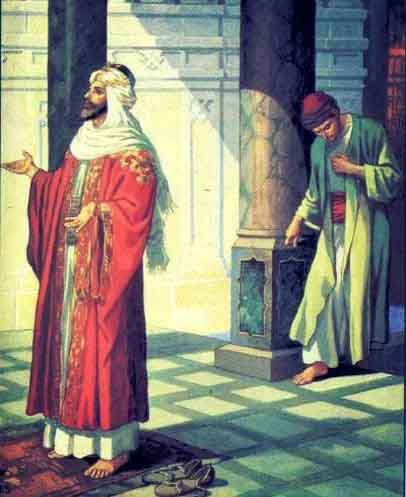
The loss of political independence was perceived by the population as a violation of the precepts of the fathers and religious principles. Many religious groups began to fight for independence and a return to the religion and traditions of their fathers, later they were mentioned in the Bible. These are the Pharisees – the “separated ones” who advocate the purity of faith and the prohibition of contact with foreigners; the Zealots – the “zealots” who call for armed resistance to the Roman Empire. The Sadducees – as a rule, the Jews of the outlying lands – spoke of a tolerant attitude towards other cultures while observing the precepts of the fathers. The Essenes (who were closest to Christianity that arose later) talked about the future of people and the world as a whole and, according to the found fragments of the Qumran “dead Sea scrolls”, who were waiting for the coming of the Messiah.
Gradually, the situation escalated: the Roman authorities brutally suppressed the uprisings of the discontented Palestinian population, social and property stratification increased, and dissatisfaction with Roman rule grew. This caused a rise in religiosity, and Christianity became one of the new religious movements.
The roots of Christianity are connected with Old Testament Judaism: Jesus himself was raised as a Jew, the apostles and the first followers of Jesus were Jews. From Judaism came the idea of the one and only God, the coming of the Messiah (the messenger of God), who will bring justice, peace and tranquility to the world of people.
In addition, Christianity absorbed the ideas of ancient philosophers. Often, to substantiate this statement, comparisons are made between the statements of Seneca (4 BC – 50 AD) “Treat those below as you would like those above to treat you” and the text from the New Testament: “And so in everything, as you want people to do to you so do you with them.”
In addition, cults of hero deities and savior deities were widespread in the Roman Empire. They were worshipped not on a national or territorial basis, but on faith in them. It is at this time that the messenger of God, the Messiah, appears, who came into the world to save him – Jesus Christ.
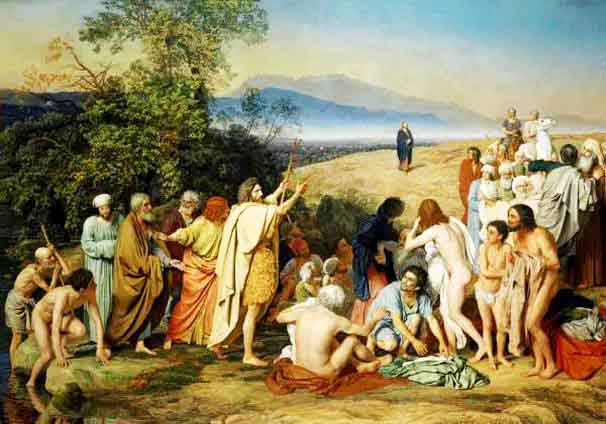
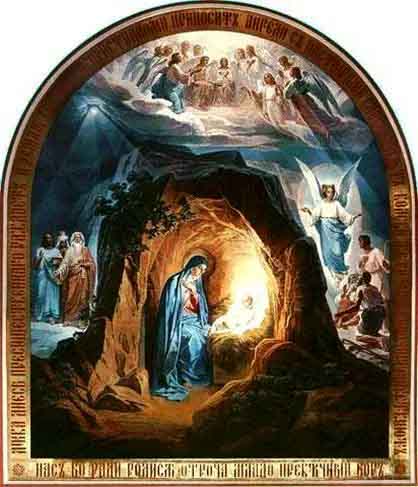
Ivanov A.A. “The Appearance of Christ to the people”
We learn about the birth and life of Jesus Christ from the evangelists. In his appearance, the ancient prophecy about the Messiah, the son of God, was fulfilled.
Two of the four Holy Gospels known to us (the manuscripts that make up part of the Christian Bible – the “New Testament”) cover events related to the birth and life of Jesus Christ. Interestingly, evangelicals adhere to different chronologies.
The Evangelist Matthew (author of the work “The Gospel of Matthew”) writes that Jesus was born in the city of Bethlehem during the reign of King Herod. According to historiographical data, King Herod began to rule in 40 BC. Josephus, the author of the work “Jewish Antiquities”, pointed out that Herod ruled for 37 years, which means that his reign ended in 3 or 4 BC. According to the narrative of Matthew, it follows that King Herod ordered the destruction of all infants under two years old, fearing the prediction of the Eastern magi about the appearance of a new “king of the Jews”. Based on this information, it can be assumed that Jesus was born around 6 BC, but no later than 4 BC.
The evangelist Luke (author of the work “The Gospel of Luke”) pointed out that Jesus was born during the census period announced by Emperor Augustus. Josephus writes in the “Jewish Antiquities” about the census and dates it to the 6th — 7th year of our era. Thus, these two Gospels give a discrepancy in dates of about 10-12 years. Both evangelists speak about the birthplace of Jesus (the city of Bethlehem). But Matthew points out that Jesus’ mother Mary and her husband Joseph lived in Bethlehem, and only then moved to Nazareth, and Luke writes that Joseph and Mary lived in Nazareth, and after the census began they moved to Bethlehem. For Joseph, Bethlehem was his hometown. The Evangelist Mark does not tell about the birth of Jesus, but points out that an adult Jesus “came from Nazareth of Galilee.”
The Archangel Gabriel announced to future parents the imminent birth of their son of God, immaculately conceived by the Holy Spirit. Jesus was born to the Virgin Mary in Bethlehem, his adoptive father was Joseph the Betrothed. After Jesus was born, Joseph and Mary brought him to the temple in Jerusalem. There they met elder Simeon, who was destined to see the anointed (messenger) of God and only then die. We know this meeting among the holidays of the modern Christian Church as the “Presentation of the Lord.”
Soon Mary and Joseph flee with Jesus to Egypt, saving him from King Herod, who ordered all the babies of Bethlehem to be killed. After Herod’s death in 4, they moved to Nazareth (3 days away from Jerusalem), where they lived in obscurity. When Jesus turned 12 years old, the whole family went on a pilgrimage to Jerusalem, to the Passover holiday associated with the exodus of the Jews from Egypt and the events preceding it. The boy lagged behind his parents, who began to look for him and found him only on the third day: Jesus was standing in the temple among teachers and lawyers. He questioned them and gave them advice, surprising everyone with his wisdom.
Further stories about Jesus relate already to the time of his preaching, that is, to the time when he was about 30 years old.
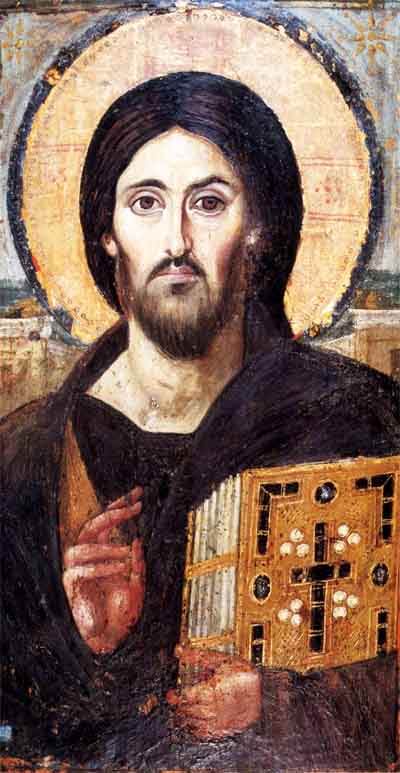
Christ the Pantocrator from the Sinai Monastery (wikipedia.org )
Jesus left Nazareth at the age of 30 and was baptized in the Jordan River by John the Baptist (the “predecessor” of the Messiah). John recognized Jesus as the son of God: “Here is the lamb of God who takes away the sin of the world… And I have seen and testified that this is the Son of God” (The Gospel of John, chapter 1, verses 29 and 34). After baptism, Jesus goes into the desert for 40 days in order to endure a duel with the devil in solitude and abstinence.
The ministry of Jesus Christ begins. He preaches repentance in the face of the coming of the Kingdom of God, talks about the suffering and death of the Son of God in the name of salvation. His sermon talks about the priority of spiritual life over social and material benefits. About love for God, for neighbor and for enemies.
Jesus, surrounded by his disciples, wanders through Galilee, carrying his teaching and performing miracles. During his travels, Jesus healed the terminally ill, raised the dead, tamed the storm, turned water into wine, fed 5 loaves to 5 thousand people. Among the disciples, he chooses first the 12 closest disciples (the apostles), then another 70 (the apostles from 70).
His first students were fishermen from the Jordan River, Andrei and Peter. After that, two more brothers, also fishermen, James and John, became his disciples. After them, Jesus was joined by Levi (Matthew), a tax collector, despised by his compatriots for collecting taxes in favor of Rome. Then other disciples appeared, among whom was the one who later betrayed Jesus, Judas Iscariot.
Jesus preached for 3 years, and on every Jewish Passover (Passover) he came with his disciples to Jerusalem.
The earthly mission of Jesus Christ was moving towards its tragic but inevitable ending, which was predicted in the Old Testament.
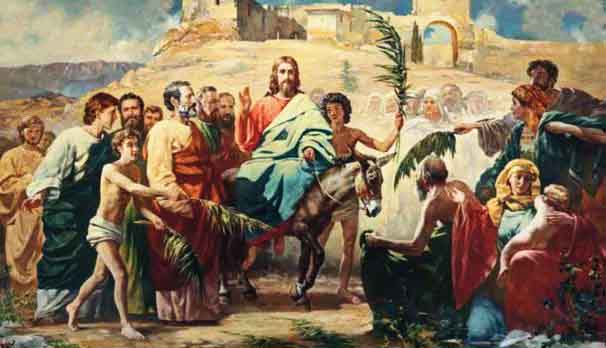
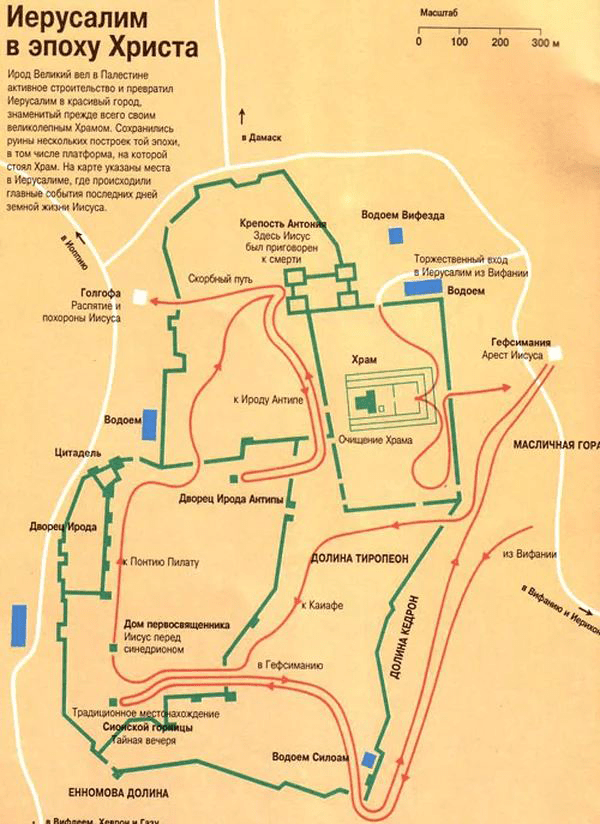
On Sunday, before the Passover holiday (Jewish Passover was celebrated by Jews as a holiday that recalled the exodus of the Jews from Egyptian captivity under Moses), Jesus and his disciples arrive in Jerusalem.
At the entrance to the city, Jesus is greeted by followers waving palm branches. The Orthodox Church calls this day “Palm Sunday” or “the entry of the Lord into Jerusalem,” and the Catholic and Protestant churches call it “Palm Sunday.”
After that, he goes to the Jerusalem temple. Famous and amazing events take place in the temple: Jesus proclaims: “It is written: My house will be called a house of prayer, but you have made it a den of robbers” (The Gospel of Matthew, chapter 21 verse 13), overturns the tables of money changers and expels merchants and buyers from the temple.
Neither the high priests nor the scribes (including the Pharisees and Sadducees) recognized Jesus as the Messiah and did not see in his face a fulfilled prophecy. The result of their collusion was the intention to destroy Jesus. They also benefited from the following circumstance: one of Jesus’ disciples, Judas Iscariot, came and asked them: what would he get if he gave them Jesus? They, in turn, promised him thirty silver coins (“thirty pieces of silver”).
On Thursday, Jesus was preparing to celebrate Easter with his disciples. The celebration was held in a secret place, because by that time Jesus was already wanted by mercenaries sent by the scribes and high priests.
This secret celebration was later called the “Last Supper”. At the last Supper, Jesus told the disciples that he knew what was going to happen. Having told the disciples that one of them would betray him, he handed Judas a piece of bread with the words: “What you are doing, do it quickly” (The Gospel of John, chapter 13 verse 27).
After Judas left, Jesus gave the disciples bread and wine with the words “Take, eat: this is my body”, “Drink from it all, for this is my blood of the new testament, which is poured out for many for the remission of sins” (Gospel of Matthew, chapter 26 verses 26-28). These actions of Jesus, centuries later, became considered the basis of the Christian ritual of communion.
When the Last Supper was over, Jesus and his disciples went to the Garden of Gethsemane on the Mount of Olives. While the disciples were sleeping, Jesus turned to the heavenly father in prayer.
Later, Judas appeared in the Garden of Gethsemane with armed guards, and, fulfilling his promise, came up and kissed Jesus in order to point him out (the expression “Judas kiss” later took root in the Christian world as a synonym for betrayal). Then the repentant Judas came to return the money, threw it in the temple and hanged himself tormented by conscience.
After accusations of blasphemy in the Sanhedrin, the arrested Christ was brought to the Jewish procurator (viceroy of the Roman emperor) – Pontius Pilate. After listening to Jesus, Pontius Pilate did not find his guilt and sent him to Herod, the head of Galilee, for trial. However, Jesus did not answer Herod’s questions. As a result, after mocking Jesus, Herod ordered him to be sent back to Pontius Pilate.
Pontius Pilate sincerely wanted to help Jesus and initiated the custom of releasing one of those sentenced to death on the eve of Easter, but the crowd, bribed by the high priests, chose another. Pilate’s possibilities were exhausted, and he performs the rite of “washing his hands” — by this he shows that he is acting against his will, not considering Christ guilty. The beating of Christ, the mockery of him took place on Friday, since then we have called this day of Christian Easter “Good Friday”.
In the evening, Jesus Christ was crucified on the cross.
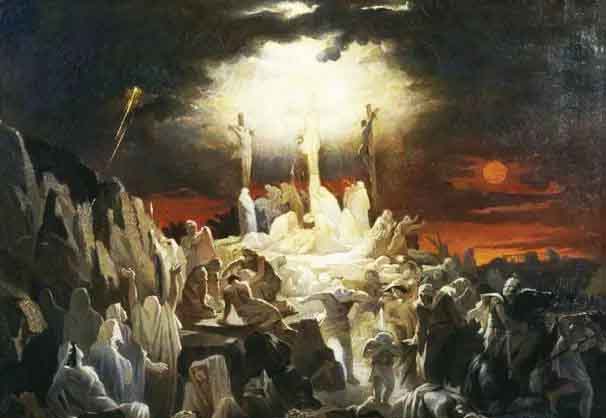
“The Crucifixion of Christ” Golynsky V.A.
At the same time and in the same place, two criminals were crucified. When Jesus was taken down from the cross, he was dead, and one of his followers, Joseph, asked for a body in order to carry out the burial. He wrapped the body of Jesus in a piece of cloth and put it in a tomb prepared for himself, built in a cave. On Sunday (the Jews honored the Sabbath and did not do any work on that day), when they came to the cave, the women did not find Christ in it.
The cloth in which the body was wrapped (which later became one of the main and most revered Christian relics – the “shroud”) remained in the tomb cave. The imprint of the body of Christ remained on this fabric.
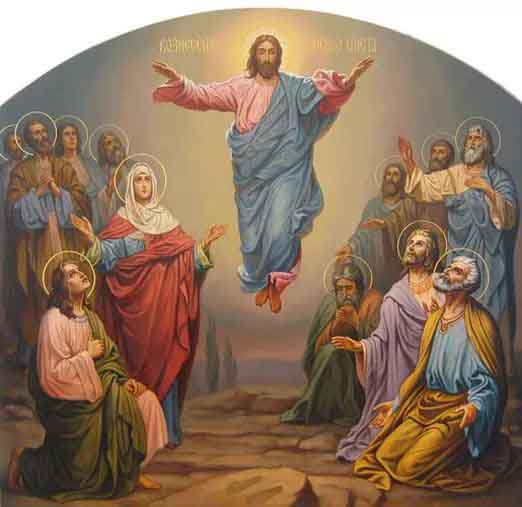
And it was announced by the angels about the resurrection of Christ. Christ appeared to his disciples for forty days. On the fortieth day after the resurrection, he ascended to heaven. This event is revered by the dear Christian holiday “The Ascension of Christ”.
This is how the earthly life of Jesus Christ, described by the evangelists, ended. We invariably remember these events every year, preparing for one of the most revered church holidays by Christians.


 English
  Russian
  German
  Polish