Approximate reading time: 26 minutes
Montenegro is a small country, it’s easy to travel all over it in one day. But this makes it no less interesting and diverse, even during a long vacation you will not be bored. Lovers of antiquity will find medieval monasteries and fortresses here, fans of outdoor activities will find mountain ranges and canyons with fast rivers. If you want to have a quiet time and relax, you can go fishing on Skadar Lake or go to one of the islands of the Bay of Kotor. Next, we will tell you about the main sights of Montenegro with photos, names and descriptions. Choose the most interesting things and plan your vacation so that you don’t miss anything.
 Reveal the content
The medieval city of Kotor
Many sights of Montenegro that are worth seeing are located in Kotor, its oldest city. It is not known exactly when it appeared, but by the beginning of the Roman conquest in the III century BC, there was already a settlement here. Kotor is located in a bay that cuts deep into the mainland, one of the most beautiful in Europe. The slopes of this bay look like natural fortifications. Over time, man-made walls and towers were added to them. The old town of Kotor is well preserved and is included in the UNESCO World Heritage List. In addition to the fortress walls, you can see many architectural sights here. These are churches and cathedrals, ancient mansions and princely palaces, and there are also interesting museums.
St. Tryphon’s Cathedral
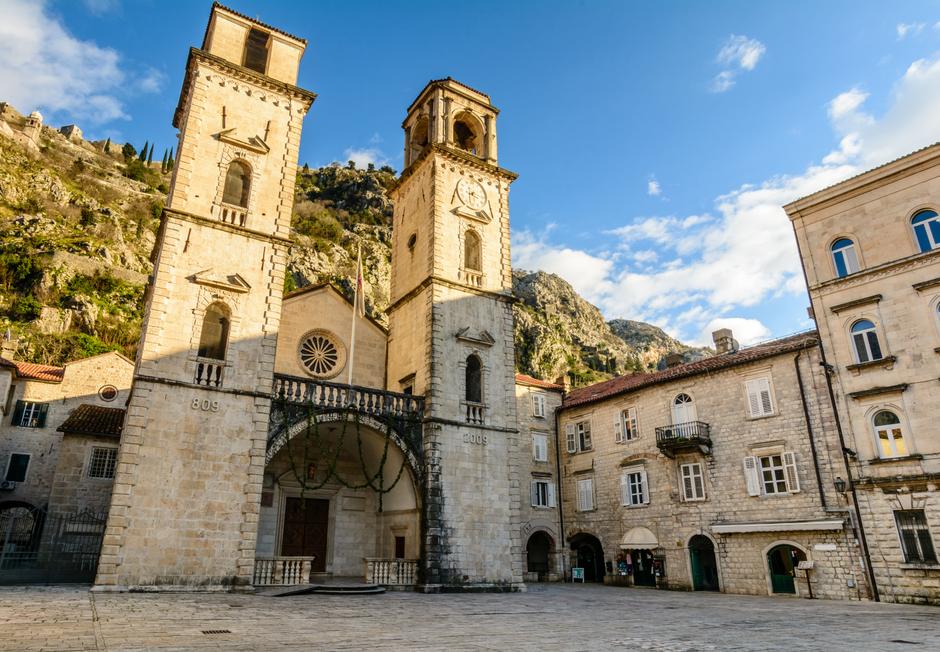
The ancient Catholic Cathedral of Kotor is one of the most famous sights of Montenegro. It is dedicated to Saint Tryphon, the patron saint of the city. This saint is also revered in the Orthodox Church. The stone cathedral was built in the middle of the XII century, and three centuries earlier a wooden church appeared on this site. But subsequently, the cathedral was damaged more than once by earthquakes and fighting, so it was restored many times. The last time the work carried out on the initiative of UNESCO was completed in 2003.
As a result of restorations carried out in different centuries, the cathedral acquired features of Gothic and Baroque style. But the original Romanesque style dominates with its massive walls and small windows. The main decoration of the cathedral is two large towers on the sides. They were designed to be symmetrical, but the means to complete one of them turned out to be insufficient, so it is slightly different.
Fragments of frescoes in the Byzantine style have been preserved inside the cathedral, once all the walls were painted with them. The pride of the cathedral is a three-tiered altar with bas-reliefs and marble columns. There is a museum of sacred art on the second floor.
St. Nicholas Church
There is also an Orthodox church in Kotor, this is the church of St. Nicholas. Although it is relatively new, built a little over a hundred years ago, the architect was inspired by medieval styles — Byzantine and Rash. The church looks strict and concise, its massive white walls are decorated with two turrets and arched windows. There are no murals inside, but a luxurious carved iconostasis with the revered icon of the Mother of God stands out against the background of the monochrome walls. Not so long ago, four more huge canvases by Sergei Prisekin appeared, who painted the Moscow Cathedral of Christ the Savior.
The Church of St. Nicholas is active, services are held here every day accompanied by a male choir. Thanks to the soft diffused light, the flickering of candles and the smell of incense, a peaceful atmosphere reigns here.
Pym’s Palace
The family nest of the Pym family is one of the most beautiful buildings in old Kotor. The palace was built in the XVII century, it is a monument of the Renaissance. The first floor is the oldest, with its massive stone arches showing the influence of Romanesque and Gothic styles. The second and third floors were added later and belong to the Baroque style, they look lighter and more elegant. A spectacular decoration of the building was a long balcony with a wrought-iron fence. It is supported by 12 stone pillars.
The Fortress of St. John
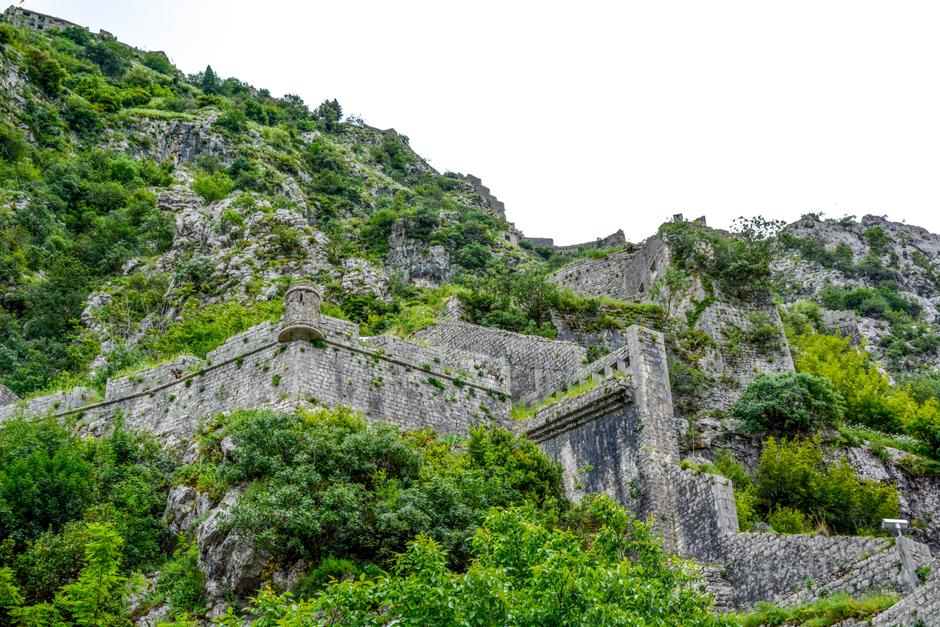
Although this fortress in old Kotor is among the top places in Montenegro, not everyone finds time for it. The fact is that you can only climb to the fortress on foot. This is a long and rather tedious journey. The whole tour takes at least three hours, but it is better to take half a day for it and no longer plan anything serious for that day. But the fortress of St. John is worth a visit. Along the way, during the ascent along the serpentine, amazing views will unfold in front of you. On the one hand, the Bay of Kotor with boats and boats is visible, on the other — the houses of the old town with red tiles.
It is believed that the first fortifications on this site appeared in the IV century under the Roman Emperor Justinian. Then, century after century, it was constantly rebuilt and strengthened. Its appearance, which is visible today, was formed during the period of Venetian rule in the first half of the XV century. But later construction continued until the 19th century. The long wall of the fortress is noticeable from afar, it is often depicted on tourist postcards and magnets.
The Cat Museum
In addition to architectural monuments, Kotor is famous for street cats. For centuries, they have come here from all over the world along with merchant ships. Funds are allocated for the care of animals, including part of the income of the Cat Museum. This is a charming place where there is a collection of postcards, prints, posters, coins, jewelry and other things dedicated to cats. The oldest exhibits are several centuries old. The museum is located in the heart of the old town. It is small, so it is easy to combine a visit with a tour of other attractions. At the museum, you can buy a couple of bags of food to treat street animals.
Gorazda Fortress
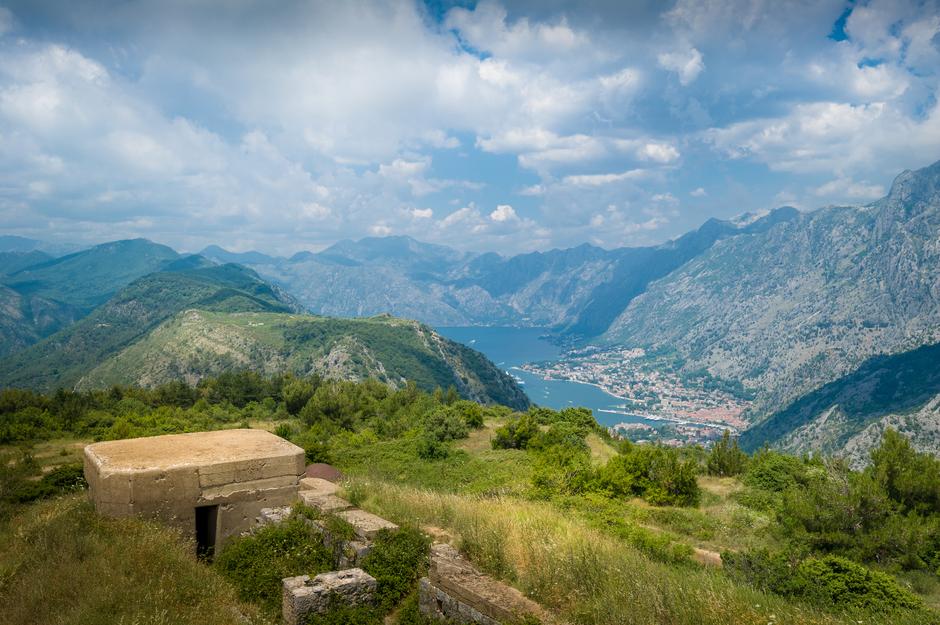
What should a tourist visit in Montenegro near Kotor? Gorazda Hill is located about 10 km from the city, and on it there is a three—tiered fortress of the same name with high walls and a moat. It was built in the second half of the XIX century, during the reign of the Austro-Hungarian Empire. This fortress played an important role in the First World War, but was later disarmed. It is now unguarded and accessible to the public.
The fortress walls are often built of blocks of different sizes, they are clearly visible. Another feature of the architecture is the absence of right angles. All buildings are arched, which gave them increased resistance to shelling. The dome has been preserved, from where cannons capable of hitting targets at a distance of up to 10 km were fired. You can go inside the fortress. Two floors are illuminated through windows, and there is graffiti on the bare walls in some places. The underground tier is devoid of lighting. If you want to see him, bring flashlights with you.
A panorama of the Bay of Kotor opens from the top of the hill. This view is considered one of the best in the surrounding area. Here you can take beautiful photos, which are used by the newlyweds. The view is especially picturesque at sunset. But you can only get to the fortress by a narrow road with sharp turns, and there is no lighting on it. Therefore, traveling at night requires great caution.
Lovcen National Park
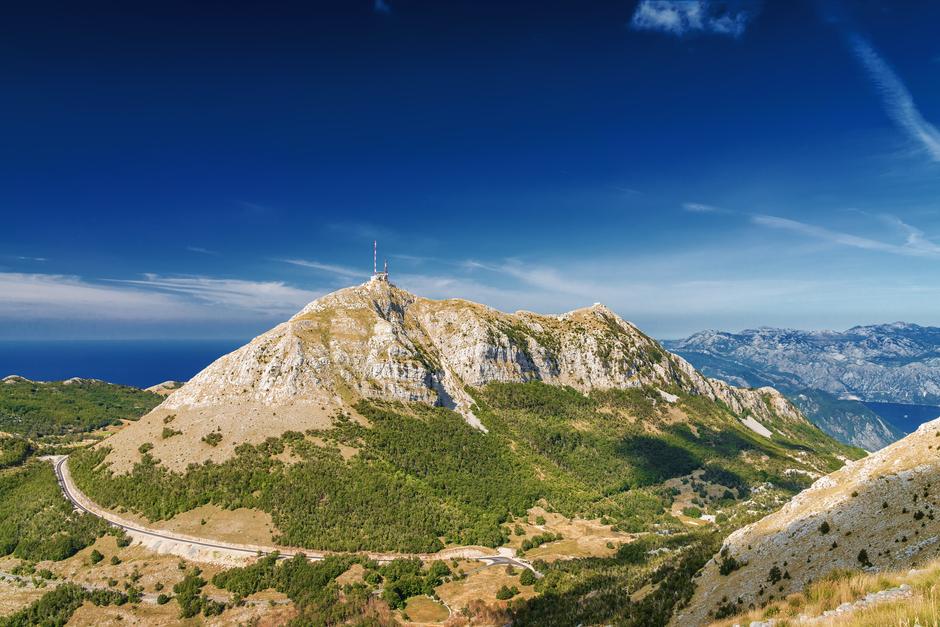
The rocky Lovcen Mountain with two peaks rises above the Bay of Kotor. The central and highest part of it has become a national park since the middle of the last century. Due to the combination of the sea and mountain climate, unique natural conditions have been created here, and the air is extremely clean. More than a thousand species of plants grow on the territory of the national park. There is a village of Negoshi, where you can taste homemade cheese and prshut — dried or smoked ham from a pork ham.
There are many attractions in the Lovcen National Park, but the most famous is the Negos Mausoleum. Peter II Petrovich Negosh, one of the most revered rulers of Montenegro, is buried here. He began his reign at the age of 18 and in the next two decades did much to liberate Montenegro from the Ottoman Empire. Negosh also helped unite the disparate mountain clans that inhabited the country and established contacts with the Russian Empire. He was a talented statesman and reformer, and besides that, he was also a poet. He collected folk songs and wrote his own, which also later became folk songs. Negos’ efforts to liberate himself from the Ottoman Empire bore fruit: a year after his death, a war broke out, as a result of which Montenegro gained independence.
Negosh wanted to be buried at the top of Mount Lovcen in a modest chapel built in advance. But in the First World War, this chapel was destroyed. It was rebuilt, but in World War II it was damaged again by Italian troops. When a mausoleum was built instead of a chapel in 1974, the Italians sent thousands of gold tiles as a gift. Now they decorate the dome of the building from the inside. Another notable decoration of the mausoleum is the figure of Negosh carved from black marble with an eagle spreading its wings behind his back.
There is a wide paved path from the Negosh Mausoleum to the neighboring peak of Lovcen Mountain. It is equipped with a circular observation deck, from where you can see a significant part of the whole of Montenegro. In addition to the Bay of Kotor, Skadar Lake, the Durmitor mountain range and even Albania and Croatia are visible in clear weather.
The mausoleum and the observation deck on Mount Lovcen are among the places that need to be visited in Montenegro. This is easy to do: in the summer of 2023, the cable car from Kotor to the mountain opened. It lifts everyone to a height of 1348 m above sea level. The distance of almost 4 km is covered in just 11 minutes. When going to the top, do not forget to take warm clothes. It’s always colder up there than in the city.
Kotor Serpentine
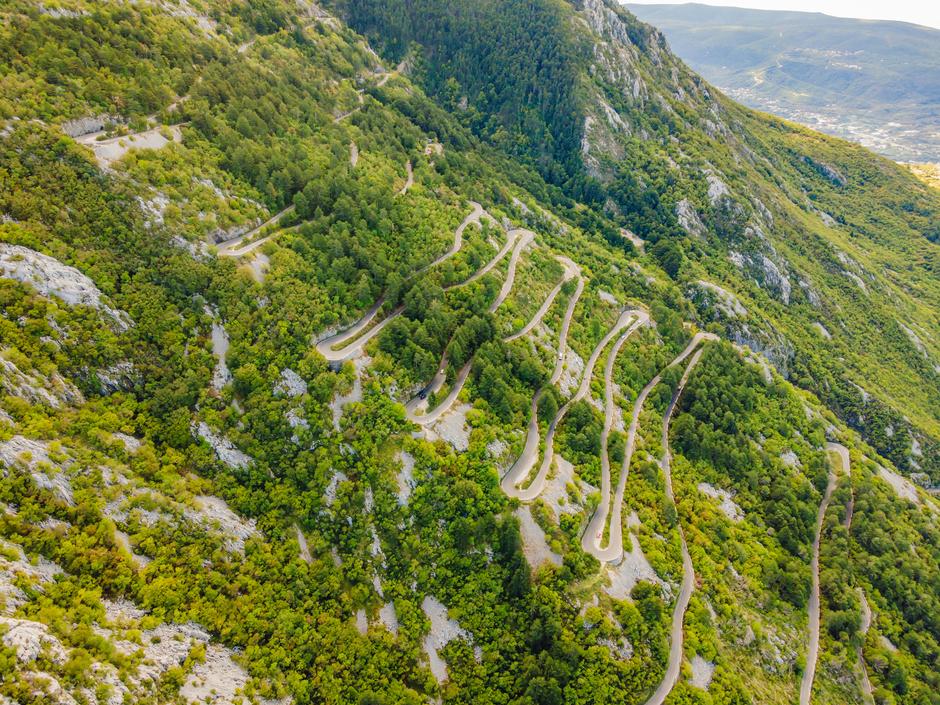
Before the construction of the cable car, the only way to Mount Lovcen was a road serpentine with 26 numbered loops. The world-famous road was built in the second half of the 19th century during the Austro-Hungarian Empire. The serpentine is carved into the rock, so it is quite narrow. But along the way there are observation decks and special pockets for traveling with oncoming traffic. The way up takes about an hour, and all this time you can admire the breathtaking views of the Adriatic Sea and the forested mountain slopes.
It is better to drive along the Kotor serpentine in the morning so that tourist buses follow in the same direction. At other times, you may have to turn back from time to time and skip passenger transport.
Cetinje Monastery
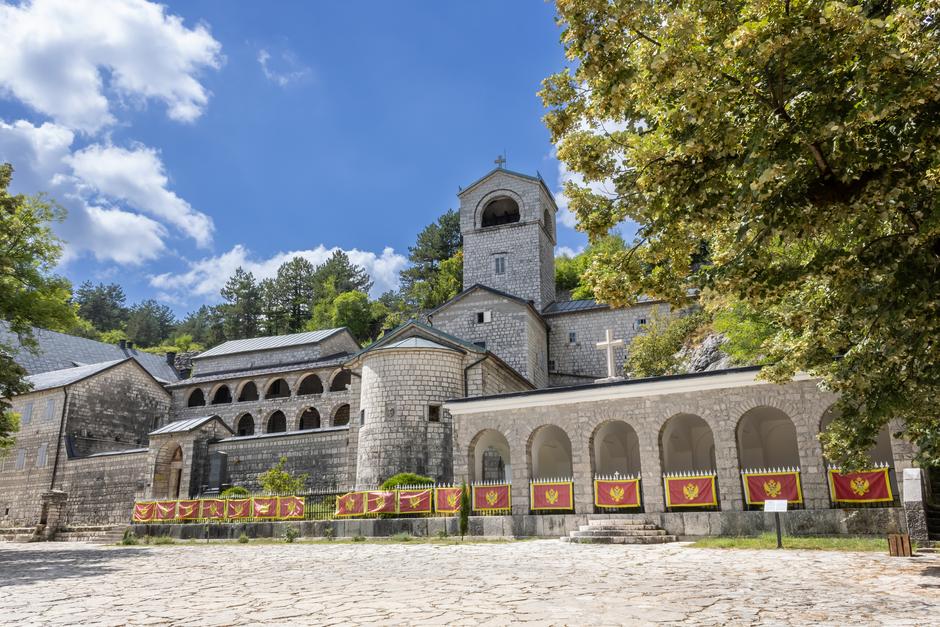
At the foot of the Lovcen mountain range is the town of Cetinje, which shares the status of the capital with Podgorica. One of the main attractions of Montenegro is located in this city. This is the Cetinje Monastery, an important Orthodox center. The monastery houses relics of the Maltese Order, including part of the relics of St. John the Baptist and a particle of the True Cross. These relics were kept in the Russian Empire in the past, but before the revolution they were taken to the Balkans. They attract pilgrims from all over the world.
The history of the Cetinje Monastery has crossed the 500-year mark. It was built in 1484 and for some time served as the residence of the rulers. There was a school at the monastery, books were printed. In 1493, the first book with Cyrillic script was printed here, it can be seen in the monastery museum.
Since it was very restless in these places during the construction of the monastery, it was made not so much beautiful as fortified. The walls were thick, the windows looked more like loopholes, and the buildings were surrounded by a moat. All this attracted the military, and in the XVII century, together with the monks, a Venetian garrison settled in the monastery. The Venetian Empire competed with the Ottoman Empire in the region, and soon a superior Turkish army approached the monastery. The Venetians did not get involved in an unequal confrontation and surrendered the monastery, but laid explosives before leaving. When the Turks began to settle in, an explosion occurred. The monastery was completely destroyed, and many of the invaders were killed.
In 1704, the monastery was rebuilt near the ruins, from where the stones were taken for construction. Later, the Turks ravaged this place more than once, but it was always restored. The last time the Cetinje Monastery was seriously damaged by the Austrians in the First World War, but in 1927 it resumed work. Now it is a large complex in the Byzantine-Montenegrin style, its white stone walls look beautiful against the dark greenery of the mountains.
Lipskaya Cave
There is another place near Cetinje that is included in the top attractions of Montenegro. This cave is the largest in the country and the only one equipped for organized visits. The entrance is 5 km from the city, there is a car park nearby. From there, visitors transfer to a train that takes them to the entrance to the cave.
Illuminated routes through the halls and galleries are laid out inside. There are many stalactites and stalagmites in the cave. Some of them have received characteristic names for their bizarre shape: popcorn, curtain, spaghetti. The standard tour lasts about an hour, including the road from the parking lot. If you want to explore the cave more thoroughly, you can book a 2.5-hour tour in advance. It involves diving to a great depth with a rope descent.
Don’t forget to dress warmly when you go to the Lipskaya Cave. The temperature inside is about 10 °C in any season.
Ostrog Monastery
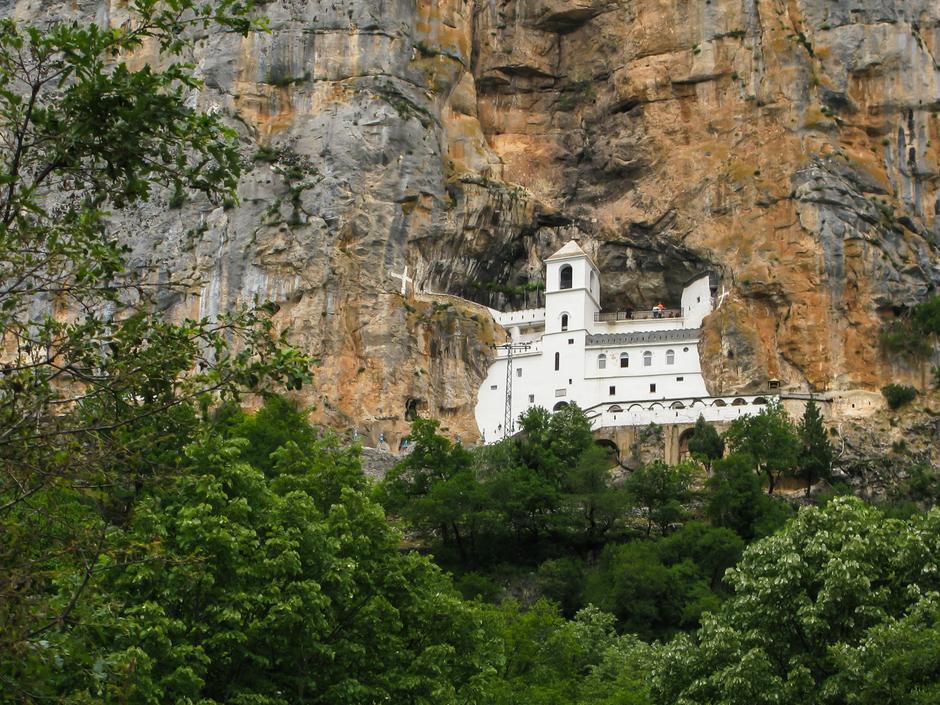
Another popular place in Montenegro for Orthodox Christians is Ostrog Monastery, built in the rocks at an altitude of about 900 m above the valley of the Zeta River. It attracts up to 100,000 pilgrims and tourists every year. The monastery was built in 1665 in two large caves and looks like it grows right out of the rock.
The complex consists of two parts — the upper and lower monasteries. The distance between them is about 2 km. In the lower monastery you can see beautiful frescoes and get cool water from the spring. The upper monastery can be reached by a steep hiking trail in about 20 minutes or by car. The upper monastery consists of two cave chapels. The ark with the relics of St. Basil of Ostrog is kept in the small Vvedenskaya Church. It is believed that they have healing power, and wishes made in this place are always fulfilled. Therefore, the flow of pilgrims to the relics does not dry up, and many leave notes with wishes. The Holy Cross Church has preserved paintings of the XVII century, made directly on the uneven cave walls.
You don’t have to be a believer to come to the Prison. The white temples protruding from the reddish rock strata look like a miracle that everyone should see. The monastery is famous for its picturesque views of the surrounding mountains and valleys. This is a popular place not only for pilgrimage, but also for tourist holidays.
Durmitor National Park
The Durmitor mountain range is famous for its picturesque lakes, green meadows and slopes covered with dark forest. This is one of the most beautiful places in Montenegro. The national park formed here was taken under UNESCO protection in 1980.
The National Park occupies an extensive plateau with a height difference from 500 m above sea level in the canyon of the Tara River to 2,525 m at the highest point. There are 18 glacial lakes scattered across the plateau. The largest and most famous among them is Crno-Jezero, that is, the Black Lake. It consists of two reservoirs connected most of the year by a narrow strait. In summer, the water level decreases, and they turn into separate lakes. The maximum depth of the Black Lake is almost 50 m. There is a 3.6 km long hiking trail around it, and routes to other attractions depart from it.
Another center of attraction in the national park is the Tara River Canyon, the largest in Europe and the fourth largest in the world. It stretches for 80 km, its maximum depth is 1,300 m. Rafting on Tara attracts many outdoor enthusiasts. In Durmitor there are conditions for mountaineering and hiking, in winter you can ski and snowboard.
Djurdjevic Bridge
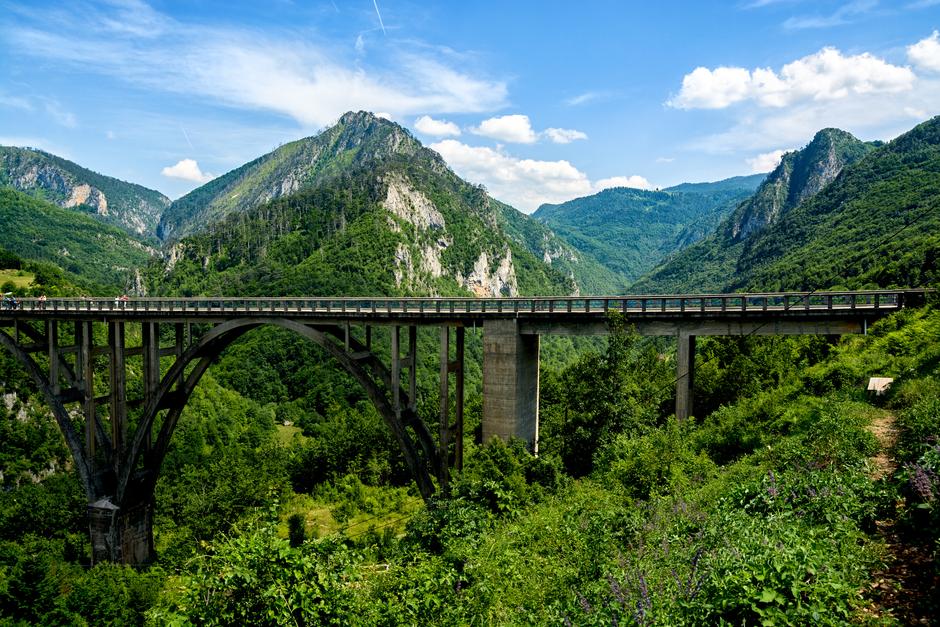
What else is interesting to visit in Montenegro? The Tara River is famous not only for its deep canyon, but also for its large 5-arch bridge. It stretches for 365 m and has become one of the symbols of the country. The bridge offers breathtaking views, because the roadway passes 172 m above the river. It is not only a highway, but also a famous landmark with a tourist infrastructure. There are zip lines, a campsite with parking, and a store. Many people start rafting from this point.
Many famous names are associated with the Djurdjevic Bridge. The chief engineer was Isaac Russo, and the bridge itself was designed by Miyat Troyanovich. Their work was completed before the Second World War. During the war years, another engineer, Lazar Yanukovych, accomplished the feat. He blew up the bridge and slowed down the advance of the enemy forces, but the explosion was such that it was easy to restore the bridge later. For this, the occupation authorities executed the engineer. Now there is a monument to him at the entrance. But, ironically, the bridge was named even during construction after a simple farmer whose house happened to be nearby.
It is usually cool and windy on the bridge, and the feeling of the abyss under your feet causes a surge of adrenaline. If you visit here, you will bring with you vivid memories and impressive photos.
Moracha River Valley
If you like picturesque river canyons, then there is another beautiful place in Montenegro that is worth a visit. The source of the Moracha River is located at an altitude of 1600 m above sea level. It is stormy in the upper reaches, and as it approaches the mouth in Lake Shkoder, the current becomes calmer. There are sections for rafting of different difficulty levels throughout 99 km.
The segment between the cities of Podgorica and Kolasin is especially popular, where the turquoise Moraca flows through a deep canyon surrounded by emerald mountains. A highway is laid in the rocks along the riverbed. This is a suitable route for hiking and car excursions. The area is especially beautiful in spring and early summer, when wild irises and other flowers bloom. And also in autumn, when the trees turn golden.
There is an Orthodox monastery of the same name in the Morachi Valley, another famous landmark. The monastery was founded in the middle of the XIII century. Later it was destroyed by the Turks, but in the XVI century it was restored. The Romanesque-style structure looks quite simple from the outside, but medieval icons and frescoes have been preserved inside. There is a cafe and a campsite for tourists nearby.
Lake Shkoder
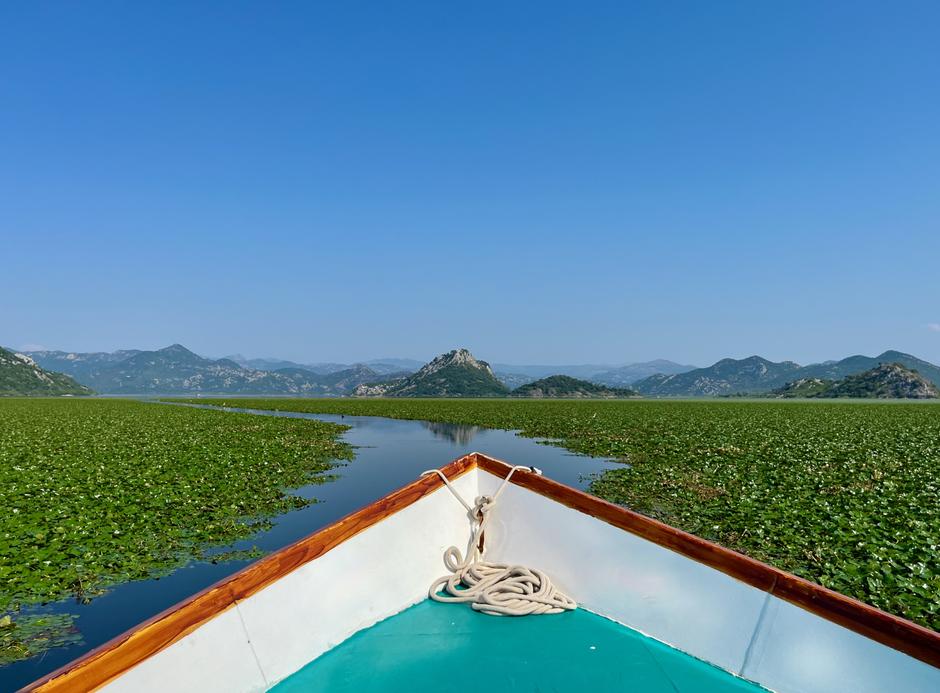
The Moraca River feeds the largest lake in the Balkans, Shkoder, also known as Skadar Lake. It floods heavily in high water, so that its area varies significantly depending on the time of year. On average, it is 400-500 km2. This huge lake cannot but be included in the list of places that nature lovers must visit in Montenegro.
Skadar Lake is famous for its rich fauna and flora, therefore, since 1983, the Montenegrin part of it has become a national park. Fishing enthusiasts can have a great time here, because more than 30 species of fish live in the lake. If you don’t want to fish yourself, try carp, eel or trout dishes at local cafes and restaurants. The lake shores are inhabited by countless flocks of birds. More than 200 species of birds can be found here, including pelicans, rare for Europe.
Due to the marshy shores, Lake Shkoder is not very convenient for trips and hikes along the coast. The best way to get to know its beauty is to go on a guided tour of the water. All conditions have been created for this. You can choose a simple boat, speedboat, kayak or yacht. The tour may include a visit to the islands, some of them have churches, monasteries, and ruined fortresses. There are also many attractions in the coastal villages, there are conditions for a beach holiday.
Prokletiye National Park
The Prokletije mountain range, which is also called the Albanian Alps, begins from the northwestern part of Skadar Lake. Besides Montenegro, it also occupies parts of Serbia and Albania. The name “Prokletiye” translates rather ominously: The Cursed Mountains. It is not given by chance. Although the local mountains are not very high, they are difficult to pass due to the steep terrain and karst formations. Unexplored corners are still preserved here. The highest point of Montenegro is located in this massif — Mount Zla-Kolata with a height of 2,534 m.
Prokletije is one of the most interesting places in Montenegro. There are glaciers here that remain below the typical snow line for the region due to the humid climate. Rivers wind between the ridges in deep canyons. On the mountain slopes there is a forest of oaks, chestnuts, beeches, pines, firs and firs. Deciduous shrubs grow higher, and fields of ferns grow even higher. At the alpine level, there are valleys with glacial lakes. The largest of them is Plavskoye Lake, it is located in the Montenegrin part of the massif.
The flora of Prokletia is one of the richest in the Balkans. More than a thousand plant species have been found here, including dozens of endemic ones. There are also many animals, including large ones: bears, wolves, lynxes, wild boars, red deer, chamois, fallow deer. 140 species of butterflies alone have been found. To protect this diversity, all three countries have made their section of the ridge a national park. Prokletiye attracts travelers all year round. Here you can climb peaks, engage in canyoning and winter sports. There are many natural and historical attractions in the national park, and hiking trails are laid out to them.
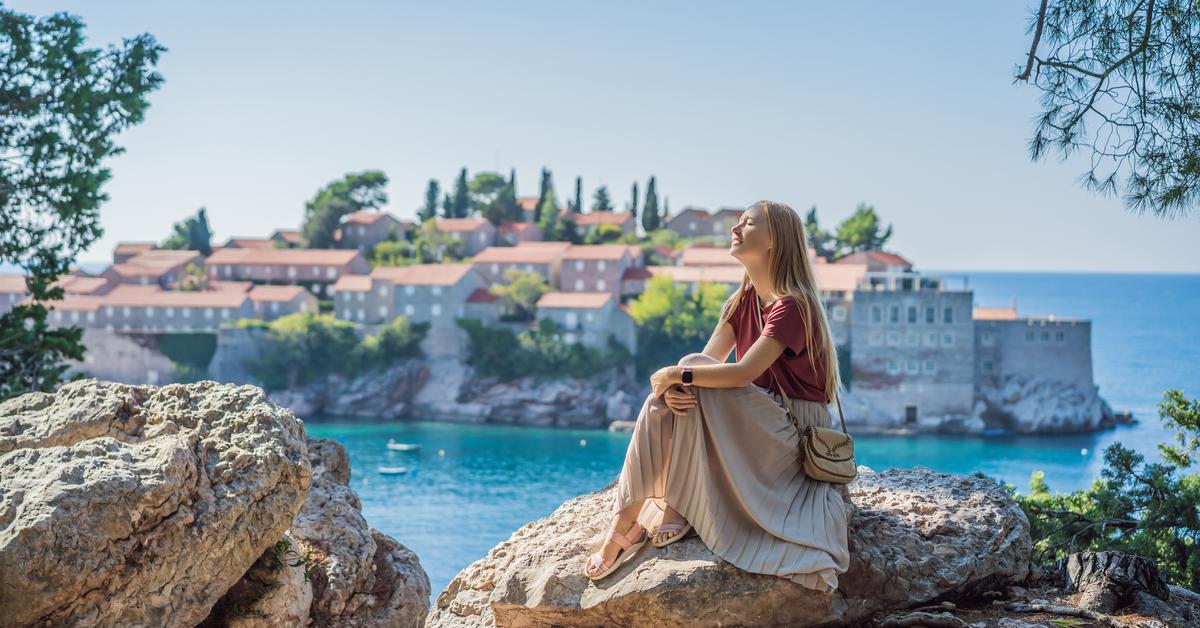
https://www.istockphoto.com/ru/фото/woman-tourist-on-background-of-beautiful-view-of-the-island-of-st-stephen-sveti-gm2164699385-584956871
Islands of Montenegro
Montenegro is a small country, and its islands are small too. But they are very beautiful, they have historical and natural attractions. Not to mention how good the island beaches are. We tell you about the best places on the islands of Montenegro.
- St. Nicholas Island. A kilometer from Budva, a high rock overgrown with forest rises from the sea water. This is a good place to go on a day trip. There is a church, three main beaches and several more cozy coves that can be reached on foot or by swimming.
- Sveti Stefan. There are many luxury hotels and villas on the famous resort island a few kilometers from Budva. They mostly come here for a beach holiday. But there is also something to see here: three temples, an art gallery, a beautiful park.
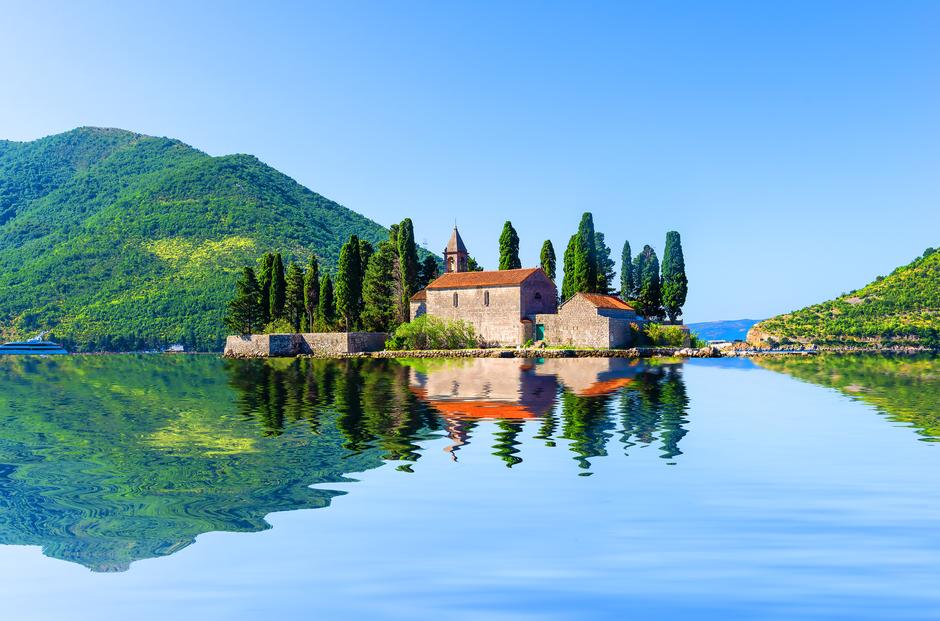
- St. George’s Island. The small island is completely occupied by the Benedictine abbey. A red tiled roof, a white bell tower, two dozen coniferous trees against a background of blue water — this is a picture that begs to be photographed. Since the island is very small and used by the clergy, it is usually viewed from the water.
- Mamula Island. The round island with a diameter of about 200 m is famous for its large fortress, built in the middle of the XIX century by an Austrian general. The monumental structure is well preserved. The coast of the island is suitable for diving. Perhaps a modern resort will appear here soon.
- Flower Island. An island measuring 200 by 300 m is located two kilometers from Tivat. Its name speaks for itself: it is famous for its bright flowers, palm trees and lush greenery. There is also a monastery here, which once occupied the entire island. It was destroyed, and now only a small part of it has been restored.
Many of the best sights of Montenegro can be viewed only as part of an excursion, and it is dangerous to remain unaccompanied in the mountains and on stormy rivers. The most convenient way to get acquainted with the natural and architectural beauty of the country is an experienced guide who will show you all the most interesting things and take care of organizational issues. You can find such a person at the Guides Club. We have many offers for any season. Choose a suitable tour and book it in advance, because places can run out quickly.


 English
  Russian
  German
  Polish