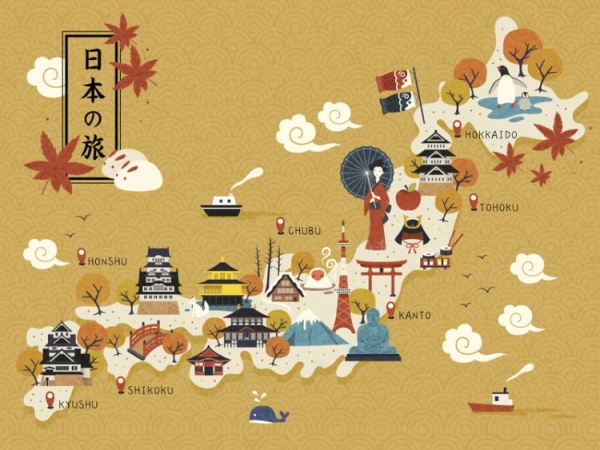
The culture and traditions of Japan attract with their calm beauty and poise. There is a deep meaning in every detail of architectural monuments and amazing buildings. The sights of Japan are fascinating! Millions of tourists come to this amazing country every year to contemplate the wonderful scenery and enjoy the local attractions. Like the delicate cherry blossom, the curious corners of nature, architecture and cultural values of the East are revealed to travelers. The subtlety, grace and elegance of lines and shapes is Japan. If you don’t know what to see in Japan, then be sure to read this review of the most interesting places in the land of the rising sun.
What to see in Japan first of all
For a European, any Japanese city is an attraction in itself, but in all its diversity there are those objects that every traveler should see. Practice shows that guides in Japan are indispensable, because without them it will not be possible to understand complex local traditions and learn ancient secrets hidden by advanced technologies.
1. Fushimi-inari Temple (Kyoto)
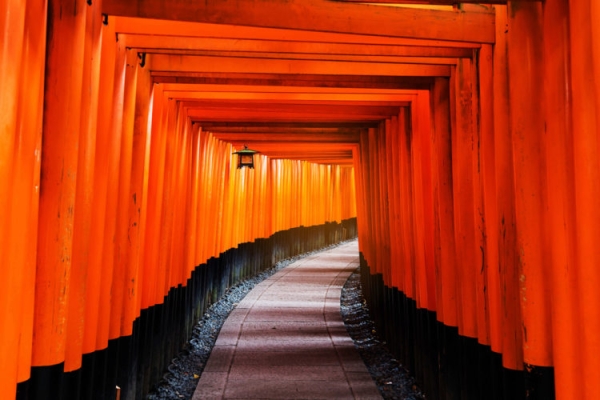
Scarlet Thorias
One of the historical symbols of Japan is considered to be the Fushimi-Inari Temple or the Sanctuary of a thousand scarlet gates, dedicated to the goddess of rice fertility. Grandiose tunnels with portals designed for the gods were created according to the belief of Shintoism. The Japanese believe that visiting the Fushimi-Inari Temple brings success and prosperity. Don’t doubt what to see in Japan. The features of the sacred complex in Kyoto Prefecture will leave an indelible impression:
- The central gate of the sanctuary is decorated with two foxes. They are the most revered animals of Japanese folklore and mythology. When visiting the Temple, you need to follow a clear ritual, the first condition of which is a mandatory donation. It is left in the offer box for coins. The sacred complex consists of five main prayer halls connected by tunnels of torii gates. They are donations from people to the Temple.
It is better to visit Fushimi-Inari at night to enjoy the mysterious and mystical atmosphere of the thousand scarlet gates. The pilgrimage through the long tunnel lasts a couple of hours, then the travelers enter the main sanctuary. Along the way, you can see many statues of foxes, small chapels and graves. Halfway there is an observation deck with a wonderful view of the city of Kyoto.
Official website: www. inari.jp/en/
Japan | Hotels at competitive prices
Booking.com
2. The Heavenly Tree (Tokyo)
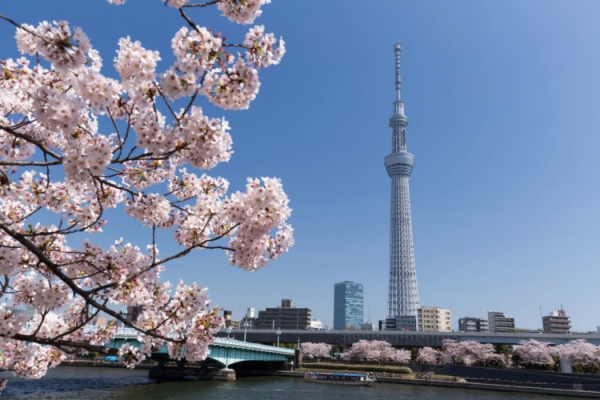
The beauty of spring Tokyo
The Tokyo Sky Tree is the second tallest TV tower in the world. This elegant architectural structure made of glass, concrete and metal soared up, thanks to the efforts of experienced designers and engineers. The height of the structure is 634 meters. Half a million people worked on this project. The grandiose Tokyo sky tree TV tower is admirable:
- Guides in Tokyo will definitely arrange a visit to the Tokyo Sky Tree, which is amazing for its height. Tourists will be able to contemplate the capital of Japan, which is spread out at the foot of a huge TV tower. There are no open areas and balconies here, so panoramic shots can only be taken through glass. It is noteworthy that the roof of the TV tower is located at an altitude of 470 meters, and the rest of the footage is the antenna. The first observation deck is located at a 350-meter height and accommodates up to 2,000 people, while the second spirals around the spire, receiving up to 900 visitors.
A mind-blowing sight opens from the grandiose height of the Tokyo Sky Tree. Excursions to Tokyo necessarily include a visit to the capital’s TV tower, which is one of the three tallest buildings in the world.
Official website: http://www.tokyo-skytree.jp
3. Garbage Island (Tokyo)

Rainbow Bridge and a smaller Statue of Liberty on Odaiba Island
The futuristic city of the future is located on Odaiba Island in Tokyo Harbor. It is a paradise for pedestrians, a holiday city glowing with thousands of lights. Why did the island get the name Garbage? In 1979, it was merged with a garbage dump, which did not prevent the original place from developing at a rapid pace. A Rainbow Bridge connects Garbage Island with Tokyo. You can get to the island by monorail, which winds in an intricate loop over Tokyo Harbor, as well as by river trams or on a special ship resembling a space shuttle. The impressions from the tour are simply unreal! In this city of the future, the headquarters of the largest corporations are located.
The attention of travelers is attracted by the titanium ball “Fuji-TV”, the Aqua City shopping center, the Tokyo Joypolis attractions and the hundred-meter Ferris wheel. Garbage Island has a lot to see in Japan. This is a robot skyscraper, a copy of the Statue of Liberty, exhibits of the Toyota automobile brand, a museum ship. But the island is especially beautiful at night in the light of bright lights. A wonderful view of the Rainbow Bridge at night opens from the Telecom Center site.
4. Asakusa District (Tokyo)
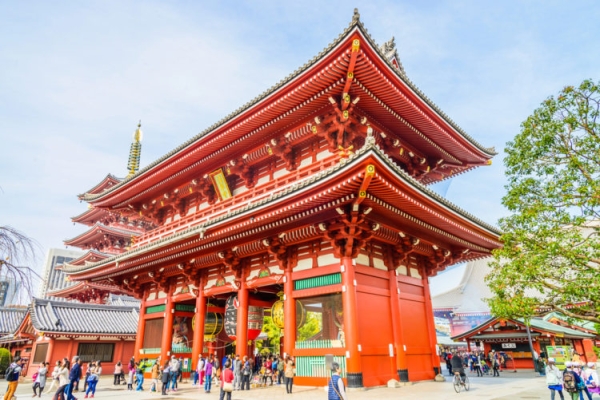
Sensoji Buddhist Temple
The sights of Japan are unique and unrepeatable. These include the Asakusa district in the central part of Tokyo with the atmosphere of the old city. It is here that the Japanese flavor dominates the urbanization of a huge metropolis. Interesting places and architectural monuments are located within walking distance, but you can use the services of a rickshaw.
What to see in Japan in the Asakusa area:
- Sensoji Temple Complex. Asakusa Buddhist Temple. Nakamise-dori souvenir street.
Japanese traditions are revered in the Asakusa area, there is absolutely no transport on the streets, but there are many cozy restaurants and cafes with Japanese cuisine, there are souvenir shops and shops where you can buy original jewelry, sweets, magical amulets and fragrant incense.
The Asakusa Kannon Temple attracts the largest number of tourists. A popular national festival, the Sanja Matsuri festival, is held on the territory of the sanctuary in May. There are small chapels on the approaches to the temple, and an incense burner is placed in front of the entrance to the main hall. It is the Asakusa district that reflects the originality of Japanese culture and traditions.
5. Tsukiji Fish Market (Tokyo)

Dishes of national Japanese cuisine
Tourists have a question “What to do at the fish market?”. Indeed, fish markets are rarely considered attractions, but are perceived as retail outlets, but not the Tsukiji Market, located in the heart of Tokyo. It has gained huge popularity among tourists who know what to visit in Japan. Up to two thousand tons of fresh fish and seafood are processed here every day.
At three o’clock in the morning, the first workers appear in the Tsukiji domestic market, and throughout the morning there is brisk trade and profitable deals are concluded. Most of the fish ends up in local restaurants, where delicious dishes are prepared from it. The main “attraction” in the market is considered to be tuna, or rather, a tuna auction. What does it mean:
- Sellers carefully select the best fish products. The selected carcasses are numbered and put up for sale. Carcasses have their tails cut off and a longitudinal incision is made. Buyers carefully study the fish flesh. Bidding starts on a signal, and the fish is sent to customers.
When the Tokyo offices are just opening, the Tsukiji Market is already finishing its work. In local restaurants, you can taste delicious sushi prepared strictly according to a traditional recipe.
Official website: https://www.tsukiji-market.or.jp
See the beautiful places of Japan in this wonderful video!
6. Sagano Bamboo Forest (Kyoto)
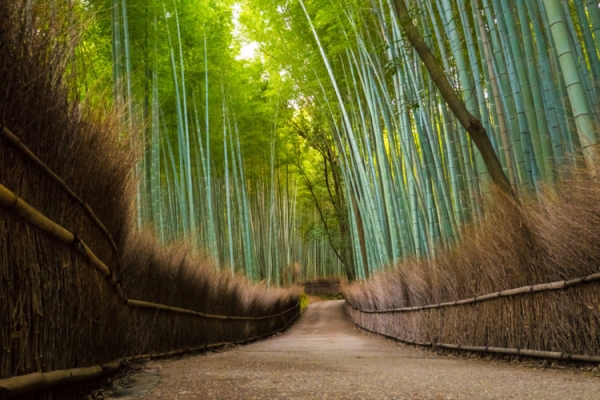
A path in a bamboo forest
A picturesque bamboo grove of thousands of tall evergreen trees is the hallmark of Kyoto Prefecture. It is amazing to see such a green miracle among the urban infrastructure. The smooth tree trunks of the Sagano Forest cover an area of 16 square kilometers. The protected area of the Arashiyama tourist area is under UNESCO protection. Bamboo forest is something that you should definitely visit in Japan. Features of the Sagano Forest:
- To explore the forest completely, a bicycle is rented at the entrance to the park. Bamboo stalks make musical sounds when the wind blows. Hundreds of alleys and footpaths cross the bamboo grove. The largest bamboo stalks in the Sagano Forest reach 40 m in height. There is a Sojen pond in the forest, on the shore of which there are temple buildings.
In Japan, it is believed that bamboo protects against evil spirits, so many temples are surrounded by tree stems. In the Sagano area, baskets, boxes and some dishes are woven from durable bamboo. The natural attractions of Japan are striking in their beauty, and the bamboo grove occupies one of the first places on this list. All tourists who are in search of harmony and peace of mind should visit the Sagano Forest in Arashiyama Park. This landmark of Kyoto can be safely included in the list of the most beautiful places on Earth.
7. Snow monkeys in hot springs (Nagano)
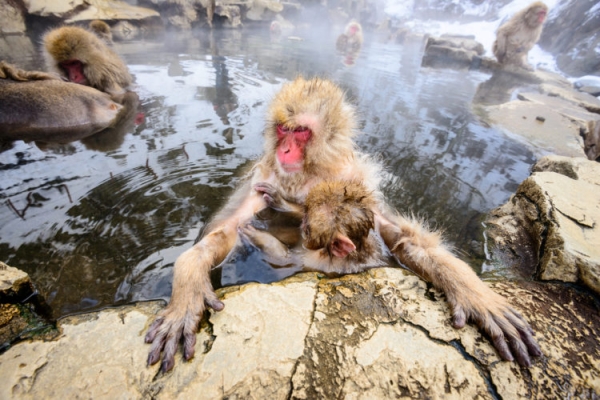
Monkeys in a hot thermal spring
In the valley of the Yokoyu River, at an altitude of 850 meters above sea level, there is a unique Jigokudani snow monkey Park, famous among travelers. Japanese macaques exhibit original behavior. The area is covered with snow for the third part of the year, but due to the presence of hot springs, snow monkeys can live in Nagano. They bask in pools like in hot tubs.
The official opening of Jigokudani Park took place in 1964. Very soon, this unique area gained worldwide fame and popularity. What to see in Japan but a bizarre natural area inhabited by intelligent monkeys? Tourists have the opportunity to take beautiful pictures of macaques and observe their behavior. Monkeys can safely withstand air temperatures up to -15 °C. Since the species of northern macaques is on the verge of extinction, the animals have been taken under protection by the relevant organizations.
In summer and spring, snow monkeys travel through the forest, jumping from tree to tree, and in the cold season they bask in the waters of thermal springs. Whole families of Japanese macaques are splashing in warm baths, getting real pleasure. Interestingly, monkeys with dry hair bring food to their relatives directly into the pools.
Since the springs of the park do not have fences, visitors to the protected area can freely watch the macaques. Monkeys can be filmed and photographed, but you need to do it carefully so as not to scare them.
Official website: https://en.jigokudani-yaenkoen.co.jp
8. Golden Pavilion (Kyoto)
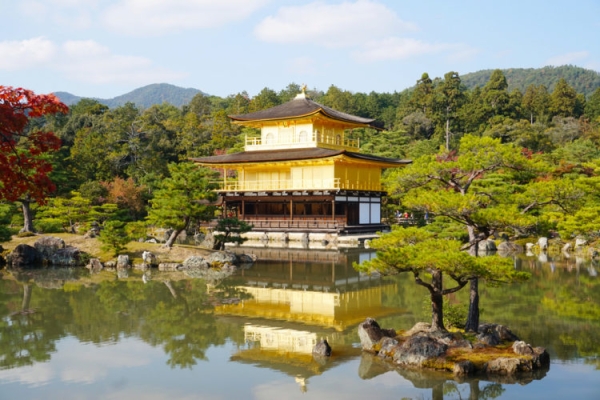
Golden pavilion on the shore of the “Mirror Lake”
The Golden Pavilion Kinkakuji is considered to be the pearl of the architectural collection of Japan. The palace, covered with gold, is striking in its beauty and luxury. Other attractions in Japan cannot be compared with it. The beautiful palace was built in 1397. Its walls sparkle in the sun with an incomprehensible beauty. Kinkakuji is part of the Rokuonji Temple complex and is considered the best example of national culture. What is remarkable about the Golden Pavilion?
The architecture of the palace harmoniously combines various styles: the aristocracy of the Heian era, samurai simplicity and asceticism of the monastic cell. The disparate architectural trends were linked together by the overall design of the palace with the thinnest sheets of gold leaf.
The top of the Golden Pavilion is crowned by a phoenix figurine made of pure gold. It symbolizes rebirth. The three-tiered palace impresses with the symmetry of curved lines and fully corresponds to the architectural style of Karae.
What is especially striking is how harmoniously the Golden Pavilion combines with the surrounding nature. The lower supports look spectacular against the background of the trunks of neighboring trees, and the building itself is located on the shore of a man-made lake. The weightless and lightweight Golden Palace is included in the architectural sights of Japan.
9. Mount Fuji (Honshu Island)
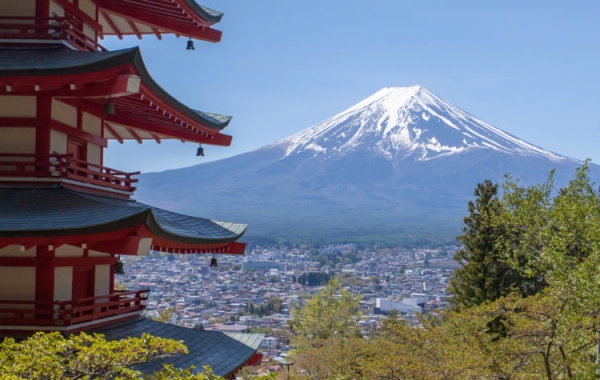
Fuji-san is the sacred mountain of the Japanese
The symbol of the land of the rising sun is the sacred Mount Fuji. What to visit in Japan outside the capital? It is definitely worth seeing the young Fujiyama volcano up close. The Japanese believe that the mountain was created by the gods out of chaos. It is the most recognizable landmark in the country. The majestic mountain peak rises to the heavens at a height of 3776 meters. Many pilgrims climb Mount Fuji. There are stations along the way where tourists can relax. There is a lot of entertainment in the vicinity of the mountain. Mount Fujiyama is surrounded by five lakes in a bizarre arc:
- Yamanaka-ko is the largest lake at the foot. Kawaguchi-ko is famous for walking along its shore. Sai-ko – there is a wonderful trout fishing here. Shoji-ko is a small beautiful lake. Motosu-ko is the most transparent and deepest lake.
In clear waters, in calm and clear weather, the majestic lonely peak of Fuji is reflected, as if in a mirror. There is a gloomy Jukai forest between the lakes, which is easy to enter, but difficult to get out, because you can get lost. Nearby there is a pleasant place for a picnic – the 26-meter-high Shiraito Waterfall. The surroundings of Mount Fuji are a great place to get to know the natural attractions of Japan.
Official website: https://www.fujisan-climb.jp
10. Himeji (Honshu Island)
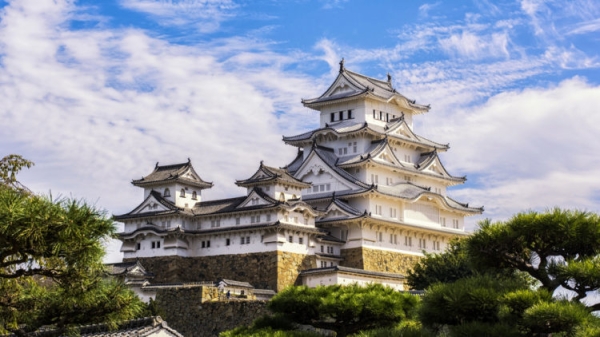
The Castle of the White Heron
The oldest castle in Japan is Himeji, or the Castle of the White Heron. The complex includes 83 structures, and almost all the buildings are wooden. Himeji is located in Hyogo Prefecture at the foot of Mount Hime. The picturesque area is complemented by a beautiful white castle – a masterpiece of Japanese architecture. The age of the castle dates back to the fourteenth century. It is now included in the UNESCO World Heritage List. After crossing a wooden bridge, tourists enter the territory of the castle complex, based on a high stone foundation.
It is noteworthy that Himeji was built as a defensive structure, but the architectural features of the castle did not lose at all from this. The graceful flowing lines of the white walls of Heron Castle perfectly harmonize with the beauty of the surrounding nature. The complex has several defensive towers, a garden with beautiful trees and a deep protective moat.
On the roof, lined with tiles of natural tiles, the coats of arms of the families who owned the White Heron Castle in various eras are embossed. The central tower is located at the highest point in the heart of the Castle. Intricate courtyard passages, gates and defensive posts lead to it. The castle enchants tourists with its beauty and elegant lines.
Official website: https://translate.city.himeji.lg.jp
Sights of Japan: what else to visit while in Japan
The great convenience of recreation here is regular transport links between the islands, that is, you can, living in one part of the country, go on excursions in Japan to any city. Information about attractions in different prefectures will help you make a list of priority places to visit.
11. Nara City (Honshu Island, Nara Prefecture)
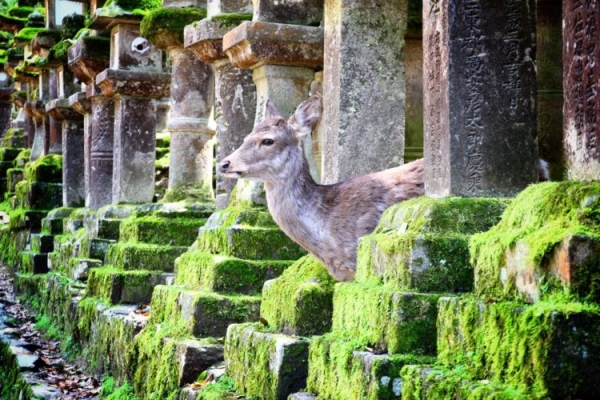
Deer in Nara Park
The sights of Japan are not only temples and castles, but also entire cities. One of them is Nara or the City of Deer, a storehouse of architectural monuments and masterpieces of culture and art.
About 1,600 deer roam freely through the streets of the beautiful city. It is said that the first emperor of Japan descended from heaven on a reindeer sled. In the 6th-7th centuries, the city of Nara was the first capital of the country. Japan’s Main Attractions in Deer City:
- Todai-ji Temple, Buddha statue, Isueyen Garden, Kofuku-ji Temple, Sarusawa-ike Pond, Kasuga Taisha Shrine, Ara-ike Pond, statues of heavenly generals.
Walking around the city of Nara is a pleasure. Hundreds of deer walk the streets at ease, they are loved and revered. On every corner you can buy deer food and treat meek animals. And on the Sarusawa-ike pond, you can see a lot of turtles. They crawl out onto the shore and bask in the sun. Art lovers will definitely enjoy a trip to Nara. The Todai-ji Temple features a giant statue of Buddha, and the structure itself is perhaps the oldest among the wooden temples.
Official website: https://www.visitnara.jp
12. Tosegu Temple (Nikko)
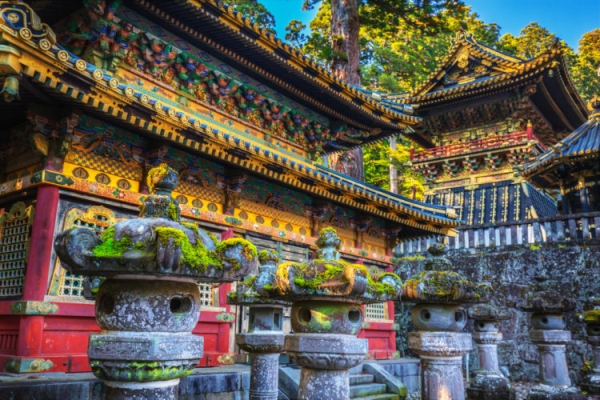
Carved decorations of the Shinto shrine of Tosegu
The Tosegu Shinto Shrine is the main architectural monument in Nikko. The shrine is dedicated to Shogun Tokugawa Ieyasu. This is the most striking figure in Japanese history, since under him the unification of Japan into a single state was actually completed. Tosegu Temple impresses with the beauty of lines and magnificent carvings, the authorship of which is attributed to the famous sculptor Hidari Jingoro. The sights of Japan would have lost a lot without this picturesque temple. Its main features are:
- Sculpture of the sleeping cat namuri-neko. Magnificent colored carvings decorating the temple. Figures of outlandish elephants with claws. The building of the sacred stable, which alone is not varnished. A symbolic image of monkeys, the patrons of horses.
The fine carvings made by a skilled craftsman to decorate the Tosegu Temple attract the attention of tourists from all over the world. The sanctuary is located 130 km from Tokyo. Often the Japanese themselves come to see the famous temple. In addition, the city of Nikko is a national natural park, which occupies a vast territory.
To get to the sanctuary of Tosegu, pilgrims must pass under a nine–meter granite gate, then under a bronze gate with a height of 6 m. After bathing in a sacred spring, guests can visit a beautiful temple. The legendary shrine is also the burial place of the Shogun. It is definitely worth visiting here.
Official website: https://www.toshogu.jp
13. Hiroshima Peace Park (Nakajima District, wiped off the face of the earth)
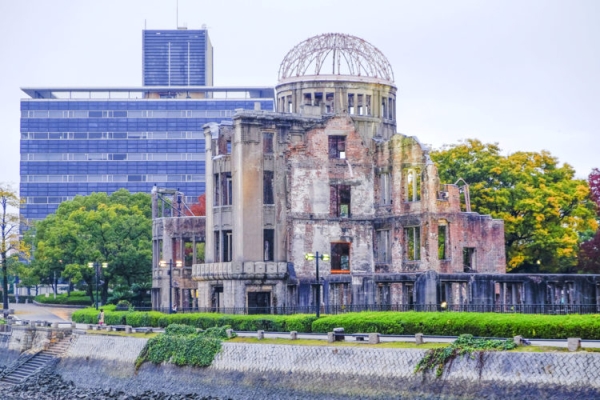
The Gambaku Dome after the nuclear bombardment
The land of the rising sun in the post–war period is the new attractions of Japan. The most famous among them is the Hiroshima Peace Park, dedicated to the memory of the victims of the atomic bomb. On the vast territory there is a memorial ensemble, which includes the Museum of Peace, monuments, a ritual bell and a cenotaph. Demonstrations are being held at the memorial site in memory of the Hiroshima tragedy. The cenotaph is a symbolic grave of the victims of a nuclear strike, whose names are inscribed on a memorial plaque.
In the middle of the XX century, the ensemble of the Peace Park complemented the pedestal of a Japanese girl Sadako Sasaki with a paper crane in her hand. This is a kind of cry of despair of the Japanese, who suffered from the impact of the atomic bomb. The girl died of radiation sickness ten years after the terrible tragedy. She dreamed of making a thousand cranes and making a wish, but did not have time…
The fountain of prayer on the territory of the Peace Park appeared a little later. It symbolizes the desire of people eager to live after an atomic explosion, and embodies the suffering of thousands of people who were not given water. And on the Flame of Peace monument there is an eternal flame lit back in 1964. The sad architectural monument is a tribute to all the Japanese who suffered from the explosion of the atomic bomb.
Official website: https://hpmmuseum.jp
14. Itsukushima Jinja Temple (Hiroshima Prefecture, Miyajima Island)
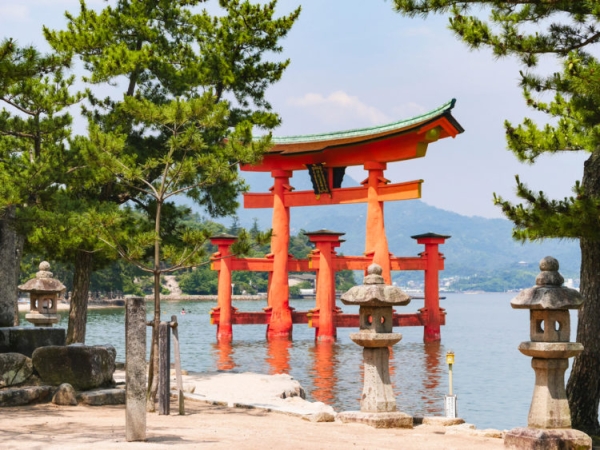
Red thorias in the water
One of the most striking examples of Japanese temple architecture is Itsukushima jinja, located above the sea. The gate of the sanctuary, which is included in the sights of Japan, is located near Mount Misen. Their height is 16 meters. The bright gates expressively emphasize the surrounding landscape, and it is simply impossible to confuse them with anything.
The Itsukushima Jinja complex consists of several shrines, each dedicated to its own deity. The main temple of the complex was built in honor of the goddess Mikoto, patroness of navigation. Most of the temple buildings are located directly on the water on wooden piles. The “Thousand Mats” Hall is impressive. It is believed that it was built from only one trunk of a camphor tree.
A treasure trove is located on the shore of a sheltered bay. It contains antique objects, masterpieces of art and ancient scrolls donated to the Itsukushima Jinja Temple. Every tourist can experience the validity of the statement that the passage under the temple gate will bring good luck and wealth.
Official website: https://www.en.itsukushimajinja.jp
15. The Imperial Palace (Tokyo)
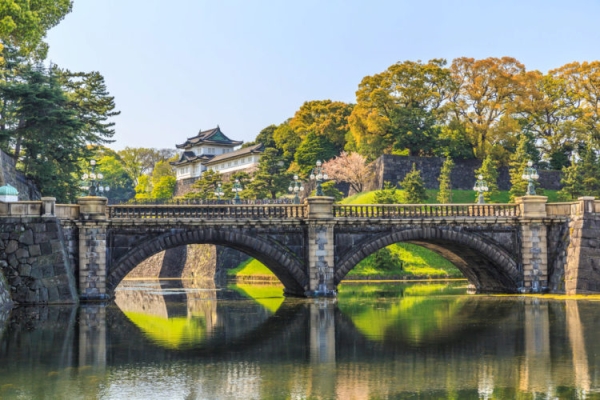
The Imperial Palace in the park area of Tokyo
What could be more luxurious and richer than the Imperial Palace? The sights of Japan are amazing, but the Imperial Castle is impossible to compare with anything. It is located in the park area of Tokyo, in general, the palace buildings occupy an area of 740 hectares. The government offices of the country are located next to the Imperial Palace. But the modern neighborhood does not violate the beautiful palace architecture at all.
A snow-white building with a pointed roof, the castle consists of two floors and one underground. The interiors of the Palace are made in Japanese style. The castle is surrounded by protective moats filled with water. There is a picturesque natural oasis around the palace.
The Castle is the residence of the Japanese emperor. Unfortunately for tourists, you can admire the palace architecture only from afar – walking around the Castle is not allowed. Nevertheless, twice a year those wishing to visit the Imperial Palace can take advantage of a unique chance – after the celebration of the New Year and on the Emperor’s Birthday, access to the inner gardens of the complex is open.
Official website: https://sankan.kunaicho.go.jp
16. Hakone
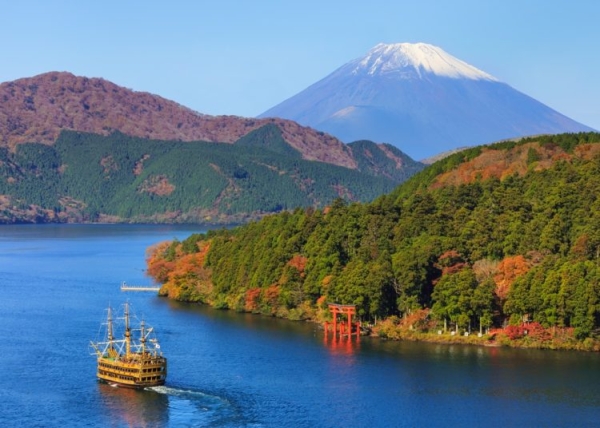
Mount Fuji and Lake Ashi in Fuji-Hakone-Izu National Park
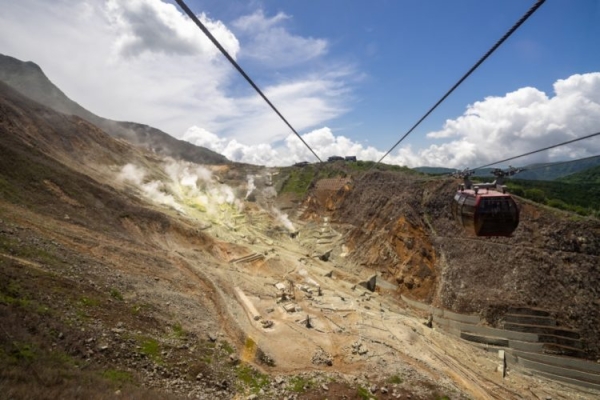
Panorama of the Ovakudani volcanic Valley in Hakone
Honshu Island is one of the main islands of the Japanese archipelago, it is here that most of the population lives and the main attractions of the country are concentrated. And one of the interesting places is located in Kanagawa Prefecture — the village of Hakone, which is famous for its hot springs. It is also one of the best Japanese resorts where you can feel the national spirit, visit a number of historical buildings, open-air museums, relax in super-equipped hotels and spa complexes. And most importantly, it is from here that you will have the opportunity to see with your own eyes the familiar peak of Mount Fujiyama, covered with a snow—white cap of snow, since childhood.
Official website: https://www.env.go.jp
17. Todai-ji Temple
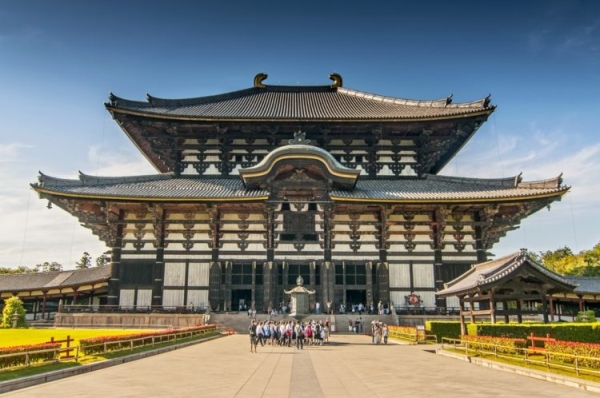
The main hall of the Todai-ji Temple in Nara
In Nara, the city of Japan’s national heritage, there are a lot of Buddhist temples, the key of which is the Todaiji Temple. It is the most important symbol of the city, a sacred place of pilgrimage for millions of people, where daily services began in the 8th century and continue to this day. In addition, the temple is also interesting because it is the world’s largest wooden structure, and also houses the world’s largest bronze statue of Buddha within its walls. In order to get inside the temple, you will need to pass through the ancient wooden gates of Nandaimon, through a hall filled with clouds of smoking incense, and only then the hall of the Great Buddha opens to your view, where a majestic statue of the deity looks down from its 15-meter height.
Official website: https://www.todaiji.or.jp
18. Shibuya District
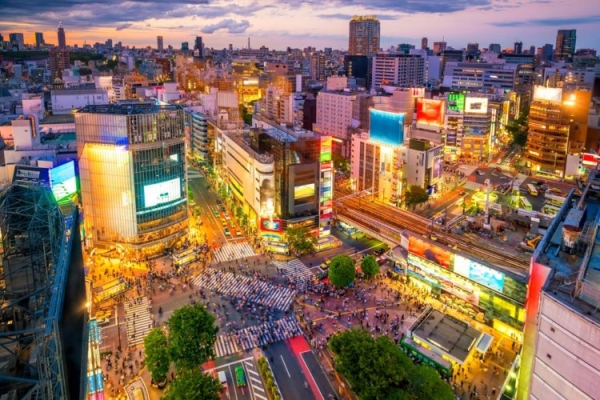
Top view of the diagonal pedestrian crossing in the Shibuya area at dusk
Sakura has long since faded, but is it still far from golden autumn in Japan? The scorching July heat and high humidity are extremely difficult conditions for active travel, but locking yourself in the walls of a hotel is not an option for active guests of the country. If you are looking for something to see in Japan in July, we recommend visiting the Shibuya quarter, a place of entertainment for Japanese youth, packed with fashionable boutiques and department stores. The fact is that this summer sales start in the most prestigious shops of Sibui, and the area turns into a real paradise for shopaholics and just those who have managed to get bored with a standard set of consumer goods, and leaving a tidy sum in expensive boutiques is an unacceptable luxury.
19. Kiyomizu-dera Temple
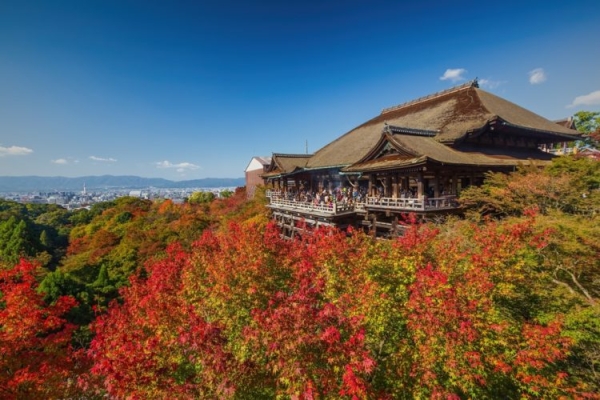
Kiyomizu-dera Temple on a picturesque mountainside
On the slope of Mount Otowa in Kyoto there is an extensive temple complex, which has become a symbol of the city. This is the Temple of Pure Water, or Kiyomizu-dera, erected in the name of the goddess of luck. The buildings of the complex, which have survived to the present day, date back to the 30s of the 17th century. Today, the temple is a place of pilgrimage for millions — about 3 million people visit it a year. In addition to the building of the temple itself, there are: a 3-tier pagoda, a sutra library, several pavilions, as well as a number of small temples on its territory. There is also a viewing platform, from where beautiful views of Kyoto can be enjoyed from a height. A notable feature of this site is that it was built using 139 supports, but without a single nail.
Official website: https://www.kiyomizudera.or.jp
20. Matsumoto Castle
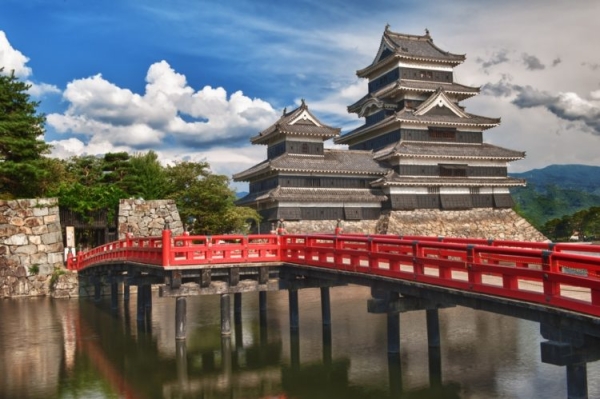
Beautiful medieval Matsumoto Castle in the eastern part of Honshu Island
On Honshu Island, in the city of Matsumoto, it is recommended to visit the ancient Raven Castle, so named because of the black facade and side towers resembling outstretched wings. The extraordinary architecture of the building is in harmony with the beauty of the surrounding nature. The area of all the buildings of the castle and the surrounding territories is grandiose — it is 39 hectares. This includes the citadel itself, the moats filled with water and the fortress wall surrounding the entire territory. A notable feature of the complex is a series of chaotically arranged steep stairs and a confusing arrangement of rooms — all this was built in such a way as to disorient enemies who raided in the Middle Ages during the period of provincial hostility.
Official website: https://www.matsumoto-castle.jp
21. Kamakura
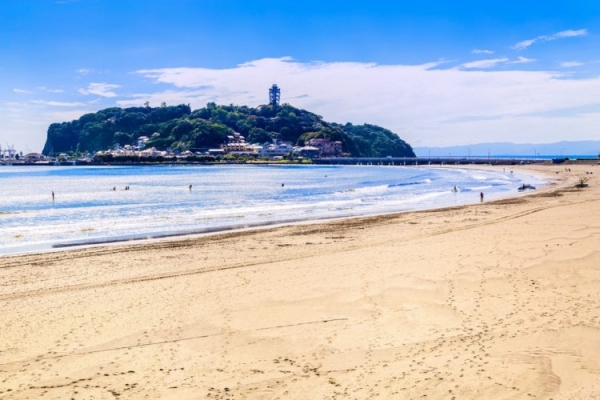
Long sandy beach in Kamakura
One of the oldest Japanese cities is located south of the Japanese capital, on the island of Honshu. This place attracts numerous tourists with countless attractions, coupled with a comfortable climate — there is no sweltering heat or severe frosts here. It seems that the ancient city has seen everything in its century — from tsunamis and typhoons, to earthquakes and wars. Nevertheless, today there are about 170 ancient monuments of great historical value preserved here. Among them are temples with numerous Buddhist relics, ancient sculptures and statues of Buddha, as well as museums, hotels, restaurants and even beaches with snow—white sand, perfectly equipped for a comfortable stay.
22. Kagon Waterfall
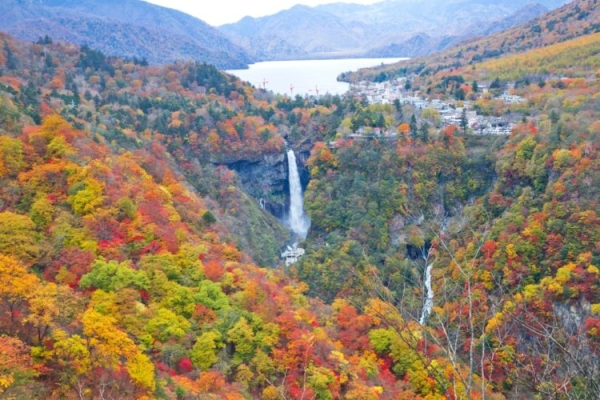
Kegon Waterfall and Lake Chuzenzi in Nikko National Park
August is another month of sultry heat in Japan, not the most favorable time for active trips to museums, theaters and other cultural sites, the heat is very quickly exhausting. When choosing what to see in Japan in August, we recommend paying attention to natural attractions such as the Kagon Waterfall, whose crystal waters give visitors a refreshing coolness. And the walk itself through the beautiful Nikko National Park, where the waterfall is located, will give you a boost of energy and indelible impressions of the dizzying views. The height of the waterfall reaches hundreds of meters, and there are several observation platforms for its observation. As a bonus of an impressive walk, there are 12 more small waterfalls that descend nearby, through numerous mountain crevices.
Official website: https://nikko-travel.jp
23. Naruto’s Whirlpool
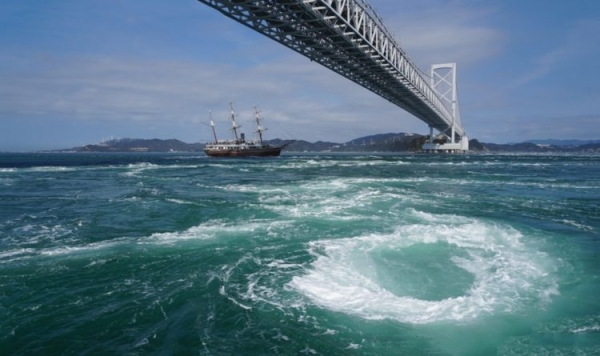
Tidal eddies in the Naruto Strait
One of the extraordinary natural phenomena of Japan periodically occurs in the Naruto Strait, connecting two prefectures — Tokushima and Hyogo. The strait itself, connecting the Indian Ocean with the Inland Sea of Japan, has a small width — just over a kilometer. Twice a day, the current first raises and then lowers the level of the Inner Sea, thereby creating a difference between the levels of the outer ocean and the sea. At the same time, the flow velocity increases to 15-20 km / h, and an amazing phenomenon arises — whirlpools with a diameter of up to 20 meters. Usually, the whirlpools are larger in summer than in winter. Regular cruises are made to the strait, allowing you to see the whirlpool in all its beauty.
24. Okinawa Island
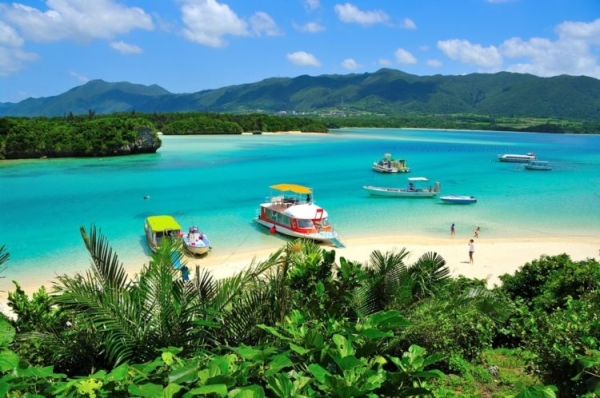
Okinawa Island is an attractive place to relax
Going to the south of Japan, the sights of which are not so numerous, the trip plan should definitely include a visit to Okinawa, an island that is part of the Ryukyu Archipelago. It is the warmest prefecture in Japan, and the only one located in the subtropical zone. That is why the island is so attractive for recreation all year round, and even in the coldest January period, the average daily air temperature here does not fall below +17 degrees. The restored Shurijo Palace reminds of the greatness of the medieval Ryukyu Kingdom on the island. The ruins of fortifications that have become World Heritage Sites are also scattered throughout the island.
25. Sapporo Snow Festival
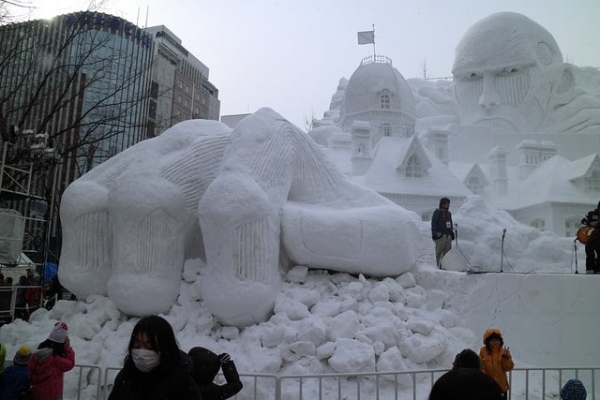
Man-made sculptures made of snow and ice at the Akinori YAMADA Snow Festival in Sapporo
Japanese culture is extremely rich and extraordinary, and many traditions of Japan were formed under the influence of some important historical events. Some traditions are thousands of years old, while others have appeared quite recently. A living example for the latter is the Sapporo Snow Festival. In 1950, several high school students from one of the city schools erected 6 animal sculptures in Odori Park. Since then, every year at the end of winter, the townspeople arrange a grandiose sculpting of figures made of snow and ice. Since the 2000s, the festival has become the largest winter event in the country, it is included in the attractions of Japan for children when compiling tourist programs.
Official website: https://www.snowfes.com
26. Kusatsu Hot Spring Town

Kusatsu Hot Springs in the central Yubatake Square
The land of the rising sun is located on lands of volcanic origin, so hot springs are a common phenomenon here. Since time immemorial, the inhabitants of the country have used the beneficial properties of volcanic waters to heal the soul and body. Kusatsu is one of the most famous resorts of international importance, based on the treatment of thermal waters. There are a lot of groundwater outlets here, and the central place is occupied by Yubatake, the largest of the sources. The water coming out here crosses the city square through specially laid channels, and at the end of the way it falls down a small waterfall — the flow rate in this place reaches 4 thousand liters per minute.
27. The Kumano-Kodo Pilgrim Trail
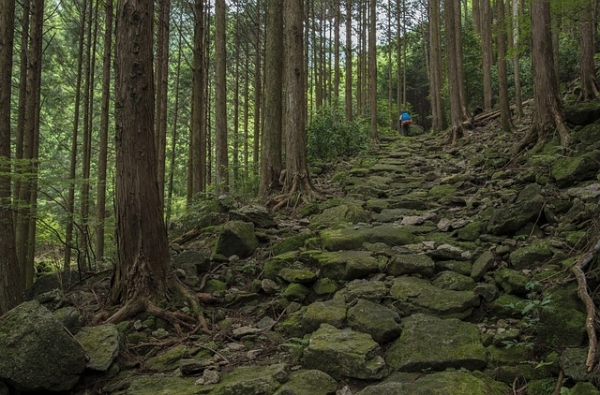
One of the ancient pilgrimage trails of Kumano-kodo
Kumano-Kodo is a large system of extensive pilgrimage trails on the island of Kii. Upon arriving here, pilgrims have the opportunity to visit places of ancient power, periodically staying in guest houses along the route. For centuries, pilgrims of the Shinto religion traveled along these paths, and it was believed that the forests of the peninsula were inhabited by Shinto deities — kami. Over time, with the spread of Buddhism, the kami began to be presented as incarnations of the Buddha. All trails are famous for their fabulous beauty, leading through mountain forests, rivers and along the ocean coast. Almost all the routes of the famous trail converge in the city of Honggu, where the most important sacred temple, Taixia, is located.
28. Sankei-en Garden
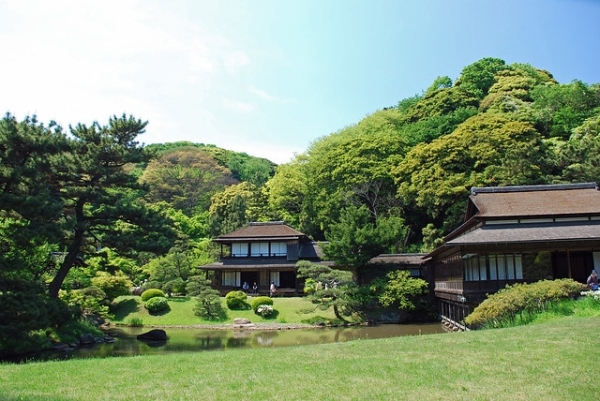
A cozy green corner in the Sankei-en naitokz garden
One of the most beautiful, quiet and cozy places in Yokohama can be called the Sankei-en Garden. This is a spacious park area with an area of about 180 square kilometers. Here you can relax from the hustle and bustle of the city, admire the amazing beauty of nature, see the exuberant variety of plants collected from different parts of the world, as well as visit a number of historical buildings — there are 17 of them in total. In particular, this is a 3-storey pagoda of the 16th century, brought from Kyoto, the Choshukaku tea house, a medieval peasant house from Gifu Prefecture, introducing visitors to the everyday life of ordinary people. The impression is complemented by picturesque ponds and fragrant flowers — sakura, azaleas, chrysanthemums, lotuses.
29. Minato Mirai (Yokohama)
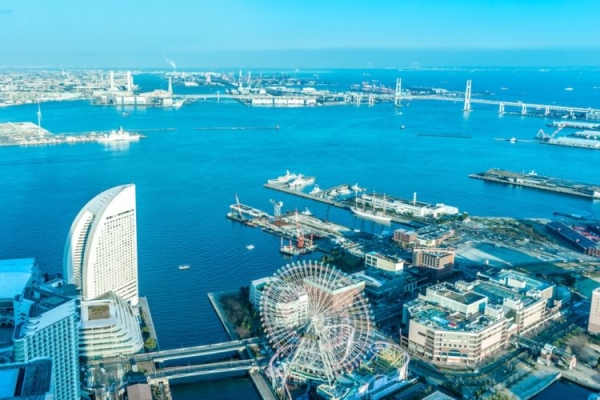
Minato Mirai District 21 of Yokohama City from a bird’s eye view
The central area in Yokohama is the Minato Mirai business district, the most attractive for visitors to Greater Tokyo. Those who arrive here have the opportunity to do shopping, various types of recreation and entertainment, visit cultural monuments and a number of thematic exhibitions. Notable places include the 70-storey Landmark Tower, the Sky Garden observation deck with breathtaking views of the harbor, museums of art, toys, industry, history, as well as the Silk Museum and the Nipon Maru Maritime Museum. The area continues to develop actively, and the list of its attractions is constantly updated with interesting novelties.
Official website: https://goyokohama.jp
30. Dotonbori Street
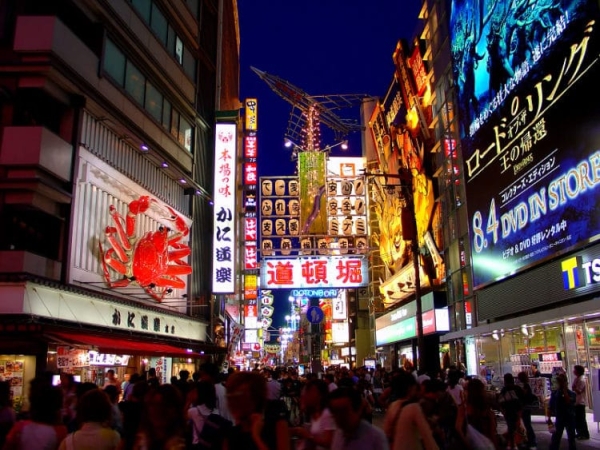
The facade of the restaurant with a luminous Kani Doraku crab sign on Dotonbori Street JKT-c
Another major business district you can visit in Osaka is Dotonbori, located on the river of the same name. The quarter is famous for a large selection of shops and boutiques, as well as an impressive number of restaurants, due to which the area has acquired a second name — Kuidaore, or “city of fine dishes”. In addition to shopping and visiting restaurants, you can have fun in karaoke centers, relax in saunas, visit comedy shows, kabuki theaters, visit galleries showing various types of art. With the onset of dusk, the quarter is especially transformed, this is facilitated by the original illumination of buildings and neon illumination of storefronts.
Official website: https://www.dotonbori.or.jp
Next to Japan is another technologically advanced country – Singapore. While staying in Japan, think about visiting this country as well. Read about the sights of Singapore and get inspired for your further journey through Asia!


 English
  Russian
  German
  Polish