Approximate reading time: 27 minutes
Asia is the largest continent in terms of area and population. It is home to 4.7 billion people who belong to different cultures. In India, China, Japan, Thailand, Jordan, and Uzbekistan, you can see real miracles. Some of them were created in the distant past, others appeared in our time, and others were created by nature itself. We have compiled a list of the most beautiful places and main attractions in Asia. Let him inspire you on an interesting and full of impressions journey!
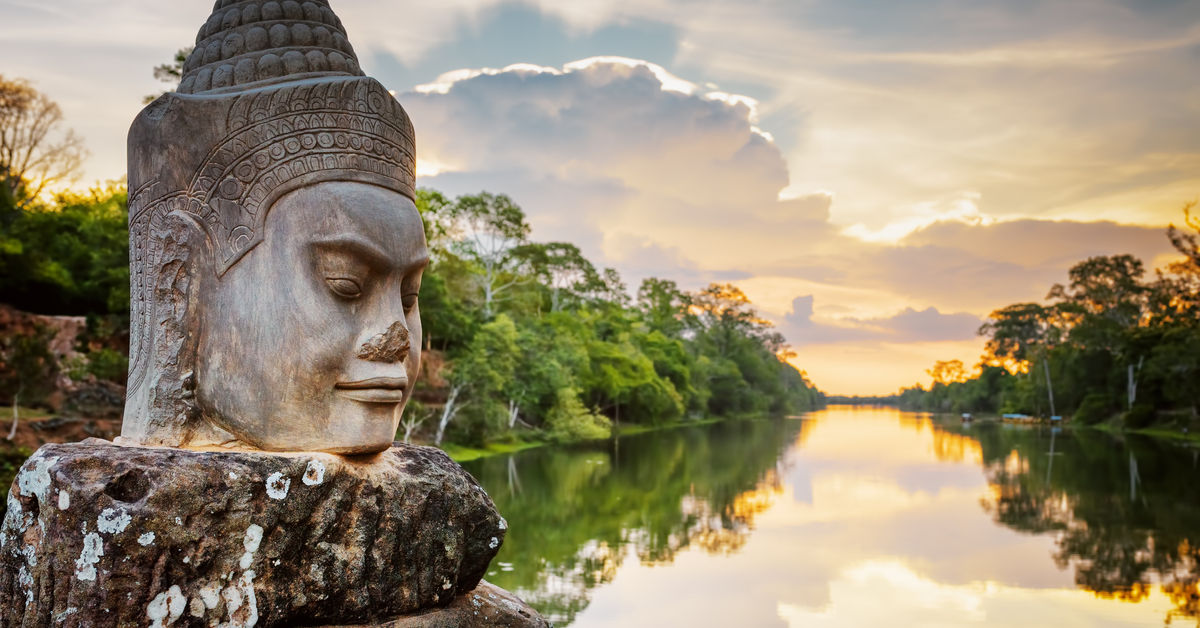 Reveal the content
Natural attractions of Asia
Many people go on vacation hoping to see picturesque islands, mountain lakes, secluded coves and majestic waterfalls. Since Asia is a huge part of the world, there is a lot to see from natural attractions here. Trips to national parks and resorts in the wilderness can be conveniently combined with outdoor activities.
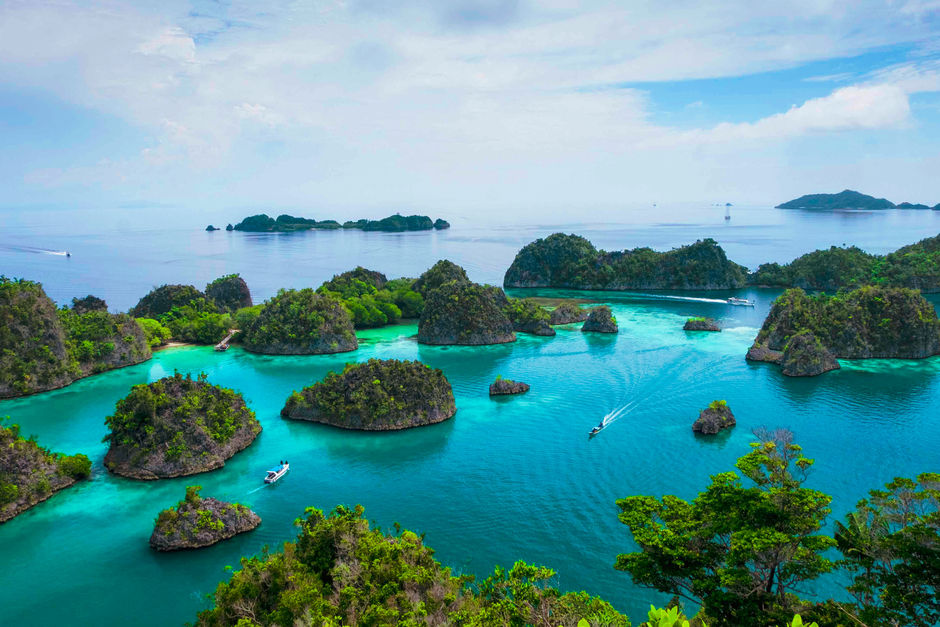
Raja Ampat Islands in Indonesia
The archipelago near the city of Sorong consists of 1,500 sparsely populated or uninhabited islands. Many of them are covered with jungle, others are attracted by beautiful white sand beaches, hidden lagoons or mysterious caves. Raja Ampat is a habitat for thousands of species of animals and plants, many of which are not found anywhere else.
The archipelago is located in the center of the so-called Coral Triangle. This is an area in the Pacific Ocean, which is famous for its rare marine biodiversity. Raja Ampat is home to over 1,300 species of fish and over 600 species of coral. This is 3/4 of all known corals in the world. Lush rainforests with majestic trees and wild orchids grow on land. The forests are home to birds of paradise, which arrange amazing mating dances.
Tegallalang Rice Terraces in Indonesia
More than a millennium ago, Bali developed an irrigation system called Subak. It was then that they learned how to create terraces and dams for rice cultivation, which are still in operation. This system has provided not only good harvests for local residents, but also an unusually picturesque view of the surrounding area.
In 2012, the Tegallalang rice terraces were included in the UNESCO World Heritage List. This is an interesting place in Asia, where photographers, artists and lovers of beautiful nature come. A walk along the terraces will take an hour or two, but it will be remembered for a long time. There is a cafe here to relax while enjoying the views. You can buy woven hats made of coconut leaves from the locals as a souvenir.
Nong Khan Kumphawapi Lake in Thailand
Lake Nong Khan Kumphawapi is a shallow swampy body of water with an area of about 4 square kilometers. Standing on the shore, you will see little other than thickets of grass. But once you get into a boat and sail away from the shore, you will find yourself among the blooming lotuses. Because of this, the lake is called the Sea of Red lotuses, although in fact they are more pink. In addition to flowers, many birds can be seen in Nong Khan Kumphawapi. Snow storks, herons and dozens more waterfowl species live here.
Lotus flowers bloom early in the morning, and when it gets hot, they close again. Therefore, boat trips are organized early: from about 6:00 to 10:00 in the morning. To get there on time, it’s worth stopping somewhere nearby or getting ready to get up before dawn. Flowering time is from December to February.
Phi Phi Islands in Thailand
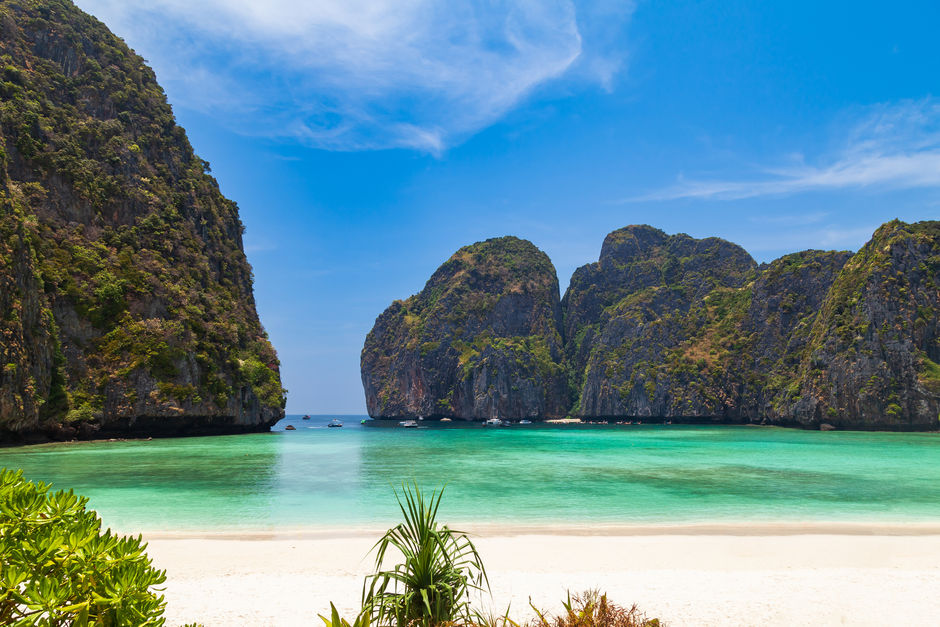
The islands of Phi Phi Don and Phi Phi Le on the Andaman coast are a great place for those who are attracted by an idyllic beach holiday. Here you will find pristine sandy beaches, beautiful cliffs, bright turquoise water and diverse marine life. Phi Phi Don Island is larger. It has hotels where you can stay for a few days, and a well-developed tourist infrastructure. It is also a place where party lovers can go in Asia. They are arranged here on nights with a full moon.
Phi Phi Le Island is smaller in size, it remains wild. Here you can go on a day trip to relax in a secluded bay, visit caves and admire coral reefs in crystal clear water.
Taman Negara National Park in Malaysia
Taman Negara is the main national park of Malaysia, its area is more than 4,000 square kilometers. This is one of the best places in Asia for wildlife lovers. The rainforest that grows here is one of the oldest on the planet. It is even older than the forests of the Congo and the Amazon. The national park is home to Indochinese tigers, smoky leopards, Bengal cats, Asian elephants, Malay bears, civets and hundreds of bird species.
Mountaineers are attracted by the Tahan mountain range. Its main peak rises to 2,187 m, it is the highest point in Malaysia. If you are attracted to a more relaxing holiday, go for a walk along one of the longest suspension bridges in the world. It stretches for 530 m at an altitude of about 40 m. Taman Negara has the sources of three large rivers and beautiful lakes. You can go boating, fishing, and take beautiful photos.
Halong Bay in Vietnam
Where to visit in Asia for lovers of interesting holidays by the sea? One of these places is Halong Bay with countless islands, there are more than 3,000 of them. They are scattered among the emerald waters and create fantastic landscapes. The islands are very different: large and small, rocky and forested, deserted and popular with tourists. In Halong Bay, you can relax on beautiful beaches, go diving, explore the islands during a boat trip, conquer rocks, explore caves or practice yoga in a peaceful environment.
Shondong Cave in Vietnam
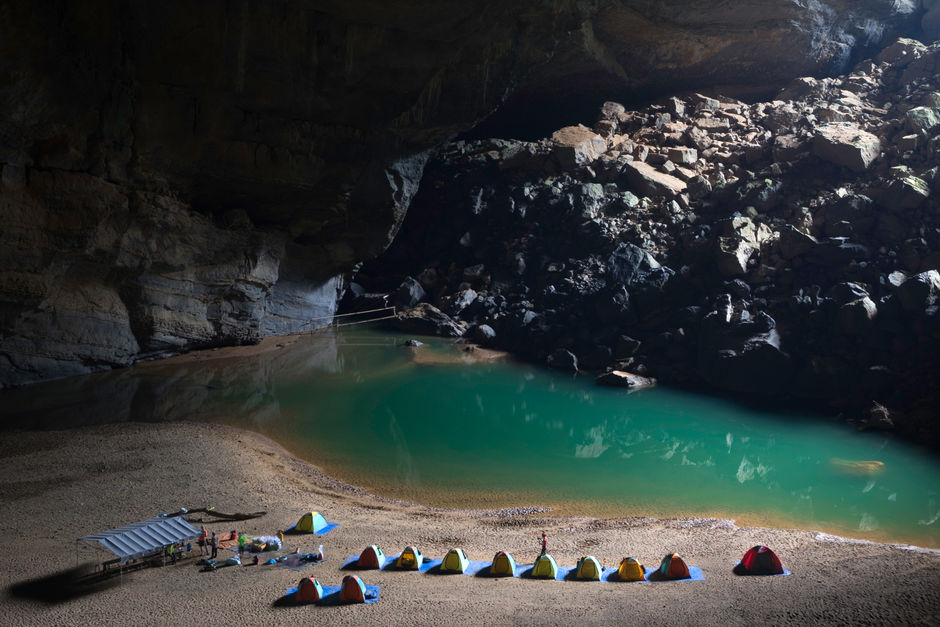
The largest cave in the world is located 500 km from Hanoi. It is the main symbol of the Phongnya Kebang National Park, included in the UNESCO World Heritage List. The Shondong Cave stretches for about 5 km. The width of its passages reaches 150 m in places, and a powerful underground river flows inside. The interior space consists of many halls, there are about 150 of them in total. In some of them, the upper part collapsed, opening access to sunlight. Grasses and shrubs grow in these areas, reaching three meters in height. They are home to rare birds, monkeys, foxes and snakes. There are also large colonies of bats in Shondong.
Detian Waterfall in China and Vietnam
The Kuaishon River flows on the border of China and Vietnam. It forms an extremely picturesque waterfall, which in China is called Detian, and in Vietnam — Banzek. It is the largest waterfall in Southeast Asia. It consists of two parts with a total width of 200 m. The northern part is larger. It is a wide three-stage waterfall with a height of 30 m with snow-white streams surrounded by dense greenery. The southern waterfall is smaller and can almost disappear in the dry season. But during the rainy season from May to September, both waterfalls become so full-flowing that they merge into one.
There is a large lake under the waterfalls, and on its shores there are observation decks, cafes and souvenir shops. Both the Chinese and Vietnamese sides have the opportunity to take a guided tour on a raft. You can swim so close to the waterfall that you can feel the touch of cool water mist.
Danxia Colored Hills in China
One of the unusual places in Asia is the Danxia Geopark in Gansu Province. It is famous for its hills and rocks, painted in different shades. This is the result of erosion, oxidation and other processes that have occurred since the Jurassic period. On the territory of the park, red sandstone, gray clays, bluish phosphates, and orange-yellow volcanic rocks come to the surface and are intricately intertwined.
In 2011, the geopark was equipped with wooden paths, stairs and playgrounds for visitors. Now it is possible to climb the hills and admire the extraordinary landscape without harming it. It is better to choose a clear day for visiting, when all the colors become especially bright. But there is no way to hide in the shade in the park, so take a hat and water with you.
Shilin Stone Forest in China
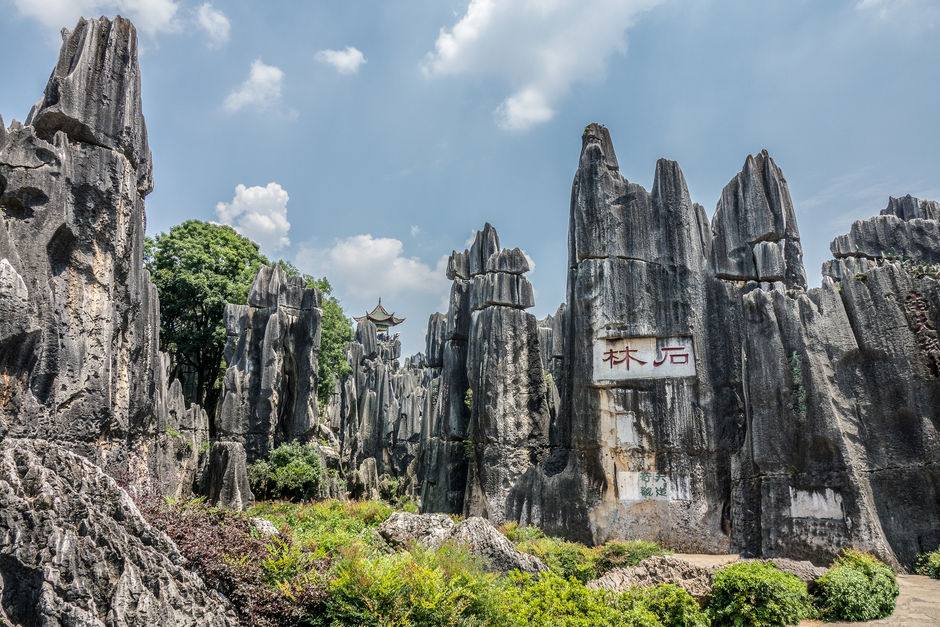
There are quite a few places in the world where bizarre limestone formations have formed as a result of erosion. The Shilin Nature Reserve in Yunnan Province in southern China differs from other such places with a huge area and a variety of stone figures. The National Park, included in the UNESCO World Heritage List, covers about 500 square kilometers. Here you can see giant columns similar to stalagmites, labyrinths formed in the rocks, caves, ponds and a lake with an island.
In summer, the locals put on smart clothes, cook a lot of delicious food and arrange a Torch Festival in Shilin. It includes traditional performances and competitions — wrestling, dancing, pole walking.
Yakushima Island in Japan
There is a beautiful island of Yakushima off the southern coast of Kyushu in Japan. A UNESCO-protected national park is located on its territory. The park is famous for the cedar forest, where the oldest living trees in Japan grow. Many of them are more than 1,000 years old, and the oldest are presumably more than 7,000 years old. This is one of the sights of Foreign Asia that is worth a visit.
The peculiarity of the local climate is that there is high humidity on the island and it rains constantly. There is even a saying that it rains on Yakushima 35 days a month. But even if you have to walk with an umbrella, you won’t be disappointed. The local scenery is very picturesque. Due to the large height difference, plants from different climatic zones, from subtropical to temperate, are found. There are many mountain peaks on the island, eight of which are above 1,800 m.
Ustyurt plateau in Kazakhstan
Ustyurt is a huge rocky desert with an area of more than 200,000 square kilometers. The plateau is located between the Aral and Caspian Seas on the territory of three states, mainly in Kazakhstan. Millions of years ago it was the seabed. Traces of the past can still be seen: fossilized shells and spherical deposits of iron are found.
Tourists travel to the Ustyurt plateau to see an extraordinary landscape similar to another planet. The flat desert terrain with cracks and small rocks looks especially impressive during sunrises and sunsets. Light chalk rocks turn red and even purple at such moments. If you stay on the plateau long enough, you can get acquainted with the local flora and fauna. Gerbils, ground squirrels and jerboa live among the sparse vegetation. They are hunted by eagles and other birds of prey, which sit on the rocks and look out for prey from a height.
Lake Issyk-Kul in Kyrgyzstan
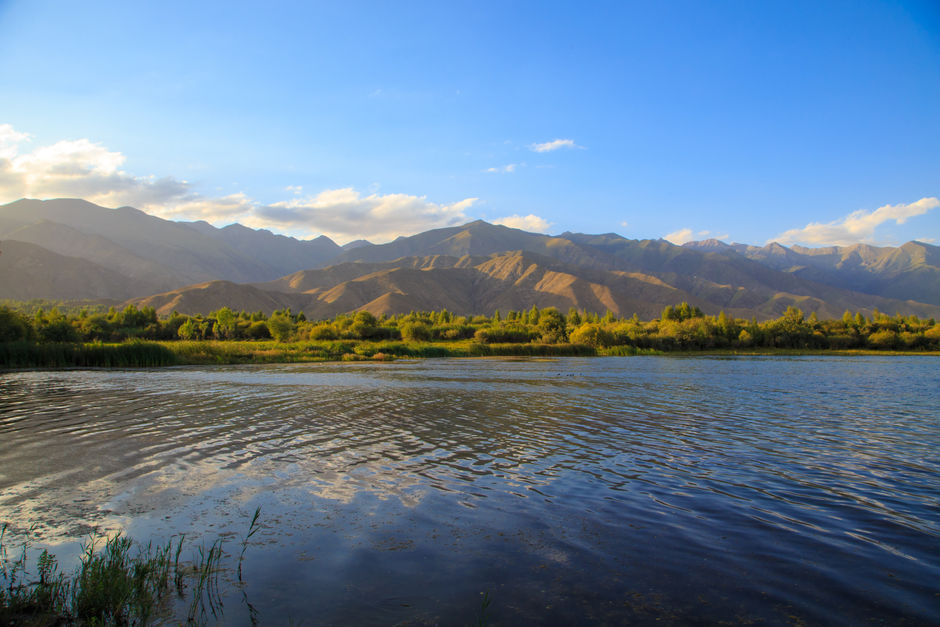
Issyk-Kul is the second largest alpine lake in the world. It is located in the Tien Shan Mountains at an altitude of 1,600 m, and its area exceeds 6 square kilometers. There are many hot springs at the bottom of the lake, so it never freezes. Its name means “Hot Lake” in Kyrgyz. The surroundings of Issyk-Kul combine the advantages of a mountainous and marine climate. This is an ideal place for a wellness holiday, so there are many sanatoriums here. There are beautiful landscapes around — mountain slopes and meadows suitable for trekking and horseback riding. Issyk-Kul is home to more than 20 species of fish, so it is also a good place for fishing.
Ancient architecture
In addition to natural wonders, there are many attractions in Asian countries created by people in ancient times. It is a memory of great civilizations that developed over a vast territory. The palaces and mausoleums of India, the thousand-year-old buildings of China, and the cave temples of Thailand are especially famous. But there are also less famous sites that are worth seeing.
The Forbidden City in China
Once in Beijing, you can’t miss the Forbidden City. It is the world’s largest palace complex, which accommodates almost 1,000 buildings. It was built in the XV century during the Ming Dynasty as the residence of the imperial family and court.
The Forbidden City has an inner courtyard for the nobility, an outer courtyard for the servants and defensive structures. Outstanding examples of traditional Chinese architecture are concentrated here. In addition to the beautiful buildings, you can look at household items, ancient works of art and beautiful gardens. Every year millions of tourists come to see all this. You can come to the Forbidden City in any season, it is always beautiful.
The Great Wall of China
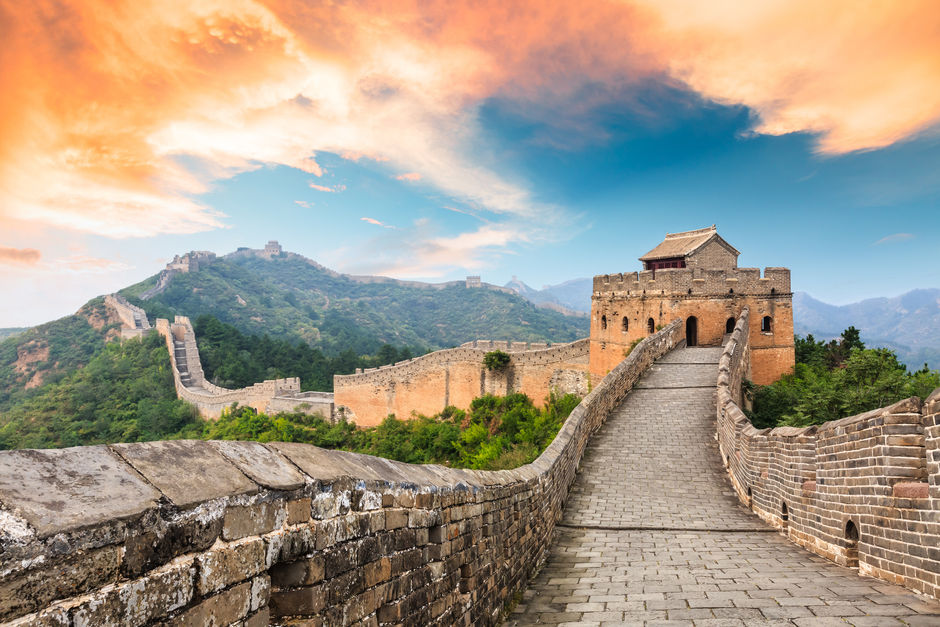
In ancient times, when China consisted of numerous fragmented states, nomadic tribes from the north posed a serious threat to it. Fortifications began to appear in different parts of the border area. Those of them that have survived to the present day are already 2,500 years old. When China united, the first emperor Qin Shi Huang decided to combine these fortifications into one large wall. In the future, up to the XVII century, it was constantly being completed, complicated and updated with the use of improving technologies.
When the Chinese border moved north, the Great Wall lost its defensive significance. But it has remained a symbol of the grandiose achievements of Chinese civilization and is now invariably included in the lists of attractions in Asia. Since the structure stretches for more than 2,500 km, you can see it in different provinces. There are more tourist areas where the wall has been restored, but there are more people there. There are not so popular routes that can be combined with outdoor activities in the mountains.
The Golden Temple of Dambulla in Sri Lanka
In the central part of Sri Lanka, about 150 km from the city of Colombo, there is a massive rock about 180 m high and more than 600 m long. Dozens of caves are hidden in this rock, and in them there is a world—famous temple complex included in the UNESCO World Heritage List.
Caves under the rock began to attract people even before our era. Over the past centuries, a huge number of rock paintings, frescoes and sculptures have accumulated here. Buddha images predominate among them, but there are statues of other gods and rulers. There are many interesting things in Sri Lanka, but the Golden Temple is one of the main attractions of the country that cannot be missed.
Borobudur Temple Complex in Indonesia
Borobudur Temple on Java Island is the world’s largest Buddhist monument and cultural symbol of Southeast Asia. This is one of those places that you need to visit at least once in your life. The temple is located on top of a hill, and rice fields and dense rainforest are spread around. It’s really an impressive sight.
The temple complex was built more than 1,000 years ago, presumably in the IX century AD. The architecture traces the influence of India, but there are also local Indonesian features. The area of the complex is about 2.5 square kilometers. It is built in the form of a three-dimensional mandala: It is a square-shaped structure with four entrances and a round dot in the center. The monument is decorated with hundreds of Buddha statues and thousands of reliefs carved in stone. There are so many Buddhist reliefs nowhere else in the world. All this grandiose structure was built without cement, but the strength of the structure is such that even after centuries of neglect, the temple was preserved and in the XIX century it was again opened to the world. It is now a UNESCO protected site.
Taktsang Lakhang Monastery in Bhutan
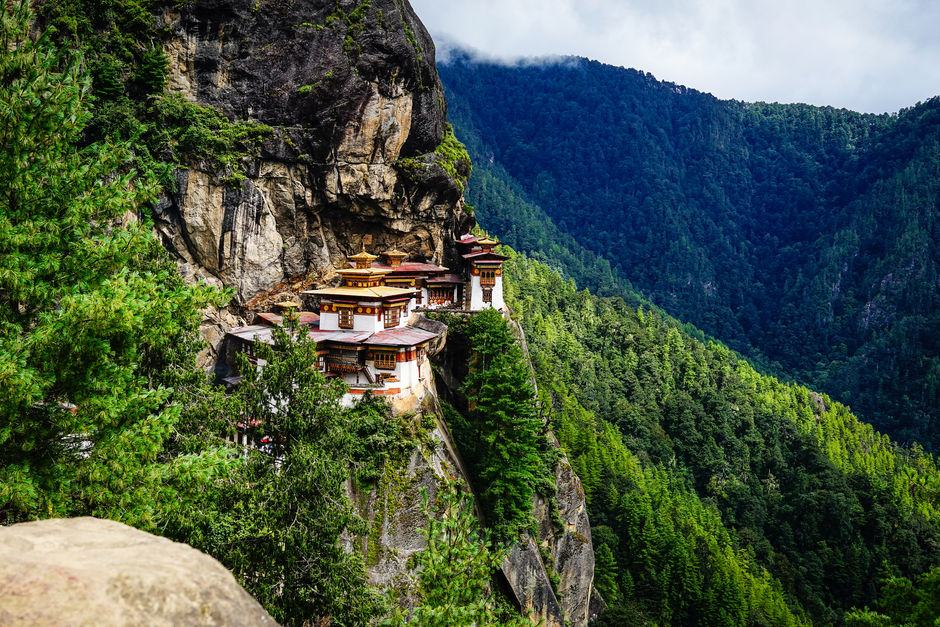
One of the unusual places in Asia is the Tiger’s Nest Monastery. It consists of several buildings built on a rocky ledge at an altitude of 900 m above the ground. These buildings literally hover over the abyss. Taktsang lakhang was built in the XVII century around a cave where, according to legends, a Buddhist guru meditated a millennium earlier. It was he who contributed to the spread of Buddhism in Bhutan, so he is revered on a par with the Buddha himself. There is a legend that this saint flew from Tibet on a winged tiger, so it was not difficult for him to find such a high and secluded cave.
Tourists who do not have flying pets have to climb a dirt road for 2-3 hours. Halfway there is a cafe where you can relax, have a snack and spin a prayer drum. From this place there is a beautiful view of the monastery, and many are already completing the tour here. But it is better to continue the path, because further on the trail becomes less steep and more picturesque. The most impressive photos can be taken at the top. The tour of the monastery itself takes about an hour, and then there is an easy way back.
Registan Square in Uzbekistan
Thanks to Registan Square with its well-preserved architectural ensemble, Samarkand was included in the UNESCO World Heritage List in 2001. In ancient times, it was the main city square. Celebrations were held here, orders were announced, and the army gathered. There were shopping malls all around.
In the XV century, the scientist and statesman Ulugbek ordered the construction of a madrasah on the square, later named in his honor. It is a beautiful building, decorated with yellowish glazed bricks and blue mosaics. Two centuries later, the Emir of Samarkand decided to build a second madrasah opposite this one, which would become a mirror image of the first one. 10 years later, the Sherdor madrasah appeared. It completed the architectural ensemble, so that it turned out to be a visually enclosed space on three sides.
All three madrassas are in excellent condition. They are extremely beautiful due to mosaic patterns, elegant arches and minarets. The ensemble transforms at different times of the day, so it is advisable to see it in bright sunlight, at night with backlight and at dawn or sunset.
The ancient city of Petra in Jordan
No one knows exactly when the city of Petra was founded, carved into the thickness of pink rocks in the south of modern Jordan. It is only known that in the 1st century BC it was already the prosperous capital of the Nabataean Empire. The city was famous and rich, as it was conveniently located on trade routes. Caravans passed through here, carrying frankincense, myrrh and spices to the west. Later, Petra became part of the Roman Empire, so both Nabataean and Greco-Roman features are visible in its architecture.
In the IV century, the city was severely damaged by an earthquake. By that time, trade routes had also begun to change. These factors led to the extinction of Petra, and by about the middle of the 7th century it was completely abandoned. But the stone buildings, although they remained forgotten for more than 1,000 years, are well preserved. In 1812, Swiss explorers rediscovered this city. Soon, visitors rushed there, and the flow of tourists has not weakened to this day.
Now Petra is one of the most famous attractions in Asian countries and around the world. Since the city is less than half explored, it will bring many more discoveries in the future.
Hawa Mahal Palace in India
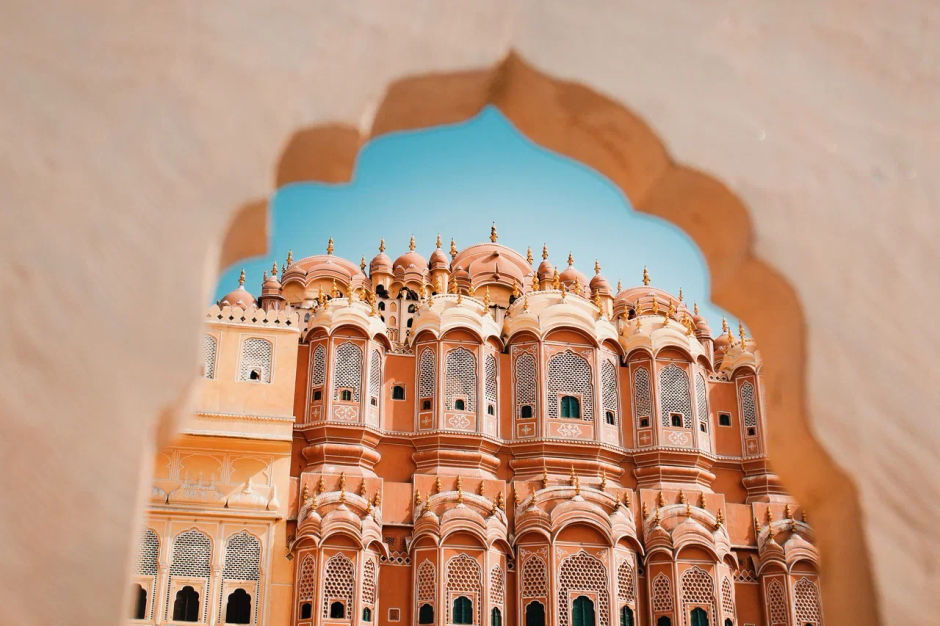
What to see in Asia to explore the exquisite oriental architecture? One of these attractions is the Hawa Mahal, or Palace of the Winds. It was built in 1799. This is the women’s section of the large city palace in the center of Jaipur.
The Hawa Mahal is located on a high hill with a beautiful view of the city. The women of the royal court could watch from numerous windows the festive processions and the daily life of the townspeople. There are 953 windows in the palace for this purpose. To make the women themselves go unnoticed, the windows are covered with carved wooden grilles. This carving is so delicate and elegant that the facade of the palace seems to be covered with lace. The building itself is built of pink sandstone. It is a commonly used building material in Jaipur, which is why the city is called pink.
Amber Fort in India
The magnificent Amber Fort, built of pale yellow and pink sandstone, is located on a high hill 10 km from Jaipur. It is one of the main tourist attractions of the region. The fort was built in a strategically important location. Since the 16th century, it has served as both the residence of the local government and a military base. The palace complex consists of four buildings, each of which has its own courtyard. The buildings are beautiful and richly decorated, combining elements of Hinduism and Rajput style.
The light show, which takes place every evening and lasts 50 minutes, deserves special mention. This is a real symphony of lights that illuminates the entire fort and gives you the opportunity to learn more about its past. At night, the fort is also illuminated, it is clearly visible from the foot of the hill.
Humayun’s Mausoleum in India
Humayun’s Mausoleum is one of the most famous examples of Mughal architecture. It traces the Persian and Mongolian traditions. It is a building with harmonious proportions that seems to hover above the surrounding green gardens. The mausoleum is made of red sandstone and decorated with white marble. It attracts not only by the beauty of the lines, but also by the romantic story associated with it. The tomb was built in 1572 by order of Emperor Humayun’s widow. Both spouses are buried here, and this majestic structure serves as a symbol of their love. In 1993, the mausoleum was restored and taken under UNESCO protection.
The Taj Mahal in India
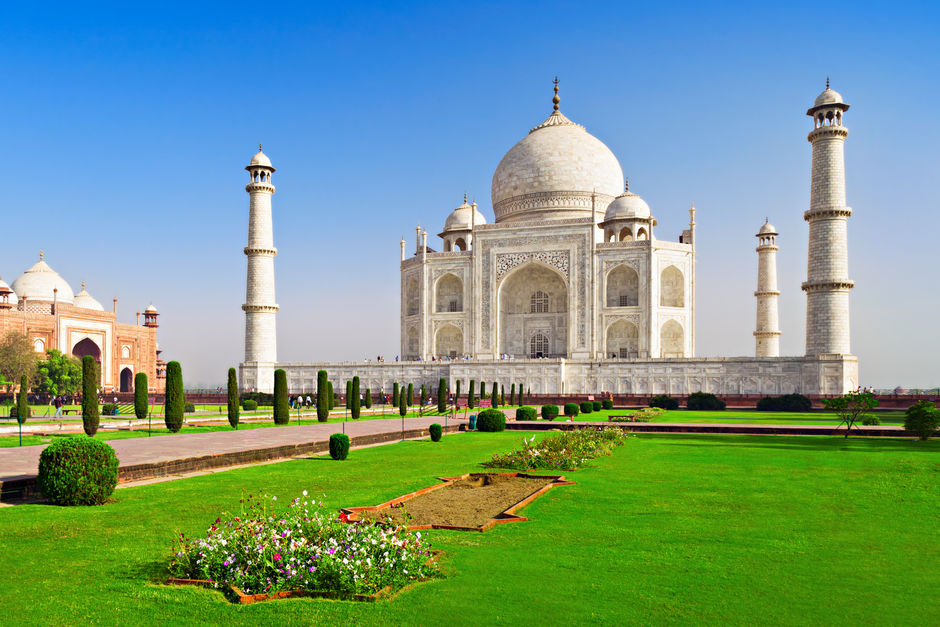
The famous Taj Mahal was built in the middle of the XVII century by the Mughal Emperor Shah Jahan. The poet Rabindranath Tagore called this structure a tear on the cheek of eternity, and Kipling — the epitome of purity. The attraction is invariably included in the top places in Asia where it is worth going. The number of tourists who flock to this architectural masterpiece in Agra every year is twice the population of the city.
The Taj Mahal was built as a monument to the emperor’s wife. It was built for 8 years, and when it was finished, Shah Jahan was overthrown by his son and imprisoned in the fort of Agra. The emperor spent the rest of his days in prison, looking out the window at the tomb he had built. After his death, he was buried in it next to his beloved.
Modern attractions
Everyone knows about the magnificent Taj Mahal, the Forbidden City in China and other wonders of antiquity. But in Asian countries there is something to see from modern buildings. Here are a few attractions that have appeared recently, but are no less impressive than the legendary historical monuments:
- Zhongyuan Buddha statue in China. This statue is also called the Buddha of the Spring Temple. Its height, taking into account the lotus pedestal, is 128 m. Until 2018, it was the tallest statue in the world.
- The Big Buddha in Thailand. The 45 m high statue is one of the main attractions of Thailand. It is located on a high hill and is visible from afar.
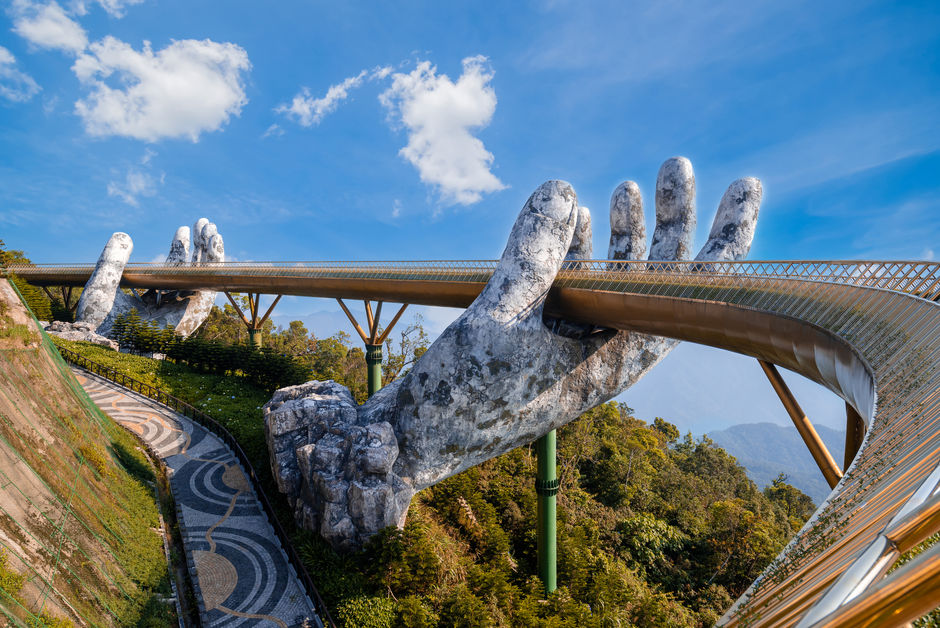
- The Golden Bridge in Vietnam. The bridge near the city of Da Nang is built at an altitude of 1,400 m, it offers incredible views. A 5 km cable car lifts tourists to the bridge.
- The Ferris Wheel in Singapore. A wheel with a diameter of 150 m and a total height of 165 m rotates in half an hour. It was built in 2008 and remained the tallest in the world for several years.
- Tokyo Sky Tree in Japan. The sky tree is a 300-meter tall TV tower, one of the symbols of Tokyo. Together with the antenna, its height is 634 m, it is the tallest TV tower in the world.
- The Statue of Unity in India. The height of the statue of Unity with a pedestal is 240 m, it has no equal in the whole world. This is a monument to Vallabhbhai Patel, a statesman of India who did a lot for the liberation and unification of the country.
- Street art in the city of Georgetown on the island of Penang in Malaysia. Georgetown is a beautiful city that is famous for its historical part and modern street art.
- Monument to Genghis Khan in Mongolia. An hour’s drive from Ulaanbaatar there is a 40-meter equestrian statue of Genghis Khan made of stainless steel. It stands on a 10-meter pedestal with 36 columns, which symbolize the khans of the Mongol Empire.
Now you know where you can go in Asia and what attractions there are in this part of the world. There are so many amazing places on the vast continent that are worth exploring that the choice is unlimited. To get the most out of your vacation, book a well-organized tour at the Guide Club. The best deals can run out quickly, so book your seats in advance!


 English
  Russian
  German
  Polish