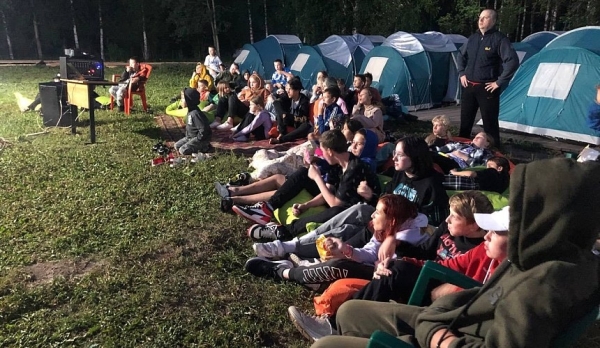
In mid-May, Rospotrebnadzor for the first time published recommendations on rest in tent camps. The most important thing in the document is that the average daily temperature at which the camp can continue working is set at +21 °C. Previously, this indicator could not be lower even at night, and therefore, with severe frosts that occur not only in Siberia, but in Central Russia, the camp had to be closed.
However, the issue of temperature is not the only and not the main problem with children’s camping. Now, according to experts, there are many times fewer camps operating in Russia than before the pandemic. And the number of rested people decreased from 183 to 79 thousand people compared to 2019. And the main problem, as Irina Peresetskaya, CEO of the Travel Club Robinsonada company (manages two tent camps in the Novgorod and Vladimir regions), says, is the bureaucratic difficulties in organizing the camp.
“The number of camps has sharply decreased after the tragic cases at Syamozera in Karelia and at the Holdomi camp in the Khabarovsk Territory, when children died (the first case occurred in 2016, the second in 2019 – Ed.). Then the pandemic started. In 2020, the camps were locked up due to the lack of a medical center, in 2021 some regions were allowed to open, others were not,” says Irina Peresetskaya.
This trend, she said, continues today. It takes a lot of approvals from various departments to open the camp. In addition, there were more restrictions, respectively, the responsibility of the organizers increased significantly: “Before there was Ivan Ivanovich, who could take the children to the forest, now he will just sit down. As a result, in order to comply with all safety requirements, you need to try very, very hard.”
Olesya Mulier, head of Smart Studio, a member of the working group of the State Duma Committee on Tourism and Tourism Infrastructure Development, also notes this: “There are camps that are spontaneously formed by people-activists who do not know the law, but who want to develop children. And there are camps operating within the framework of the law. Brave, strong people who take up this case are faced with a huge amount of permits and frequent inspections, since this type of tourism is overloaded with regulatory legal acts.” Not everyone has the strength and patience, so some organizers of the tent rest, according to the expert, switched to other activities after the pandemic.
And somewhere the rest was reformatted. For example, this happened at the Robin Hood children’s camp in the Kaluga Region, tent recreation developed here until 2019. “During the pandemic, tent camps were banned, and since 2021 we have not resumed this project, but replaced it with glamping for children with comfortable houses on the shore. And they hit the nail on the head. I liked glamping and it is still very popular,” he said TourDom.ru The head of the camp is Taras Kononets.
However, according to Irina Peresetskaya, there is still a demand for classic camping. The important thing is that this is both a romance and a kind of survival school. And the price issue is very important: on average, a trip to a tent camp costs 30-40% cheaper than a stationary one. For example, a 12-day shift in June will cost (depending on the camp) 45-75 thousand rubles per person.


 English
  Russian
  German
  Polish