What would happen if 5 young men and 6 women, strangers to each other, were placed on a small raft and sent sailing for 101 days? Such a strange experiment was conducted by the Mexican anthropologist Santiago Genovés in the early 70s. The participants of this bold project had to cross the Atlantic Ocean on a 12-by-7-meter Acali raft. The scientist called the experiment a “Peace Project,” but the journalists immediately gave it a different name — “Sex Raft.”

Henoves’ goal was to study the behavior of people in extreme situations. The participants cut ties with the world and went to meet the unknown in the company of people they had not known before. During the voyage, they had to film what was happening on film cameras, keep diaries and fill out tests on various topics — from personal relationships (who you like and who you don’t like) to masturbation.
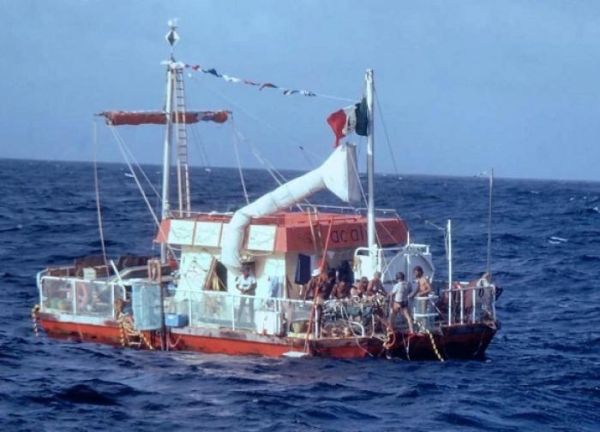
When asked by journalists why it is impossible to conduct an experiment by simply isolating the participants from the outside world, for example, in the forest, Santiago Henoves replied:
“You can’t do such an experiment on land because people might escape. We want to see how much a person is really capable of bearing.”
The anthropologist’s insidious plan
The scientist posted announcements about the competition for applicants. Suddenly, thousands of people responded to them. But Henoves had strict requirements for future navigators. They were supposed to be married and agreed to leave the family for a while. The age of the participants was 25-40 years old and they had to be sexually attractive. And the most important requirement is diversity. Men and women were selected from different races and backgrounds.
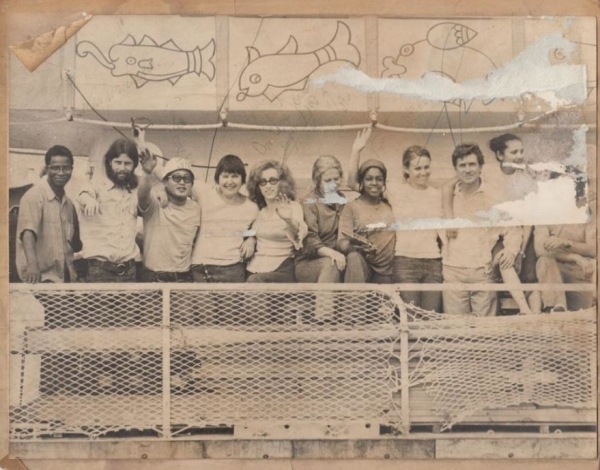
The anthropologist also had a devious plan. He wanted to put women at the head of a small team. Yes, so that it was impossible to do without them. He did it all right. Maria Bjornstam, a Swede, became the captain, the only female medic from Israel, and the French scuba diver became the third important expert for everyone.
Also on the raft were an attractive priest from Angola, a Japanese photographer and a woman from the United States who wanted to escape from the cruelty in a relationship. The other participants were also very different. The eleventh member of the team was the scientist himself. The treacherous Santiago created special conditions on the raft, under which it was almost impossible to retire.
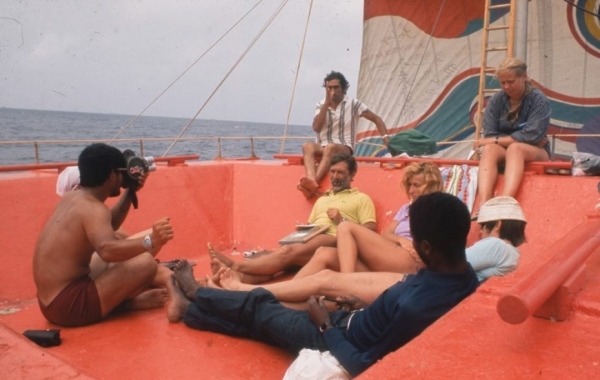
To go to the toilet, I had to climb onto a structure hanging over the water and perform my natural needs in front of the rest of the participants in the experiment. Moreover, there were no books on board, and the scientist strictly forbade reading. Men and women had no choice but to do all kinds of daily sea chores. In their free time, which was plentiful, they had to communicate with each other and pour out complaints about life in diaries.
“Madness of the crowd” and daydreams
Later, journalist Stuart Jeffries of the Guardian noted that Henowes made every effort to ensure that conflicts arose on board every now and then. In such difficult conditions, the 11-person company had to sail from the Spanish city of Las Palmas de Gran Canaria and reach the Mexican peninsula of Yucatan. The estimated journey was supposed to take 101 days.
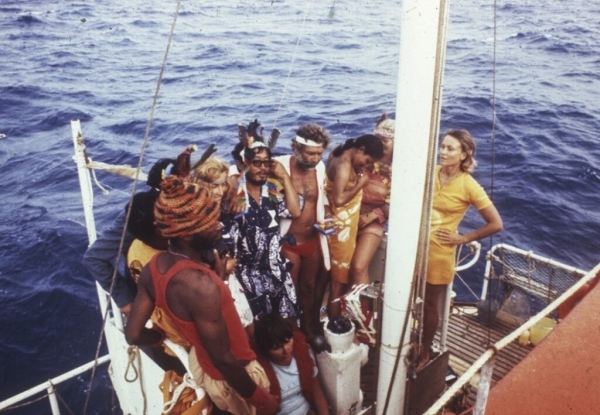
Prior to the experiment with the raft, Santiago had been studying primate aggression for many years. Actually, he expected that very soon the participants in the experiment would start to conflict with each other, and the raft would become a place where cruelty and debauchery reigned supreme. However, people communicated quite peacefully with each other and quickly became friends.
The anthropologist expected aggression during the experiment and seemed to see it where it was not. When the expedition members caught a shark, he made this entry:
“The madness of the crowd! They are acting as part of a dangerous collective!”
However, if you take an unbiased look at the footage of the video chronicle that the travelers took during that fishing trip, you won’t notice any madness. People just butcher a shark to cook their own food.
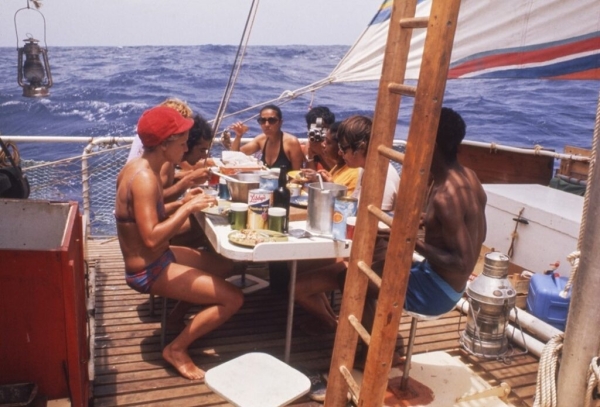
The journey has become a difficult challenge for all participants. But the experience was perceived by people in different ways. One of the women, African-American Faye Seymour, told in a later documentary about strange thoughts about slave ships.:
“I was sitting on the starboard side and looking at the water. I started to hear their voices coming from there… suddenly I heard my ancestors calling me. They could feel me floating above their bodies and tragedies. It was one of the best things that happened to me.”
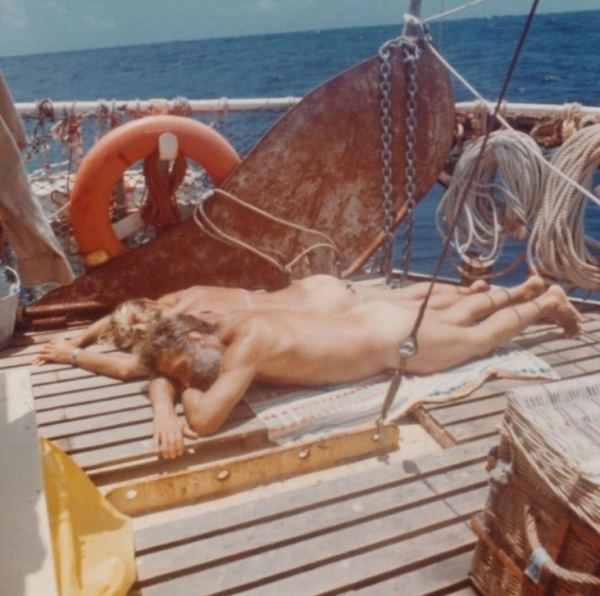
Yes, there were plenty of juicy moments, because of which the experiment was called a “Sex raft” behind its back. People did have sex with each other, but rather they did it out of boredom, without any violent emotions. Obviously, the scientist was counting on a much greater intensity of passions.
The collapse of Dr. Henoves’ hopes
The experiment was difficult. Henowes deliberately initiated conflicts by coming up with tasks with different scenarios for the participants. He tried to put the team in a situation where they turned against one person and ignored him. Somehow, in an attempt to set people off, the scientist began to publicly read the questionnaires that were filled out for him during the voyage. He chose the most provocative and embarrassing details in his opinion in order to cause conflict. This surprised the participants, but even then they did not quarrel.
From time to time, the travelers were let down by the equipment. The ship leaked twice, the compass broke, and radio communication was lost several times and was absent for weeks. After three months at sea, the raft was found in the ocean by rescuers from Mexico. They towed it to the port on August 20th, 1973.
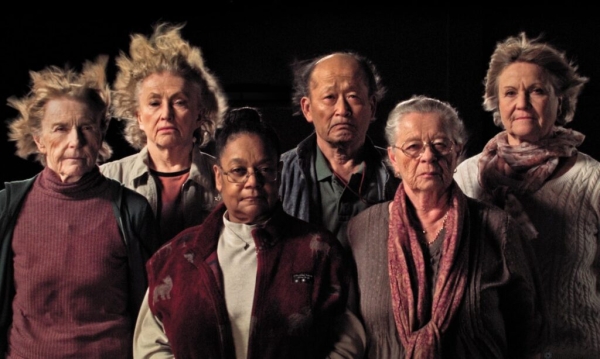
The raft team years later
According to the results of the experiment, no clear conclusions of scientific significance were made. Not surprisingly, Santiago Genoveswas unhappy. Despite all the difficulties and machinations of the scientist, the team behaved quite cohesively. Not only did they not fight with each other, but they did not even make friends with their fellow rafters. The only person everyone had a strong dislike for was the author of the project himself.
Many years later, after Henoves’ death, the journalists managed to bring together the Sex Raft team. A documentary was made about the difficult journey, in which the elderly participants shared their impressions. To evoke their memories, a pavilion resembling their ship was built for the film.
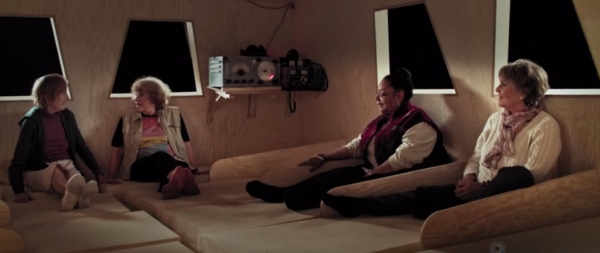
Interviews with eyewitnesses were supplemented with footage taken on board the raft with a 16mm movie camera. The film, which is called “Sex Raft”, turned out to be interesting and makes the viewer think.
It remains to add that not only this case proved that people who find themselves in a close society in extreme conditions begin to quarrel and share power. The story of 6 teenagers who lived for more than a year on a desert island in the ocean is another great example of cooperation and mutual assistance between people.


 English
  Russian
  German
  Polish