Unaccounted expenses will eat up the investor’s profit and empty the pockets of the owner of the resort apartment. Therefore, housing maintenance costs must be dealt with before the transaction is carried out. We tell you what responsibilities real estate owners have in Thailand, how much they will have to spend on taxes and utility bills, how to rent out objects and earn money from it.
Taxes for property owners
Property owners in Thailand pay annual taxes on the ownership and rental of properties.
Land and construction tax
Thailand’s Land and Construction Tax Law came into force on January 1, 2020.
Tax rates do not depend on the form of ownership and vary depending on the cost and purpose of use of the object.
They are exempt from paying tax:
- owners of villas worth less than 50 million baht ($1.3 million)
- owners of apartments worth less than 10 million baht ($271.3 thousand)
Important! To receive the benefit, you must be a registered permanent resident.
|
Purpose of use |
The tax rate in 2024 |
|
Agricultural purpose |
0,01% |
|
Housing |
0,02–0,1% |
|
Other uses |
0,3–0,7% |
|
Empty objects |
0,3–0,7% |
The tax is levied on property owned on January 1 of the year and is payable in April. A fine of 40% of the amount owed is threatened for delay.
Taxes on the rental of real estate
We publish the basic rules of the Thai tax system. We recommend consulting with local brokers – they will tell you about ways to optimize the load.
Income tax for individuals
The tax on income from sources located on the territory of the kingdom differs depending on the status of the owner of the property.
For tax residents
If the owner spends more than 180 days a year in Thailand, he pays tax on the income received on a progressive scale.
|
The amount of income |
The tax rate |
|
Up to 150 thousand baht ($4,050) |
0% |
|
150-300 thousand baht ($4,050-8 100) |
5% |
|
300-500 thousand baht ($8,100-13,500) |
10% |
|
500-750 thousand baht ($13,500 – 20,250) |
15% |
|
750 thousand – 1 million baht ($20,250 – 27,000) |
20% |
|
1-2 million baht ($27,000-54,000) |
25% |
|
2-5 million baht ($54,000-$135,000) |
30% |
|
From 5 million baht (from $135,000) |
35% |
For non-residents
In most cases, a fixed rate tax of 15% is applied to non-residents of Thailand.
Income tax for companies
Legal entities pay income tax on rental on a progressive scale.
|
The amount of income |
The tax rate |
|
Up to 300 thousand baht ($8,100) |
0% |
|
From 300 thousand ($8,100) to 3 million baht ($84,000) |
15% |
|
From 3 million baht ($84,000) |
20% |
Important! Landlords are entitled to a standard tax deduction in the amount of 30% of the income received from the lease and even the amount of expenses actually incurred during the lease, provided that the relevant documents are presented.
The declaration must be submitted at the district office at the location or online on the official website of the tax service.
VAT for landlords in Thailand
In some cases, owners who earn money from renting in Thailand receive another tax – VAT.
Any individual or legal entity that regularly supplies goods or provides services in Thailand and has an annual turnover of 1.8 million baht ($55 thousand) is subject to VAT. The standard rate is 10%, but by the end of September 2024, the state has reduced it to 7%.
You need to submit reports to the tax service before the 15th of each month for the previous one.
Utility bills
The amount of utility payments depends on the type of real estate, location, area and package of provided utilities.
Maintenance of the territory
The wider the infrastructure in the complex, the more the homeowner pays. The standard package of services includes round-the-clock security, maintenance of the communal pool, garden maintenance, lighting, elevator maintenance, garbage collection, minor repairs in the apartment.
The tariffs usually range from $0.6 to $3 per sq. m per month, including the services of the management company. The management company charges a fee for the maintenance of the complex once a year.
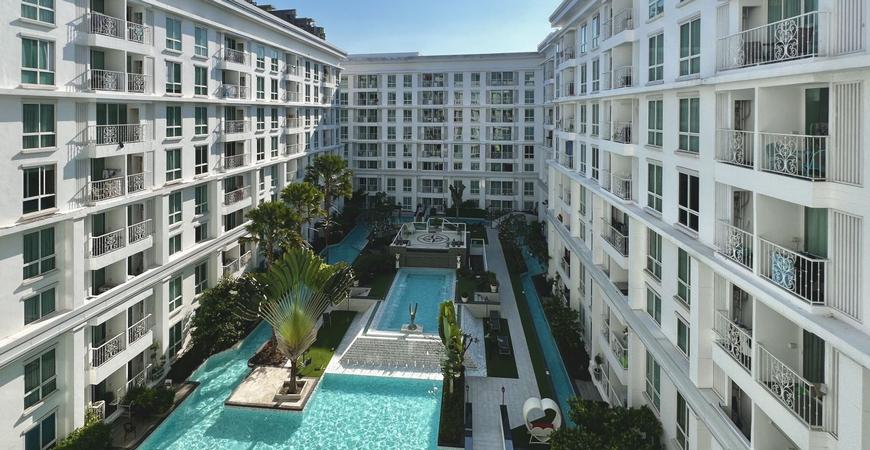 The management company charges a fee for the maintenance of the complex once a year
Electricity
In Thailand, all utilities are managed by the Government and there are two main electricity suppliers in the country. In the Bangkok metropolitan region, electricity is supplied by the MEA (Metropolitan Electricity Authority). PEA (Provincial Electricity Authority) serves the rest of the country and has offices in each province.
You need to pay bills according to the meter readings.
Electricity in Thailand costs from $0.06 per kWh. You can “cash in” for $100-200 per month.
In hot climates, air conditioning is often used, which accounts for the highest electricity consumption. If you use the equipment wisely, you can reduce monthly energy costs to $ 30-60 in an apartment of 50 sq. m. Official tariffs are available on suppliers’ websites.
Water supply
There are two supply companies in Thailand. In Bangkok and the suburbs, it is the MWA (Metropolitan Waterworks Authority). The PWA (Provincial Waterworks Authority) serves the rest of the country and has offices in each province.
The water is supplied cold. It becomes hot already in apartments thanks to electric water heaters.
The bill for the consumed electricity is issued at the beginning of the month upon the fact of the consumption for the previous one. It must be paid in the first two weeks after receipt. Otherwise, penalties and fines will begin to accrue, and substantial ones at that.
In Thailand, a cubic meter is called a unit. On average, they charge a little less than $1 per unit.
Most people spend 100-200 baht ($2-6) per month on water.
Usually, the manager of the complex is left with a deposit for several months in advance, then the owner receives a report on the funds spent. You can also pay water and electricity bills in Thailand at many supermarkets.
Gas
In Thailand, owners of gas stoves are forced to purchase and refuel cylinders, since there is no central gas supply in the country.
At the first purchase, you need to pay a deposit for the rental of the tank plus the cost of the gas itself. The deposit will be about 1.5 thousand. baht ($40), and gas is likely to cost 300-500 baht ($8-14).
If you need to replace the cylinder, just call the store. They will bring you a new one, and the old one will be taken to the gas station.
Internet, TV, phone
Foreigners almost never use landlines in Thailand.
There are four main mobile operators in the country: AIS, DTAC, TrueMove and TOT. You can buy a SIM card for a mobile phone both in their offices and in simple supermarkets.
Domestic call prices start at 1 baht ($0.03). You can purchase packages with an Internet connection that cost about $15-20 per month.
They pay about $20-30 per month for fixed Internet in the apartment. Usually the money is deposited a year in advance at the provider’s office or at the reception in the complex.
The largest satellite TV provider in the country is True Visions. Their services cost from $10 per month.
You can pay at the provider or through the manager. In many residential complexes, television is already included in the maintenance fee of the complex.
Real estate insurance
There are no mandatory property insurance requirements for foreigners in Thailand.
You can apply for a policy on your own. But before you go to negotiate with an insurance company, check with your complex – many include this service in the annual support fee.
The average cost of insurance is about 400 baht ($11-12) per month or about 4.6 thousand. baht ($125) per year.
Renting out real estate
Foreign owners can rent out real estate in Thailand in three ways.
By yourself
In this case, you will have to prepare an apartment for rent, look for tenants and solve all the issues that arise on your own. The approach requires time and market knowledge, but it potentially allows you to get the highest income.
Please note! According to Thai law, facilities without a tourist and hotel license cannot be rented out for short-term. Licenses are granted to complexes with hotel infrastructure, but not all projects that generate income from daily rent have such infrastructure. They have not yet been fined due to the current moratorium on inspections. But how long it will last is unclear!
Renting through a real estate agency
You can sign a contract with an agency that will take care of everything. Realtors will advertise your apartment, look for guests, charge them rent, prepare real estate for rent, meet tenants at the airport, evict, monitor cleaning, payment of taxes and utility bills.
You will be able to coordinate with the agency the schedule – when you rest yourself, and when the apartment can be rented.
A large list of companies operating in different regions of Thailand can be found on Prian.
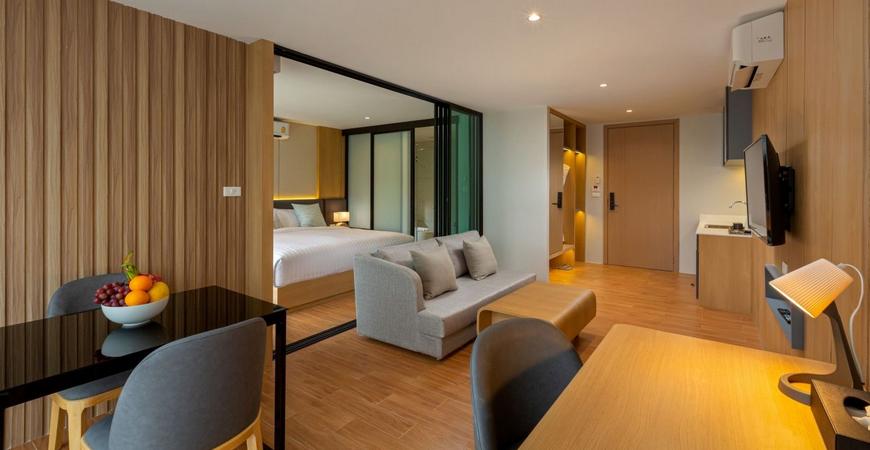
Typical apartments in one of the residential complexes in Phuket. Usually, offers with one or two bedrooms are in the greatest demand
Renting through a management company
Many residential complexes in Thailand have a management company that not only maintains the building, but also rents it out. In some residential complexes, the hotel brand (Wyndham, Hilton, etc.) is engaged in management.
The owner can give his property to a rental program – with a guaranteed income (they usually offer a yield of 5-8% per year) or with an actual one (up to 20% per annum). To use the options, you need to choose a complex that provides such services at the purchase stage.
Read also
- Are you going to buy a property in Phuket? Great! But first, read a few facts and practical tips
- The manager decides everything, or what should not be forgotten when choosing a property in Phuket
Sale of real estate. Procedure, taxes
First of all, the owner needs to decide how he will sell his property in Thailand.
- Independently: to distribute information about the sale (post information on real estate websites, contact agencies and conclude contracts, carry out real estate displays, discuss terms)
- Through a real estate agency
It is necessary to notify the management company about the future sale, as sometimes potential buyers come to her office.
Every transaction on the secondary market takes place in a different way. It differs depending on how and for whom the property is registered, on the status of the buyer, on the location of his funds, on the availability of installments. In any case, the transaction should be accompanied by a competent lawyer, whose services will cost $ 700-1000.
Taxes on sales
They depend on the status of the property, the status of the seller, on how many years the object has been owned, on the estimated value of the property in the land department.
Registration fee
The buyer and seller pay a fee for the transfer of ownership (transfer fee) – about 2-3% of the value of the property.
The registration fee for registration of a long-term lease agreement (leasehold) is 1% of the amount specified in the agreement.
Special Business Tax (SBT)
It is payable by both legal entities and individuals who have owned real estate for less than five years. The amount of the fee is 3.3% of the sale price or cadastral value (whichever is higher).
Stamp duty
Sellers of real estate pay in the case when the period of ownership of the object was more than five years and a special business tax (SBT) was not levied.
The tax amount is 0.5% of the sale price or cadastral value (whichever is higher).
The stamp duty for registration of a long-term lease (leasehold) is 0.1% of the amount in the contract.
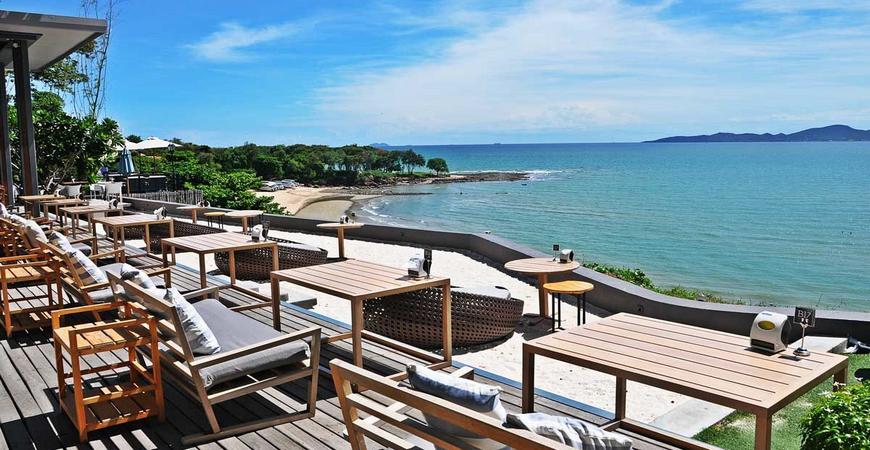 View from the complex on Pratumnak Hill in Pattaya
Withholding tax
In addition, the seller pays withholding tax.
If the selling party is a company, then the tax will be 1% of the amount of the official valuation or the contract price, whichever is greater.
If the seller is an individual, then income tax is calculated on the basis of a progressive rate minus the standard deduction for the number of years of ownership from the estimated value.
Income tax in baht
- Up to 300 thousand – 5%
- 300-500 thousand – 10%
- 500-750 thousand – 15%
- 750 thousand – 1 million – 20%
- 1-2 million – 25%
- 2-5 million – 30%
- From 5 million – 35%
The amount of the deduction depends on the period of ownership
- 1 year – 92%
- 2 years – 84%
- 3 years – 77%
- 4 years old – 71%
- 5 years old – 65%
- 6 years old – 60%
- 7 years old – 55%
- 8 years and more – 50%
Example of calculating sales tax
The seller owned the condominium for less than two years, the official estimated value of the object is 3 million baht (about $ 82 thousand).
- Calculate the deduction based on the number of years of ownership:
3 000 000 – 3 000 000 × 84% = 480 000 baht - Divide the amount received by the number of years of ownership of the property:
480,000 / 2 = 240,000 baht - Calculate the tax using the set rates:
240,000 × 5% = 12,000 baht - Multiply the amount received by the number of years of ownership:
12,000 × 2 = 24,000 baht – the total amount to be paid.
The amount to be paid should not exceed 20% of the total transaction value.
Resume: This must be remembered
- Property owners in Thailand pay annual taxes on ownership, rental and sale of property. Their size depends on many parameters. Consult with accountants and brokers to reduce the workload.
- In residential complexes in Thailand, a support fee is charged for the maintenance of the territory – from $ 0.6 to 3 per square meter per month. The more infrastructure there is in the residential complex, the more expensive the service.
- Utilities are paid by meters. The biggest bill is usually for electricity – up to $200 per month if you use the air conditioner often.
- Real estate insurance in Thailand is optional. For those who wish, insurance will cost about 4.6 thousand baht ($125) per year.
- You can rent out the objects yourself, through a real estate agency or a complex management company. Facilities without a tourist and hotel license cannot be rented for a short period of time.
Photo: Unsplash (Andreas Johansson), prian database
Conditions for quoting materials Prian.ru
To share the material: Print
Источник

 English
  Russian
  German
  Polish