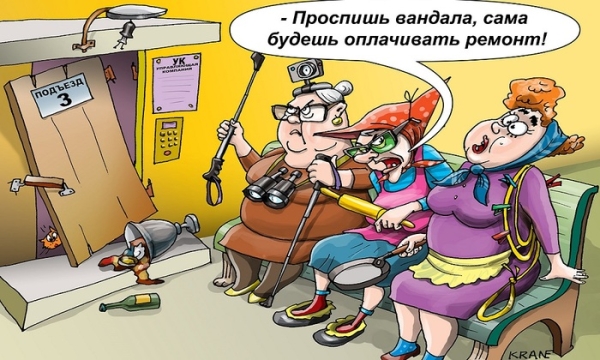
New amendments to the Civil Code, which came into force in October 2023, prescribe that breakdowns or some other damage to communal property, the elimination of which was previously carried out by the management company, will now be paid for by those vandals who have done dirty tricks.
Well, indeed, if a citizen is so out of his mind that he hits the light bulbs in his entrance, plunging him into darkness, then let him fork out personally, paying for the damage to the house. Is it logical? It seems to be. However, if this vandal citizen is doing outrages in full view of everyone, then he is a client either for the police or for the psychiatric emergency room. But most vandals prefer to move quietly so that there are no prying eyes nearby.
Then the residents themselves must figure out the attacker, provide evidence and write a statement to the police. It’s troublesome for people who work hard for a living for days. In such a situation, residents have two options. Or equip entrances and courtyards with video cameras and ensure their regular maintenance, which, of course, will cost a lot of money and is unlikely to suit poor families. Or hire private detectives to investigate cases of vandalism, which is likely to cost even more. Otherwise, you will not find the culprits and there will be no one to write a statement to the police (and will they accept it without iron evidence?).
Then the scheme is outrageously simple: representatives of the Criminal Code estimate – by themselves and by their own standards – how much it will cost to repair the damage, and enter these figures into the bills for housing and communal services. The receipt does not detail the line “for communal property”.
“This innovation will lead to the fact that the condition of communal property will deteriorate unless a vandal is found who broke mailboxes or set fire to elevator buttons,” says Pavel Sklyanchuk, a member of the public council of the federal project “School of Literate Consumer”. “In this case, the management company declines all responsibility.”
It’s also logical. But such logic leaves residents no choice but to organize patrolling of courtyards and entrances, as well as the territory around the house. From vandals. And there’s only one question: what kind of weapons will these patrols need- rubber batons or baseball bats? According to the principle “saving drowning people is the work of drowning people themselves.” But will the police agree to this?..
Alexey Vorobyov.
Figure: E. Crane.



 English
  Russian
  German
  Polish