Approximate reading time: 15 minutes
The national cuisine of Armenia has been formed over the centuries and is considered one of the most ancient in the Caucasus. Local culinary traditions have absorbed the influence of the Mediterranean, the Middle East and Eastern Europe. We have prepared a list of national dishes with names, photos and descriptions to make it easier for you to choose what to try first. Getting to know them is sure to add vivid impressions to your trip.
Armenian folk recipes are based on fresh and natural products: vegetables that ripen almost all year round, nuts, fruits, meat, cheese, wild herbs and a variety of spices. These culinary secrets are passed down from generation to generation, and the cooking process often requires time and patience. Therefore, repeating such dishes at home is not an easy task, even if you have all the necessary ingredients.
Lavash
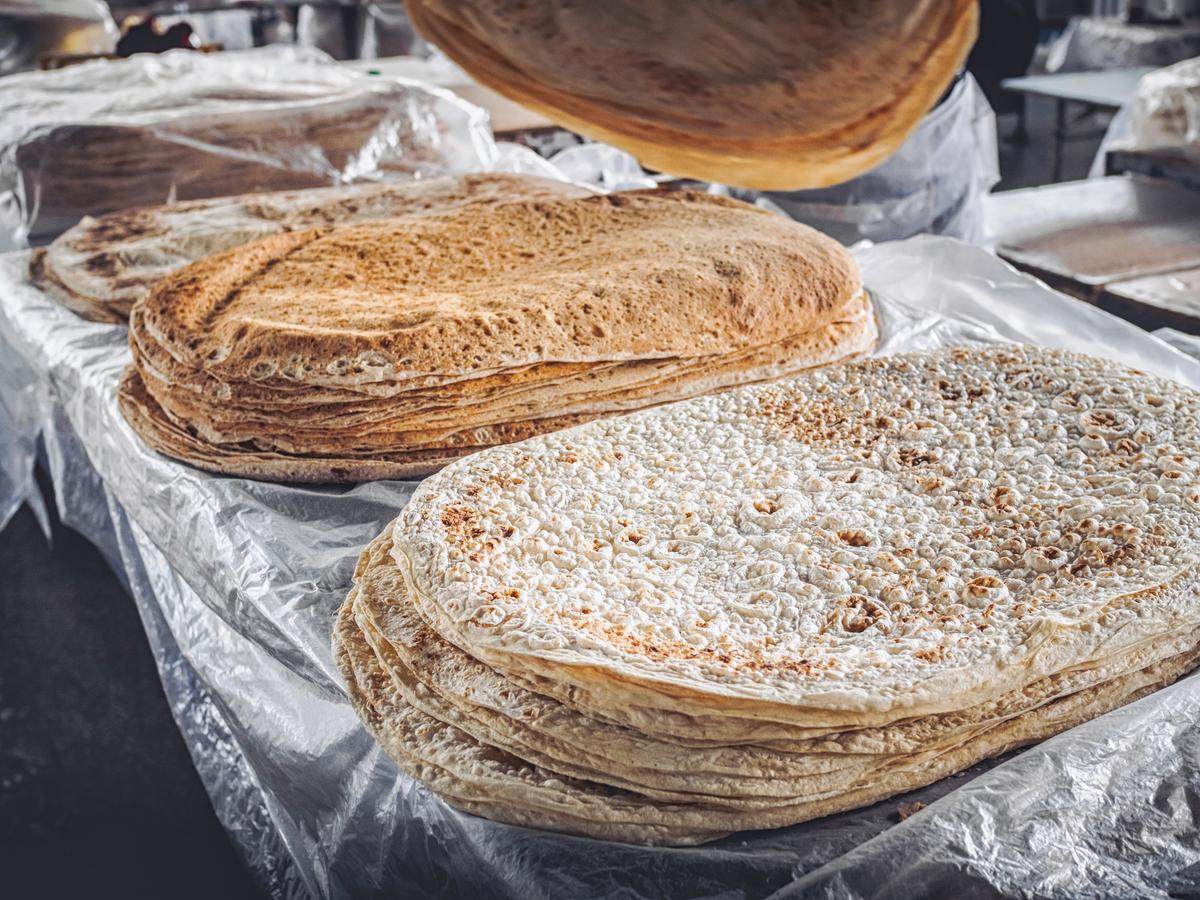
Thin tortillas made from wheat flour, water, salt and sourdough are known throughout Western Asia. But there is an assumption that they first appeared in Armenia. Lavash is cooked in a deep clay oven called a tonir. A rolled piece of dough is glued to the wall of the oven, and it is baked in a matter of minutes.
Freshly made lavash is very tasty. It is eaten separately and used to prepare different dishes. For example, meat, cheese or vegetable fillings are wrapped in it. When the extra tortillas remain, they are rolled into a tube and dried. In this form, lavash can be stored for months. Dried lavash is eaten as thin crackers or soaked before use.
On Easter, lavashes in Armenia are usually lit in the church, like our cakes. They are also used in traditional wedding ceremonies.
Zhengyalov Khats
This is another traditional Armenian flatbread. It differs from lavash in the large amount of greenery in the composition. The name translates to “bread with herbs”. To make it, the thinly rolled dough is sprinkled with chopped herbs, then rolled up and rolled out again so that the filling is inside. The herbs used are very different: all kinds of green onions, parsley, dill, mint, cabbage, sorrel, spinach, beet tops, young nettles. Whatever is at hand.
The tortillas are fried on both sides until golden brown in a special cast-iron dish called saj. The finished dish is greased with butter. Gingyalov khats are especially delicious when hot, then each of the herbs reveals its taste and aroma. But cold tortillas are also a great option for a snack.
Gata
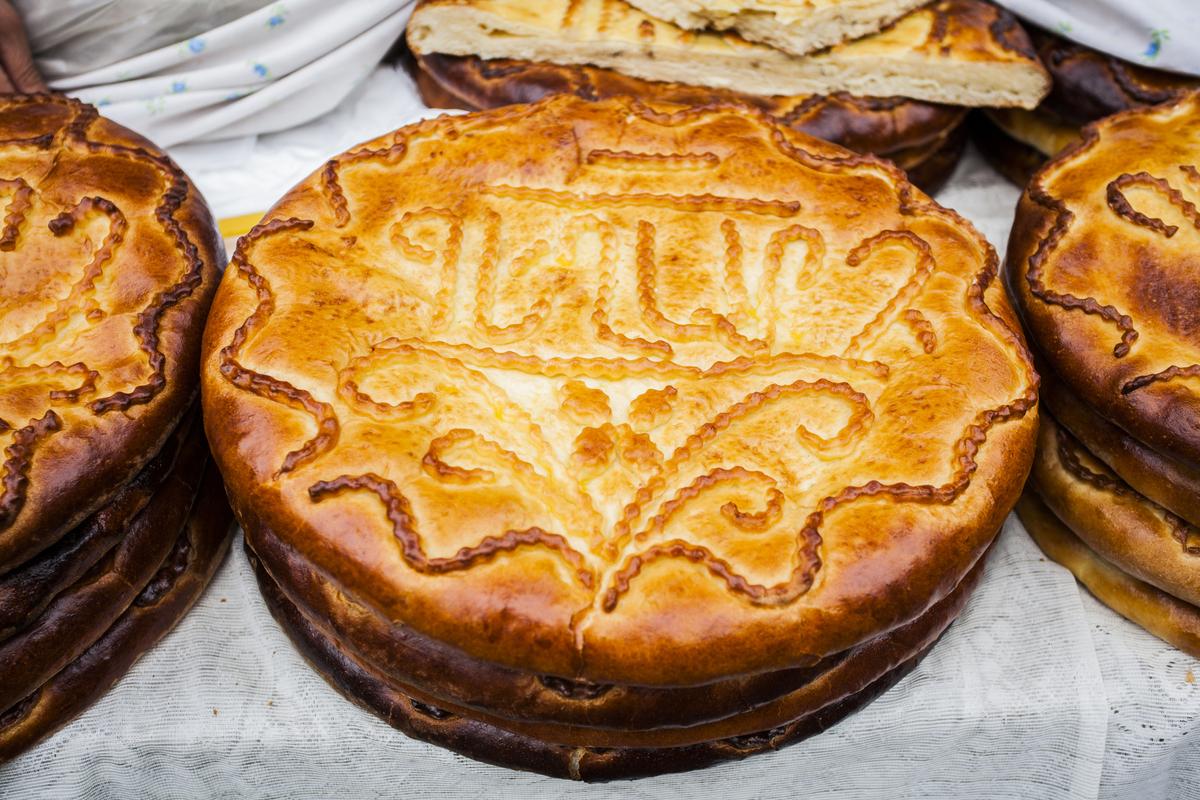
Gata is a sweet Armenian pastry, delicate and rosy. It is prepared with the addition of a large number of eggs, sometimes with matzoni, but the recipe has many variations. Usually there is a filling of butter and powdered sugar melting in the mouth, sometimes a nutty mass. The shape and size also vary — a gata can resemble an ordinary round pie, a croissant made from thin layers of dough, or a strudel. Simple pastries are prepared for every day, and if it is part of a festive treat, it is intricately decorated on top.
Ghat is always baked for Christmas and any other holiday. It is sold everywhere in bazaars and near famous landmarks. It’s a great addition to a cup of coffee or tea. In September, the ghats festival is held in the village of Khachik.
Lahmajun
Many tourists call this dish Armenian pizza. Lahmajun can be found everywhere: on street stalls, in cafes and restaurants of traditional cuisine.
The base for lahmajun is a thin, crispy flatbread. A layer of meat, herbs, tomato paste, chili and various spices is applied to it — all this is mixed into a homogeneous mass. The main difference from pizza is the absence of cheese.
Lahmajun is baked in a hot oven, which makes it ready in just minutes. This makes it an ideal choice for fast food. And its small size and thin shape allow you to roll it into a tube and eat it right on the go.
Khorovac
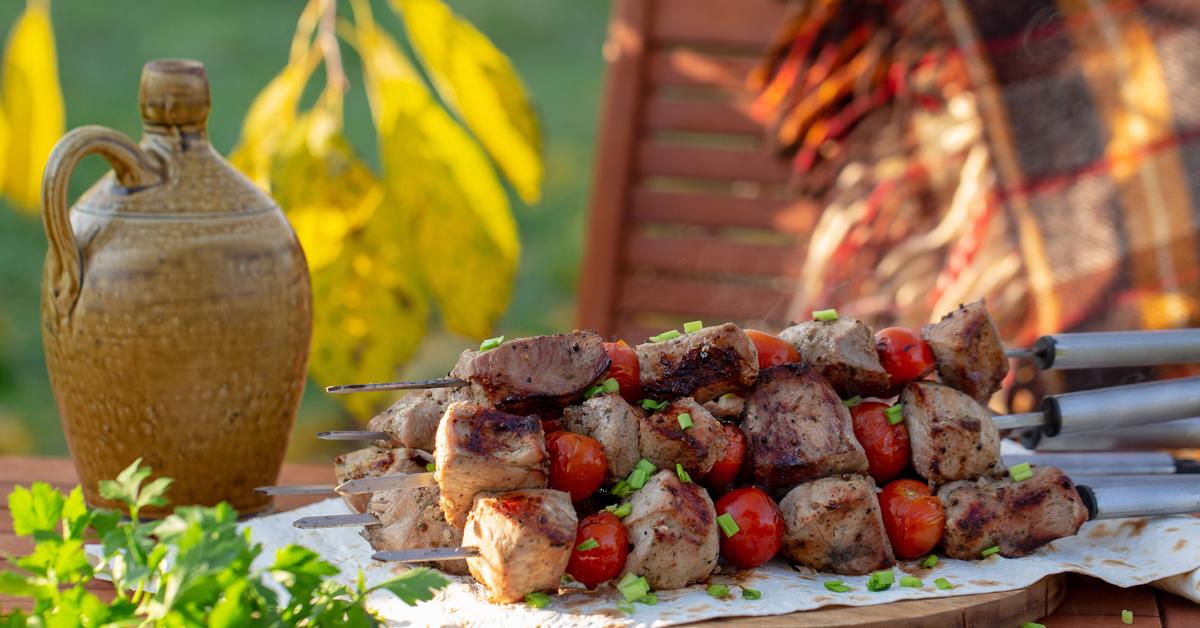
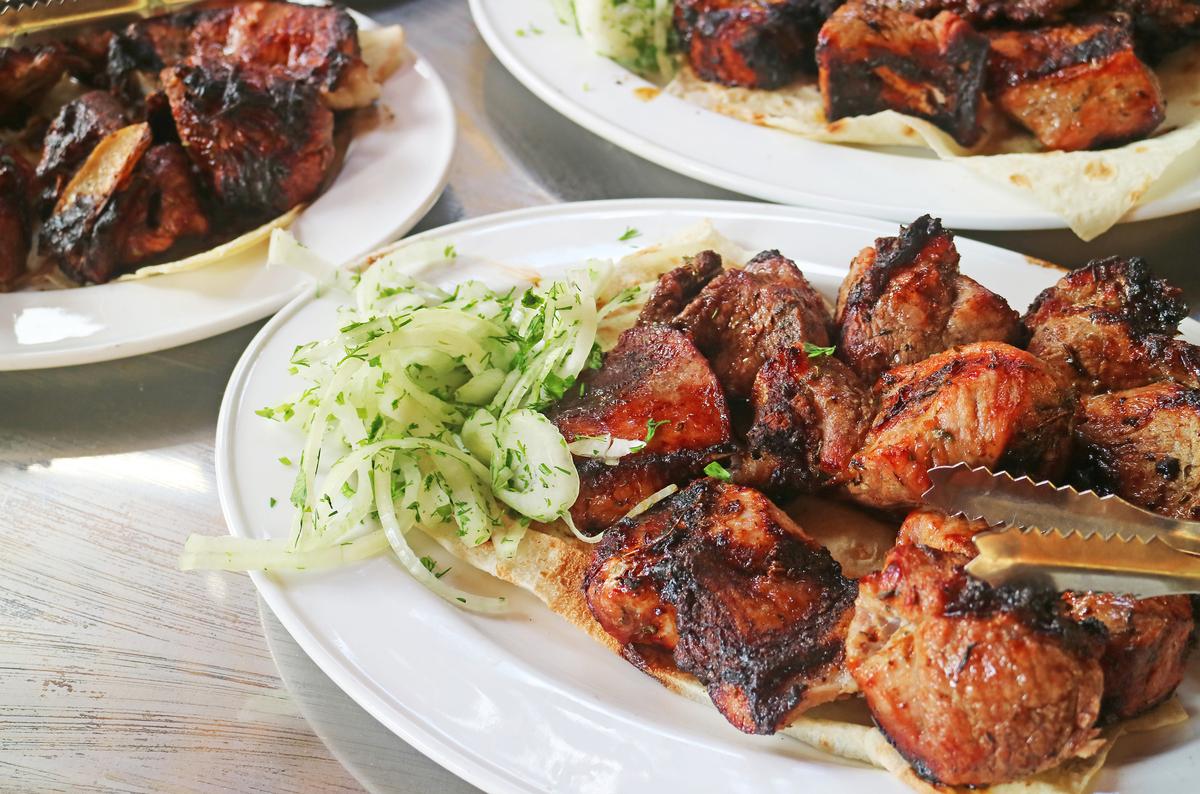
One of the most popular dishes in Armenia is khorovats, which is usually translated as shish kebab. This is the main treat of all holidays in the warm season. There is even a themed festival that takes place in August in the city of Akhtala.
Most often, khorovac is made from pork, lamb or beef. The meat is fried on skewers or mangalas, baked in a tinted dish. In this case, the marinade is the simplest, and spices are almost absent. The meat in Armenia is of excellent quality, and the extra seasonings only interrupt its taste. A salad of fried vegetables is prepared for meat, which can be wrapped in pita bread.
Kufta
This traditional Armenian dish is similar to meatballs, which are made from minced beef or lamb, beaten to a homogeneous dough. Onions, seasonings and bulgur are added to the meat. The meat balls are boiled for about 40 minutes in chicken broth, to which additional ingredients are sometimes added for flavor. For example, pomegranate molasses or brown sugar. The finished kufta is sliced, sprinkled with lemon juice and flavored with melted butter.
Tolma
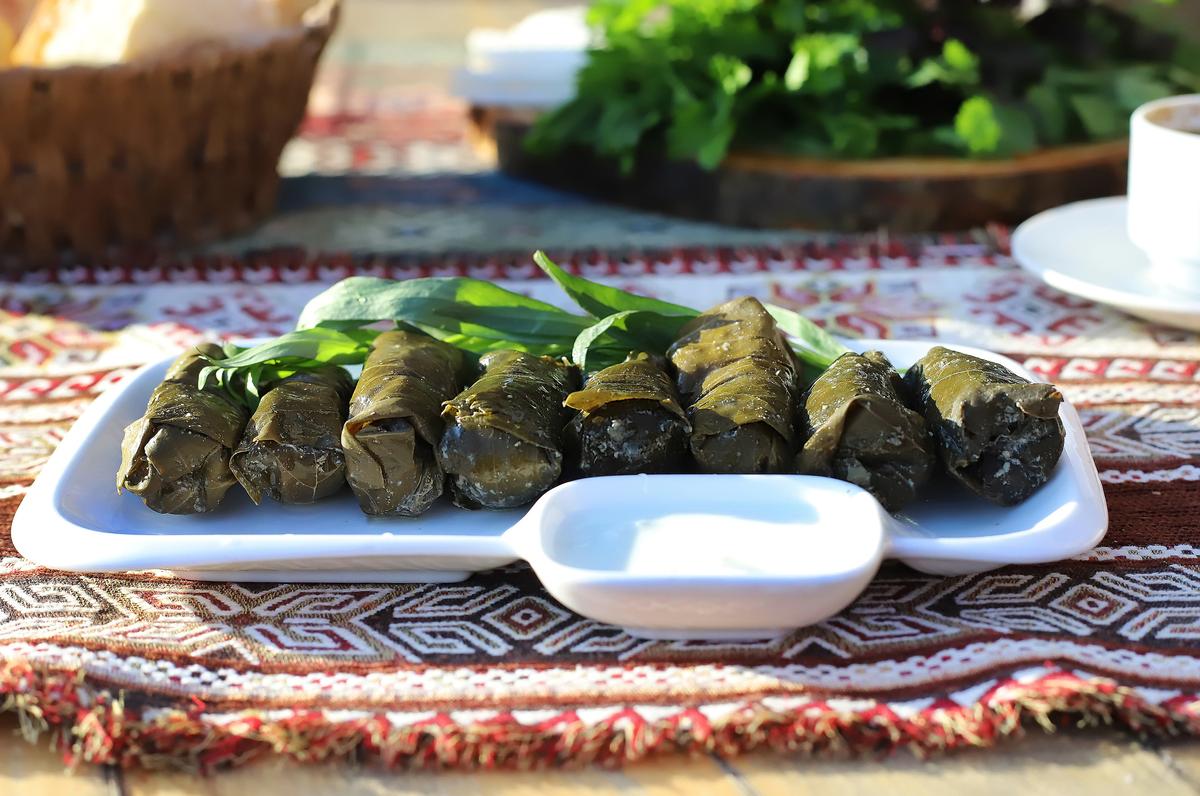
The dish of grape leaves, which is wrapped in a hearty filling, is known throughout the Middle East and the Mediterranean. But Armenia has its own peculiarities of its preparation. They manifest themselves in the preparation of the leaves and in how to wrap the filling, as well as in the selection of spices and other subtleties. Armenians are more creative in making toppings. Traditionally, minced meat with onions and rice is used for this, but you can try tolma with fish, lentils, cheese, nuts, dried fruits, and various types of vegetables. Stuffed grape leaves are simmered in tomato sauce, and when served, a refreshing sauce of matzoni with garlic is added.
Hapama
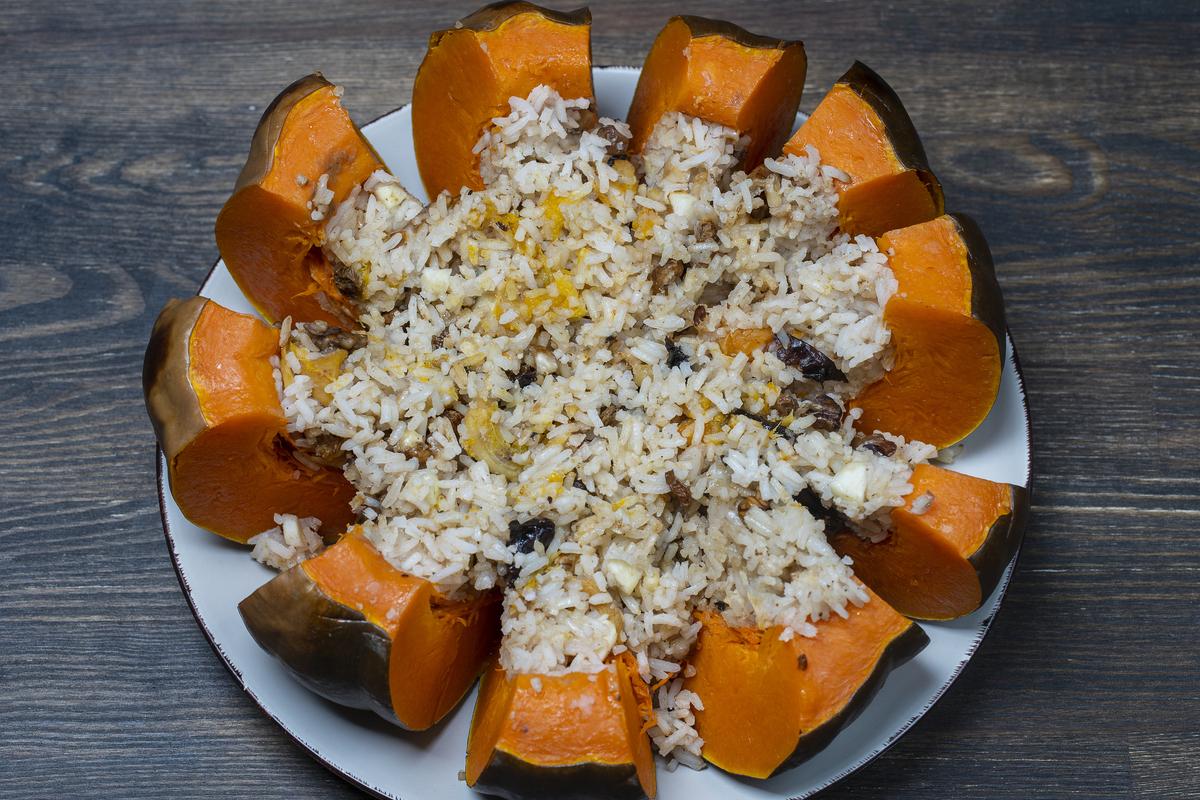
Hapama is a special dish of Armenian cuisine, which is usually served at weddings during the season, as well as on New Year’s Eve and Christmas. Stuffed pumpkin symbolizes abundance, besides its bright appearance always attracts attention on the festive table. At weddings, the rosy sides of pumpkins are often decorated with carved hearts and other symbols, which adds solemnity.
However, you don’t have to wait for a holiday to try hapama. It can be ordered in Armenian restaurants at any time of the year.
Classic hapama is usually served as a dessert. A filling of rice, almonds, dates, prunes, dogwood and other dried fruits is put into the pumpkin, honey and spices are added. The finished dish is cut into slices with a filling in the middle, flavored with melted butter and served with fragrant tea.
There is also a savory option: pumpkin is stuffed with ground beef with vegetables and herbs. This hearty option is ideal for those who prefer rich flavors.
Amich
Chicken and turkey lovers should definitely try amich, a bright and flavorful dish of Armenian cuisine. For its preparation, a bird carcass stuffed with rice, nuts and dried fruits is used. The flavor of the dish is given by ground spices such as pepper, cinnamon and cloves, and ghee adds juiciness.
The bird is baked until golden brown, after which it is cut into portions. Sweet rice with dates, dried apricots and raisins makes a ready-made side dish, to which it remains to add fresh herbs and vegetables.
Hashlama
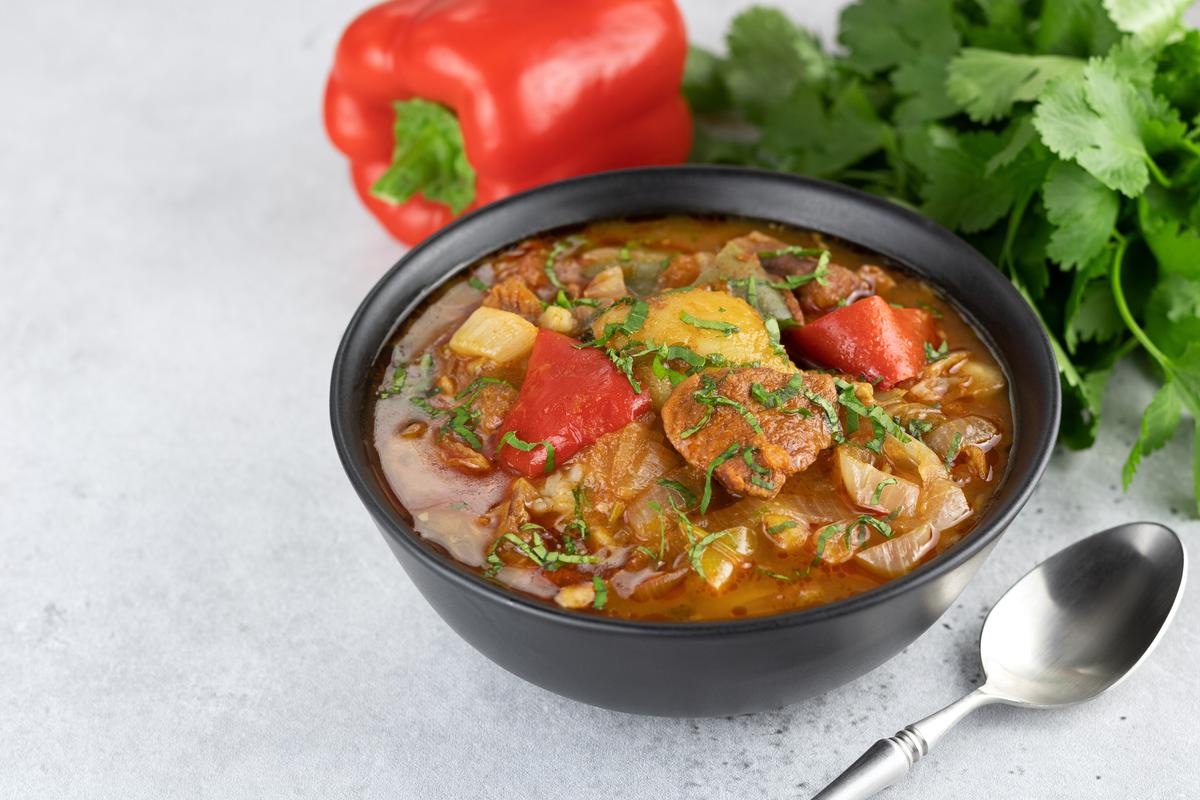
Armenia and Georgia are arguing among themselves about the place of origin of this dish. It is prepared very simply: large pieces of meat are boiled in a cauldron with spices. Other ingredients may be missing, but sometimes onions, potatoes and tomatoes are added, in the summer season eggplant, bell pepper and herbs.
Despite its simplicity, the dish is considered festive because the most tender and delicious pieces of lamb or beef are selected for it. The finished hashlama is a thick, rich soup, something in between the first and second courses. It is served with fresh herbs.
Hash
It is believed that hash was invented by poor people who sold all the good meat, but kept only the legs, heads and offal for themselves. But now it is one of the most popular dishes in Armenia, and it is loved regardless of wealth.
The main ingredient of this soup is carefully peeled beef or lamb legs and tendons. They take a long time to boil, so hash is cooked for 6-8 hours, and sometimes 10 hours or even a day. Additionally, tripe, tripe, kidneys, and various vegetables are sometimes added to the soup. Sometimes nothing is added except the legs, and then it turns out to be a rich broth rather than soup. Salt, pepper, and garlic are used from spices. They are added to the soup or served separately so that everyone can pour as much as they want into their plate. Hash is eaten hot as soon as it is removed from the heat, otherwise it will harden and turn into jelly.
Tjvjik
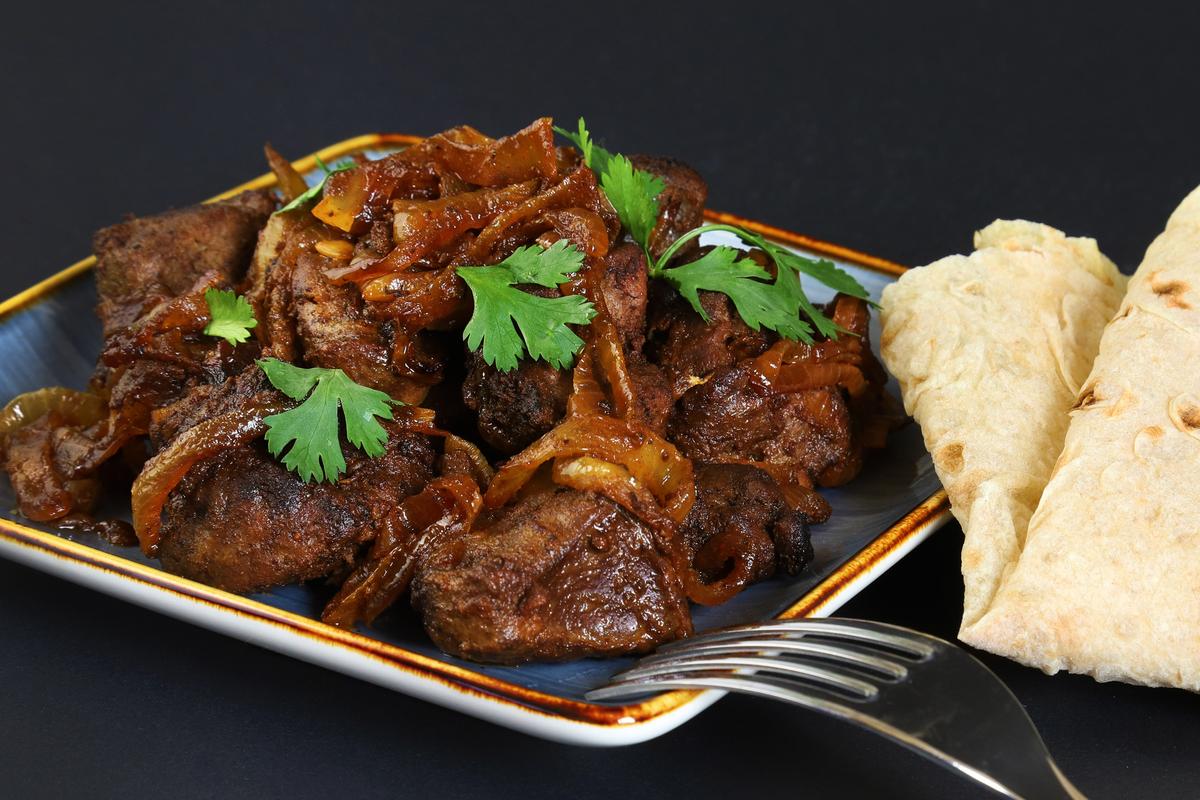
In its classic form, this national dish of Armenia is made from beef liver fried with onions. In the more modern version, any liver and offal are used. They are fried until half cooked with bacon, then stewed with tomato paste, onions, herbs and spices. You can cook in a frying pan or a cauldron. The dish turns out to be tender, juicy and slightly spicy thanks to the pepper. The name “tzhvzhik” is derived from the sounds that are heard during frying.
Harisa
This dish, popular in Armenia, is best suited for cold weather. It is also traditionally prepared at the end of Lent. It is believed that the recipe for harissa was invented by George the Enlightener, who baptized the first Christian rulers of Armenia.
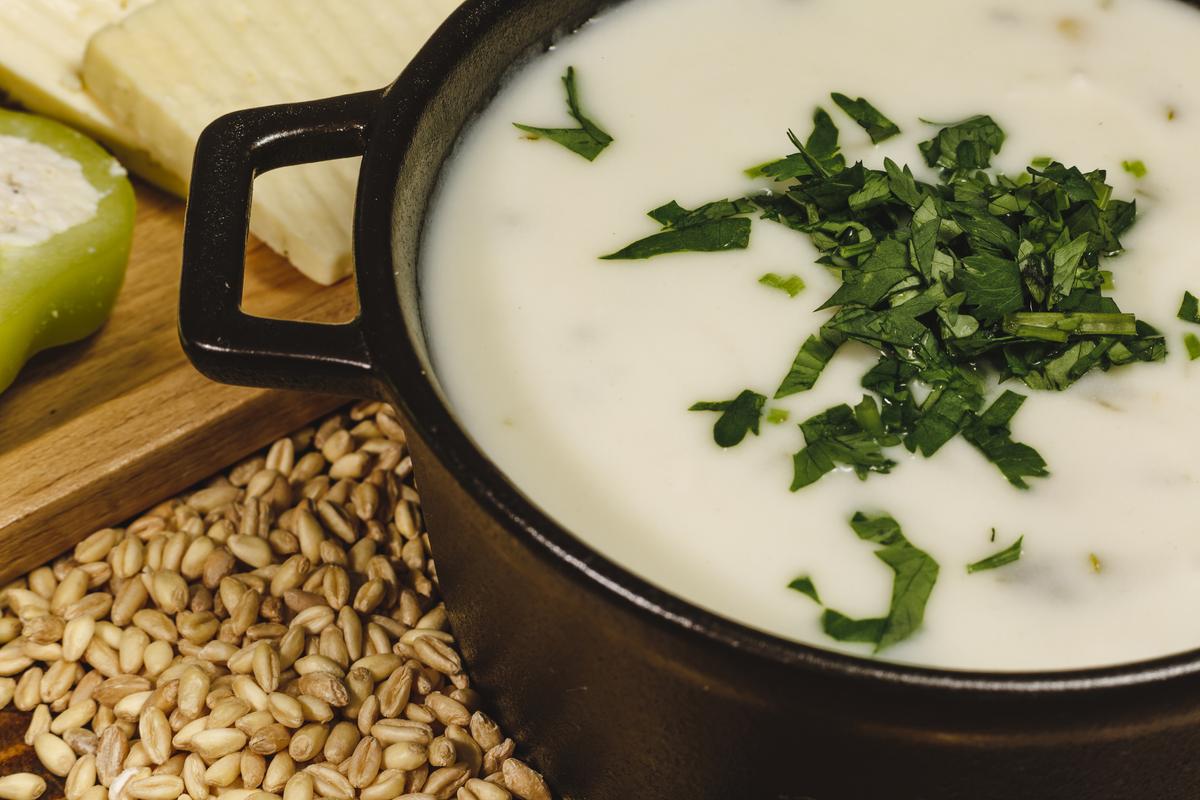
The dish is a porridge or mashed soup made from crushed wheat with the addition of meat, usually lamb or chicken. It is boiled in water or broth for several hours until all the ingredients are mixed into a homogeneous mass. Ghee and pepper are added to the prepared porridge.
Ishkhan
Although Armenia has no access to the sea, Lake Sevan, rich in fish, is located on its territory. There are many restaurants on its coast where you can taste one of the most delicious dishes of Armenia. Sevan trout ishkhan is so good that back in the XV century it was exported throughout the region. This fish is prepared in a variety of ways — boiled, grilled, stewed in wine with aromatic herbs, stuffed in thick, wrapped in lavash. Ishkhan is also available in city restaurants, but it tastes better on the shore of Sevan due to its freshness.
Saved
In difficult times, this soup becomes a real folk food in Armenia, as it is prepared from the most affordable products. These are wheat and diluted matzoni, which serves as a fermented milk broth. Usually, more eggs or egg yolks, ghee, fried onions, various herbs and spices are added. Wheat can be replaced with rice, millet or lentils.
In winter, the dish is made thick and served hot. In summer, it is often diluted with tannin and eaten chilled. Spas is served with lavash, and if you want to add a meat component, kufta is suitable.
What other dishes are worth trying in Armenia?
There are many more wonderful dishes in the top dishes of Armenia. Let’s briefly list a few dishes worthy of attention. Some of them can be brought home and treated to loved ones.
- Msosh. In Armenia, it is customary to observe fasts, which account for almost half of the year. Therefore, there are many delicious dishes without meat and fish. One of them is mshosh, which is made from lentils or beans with nuts, dried fruits and vegetables. There are varieties for hot and cold serving.
- Khurgin. This is an appetizer that is convenient to take on the road. Fried meat and vegetables are placed in a round pita bread, which is tied in a bag with a knot on top. The word “hurjin” translates to a bag with a knot. The top is then cut off, and the rest of the pita bread is used instead of a plate.
- Aveluk. Hundreds of species of wild plants are used in the traditional cuisine of Armenia. One of them is aveluk, or horse sorrel. In season, it is harvested, dried and braided into pigtails, after which it is used all year round. Soups, salads, and pastries are made from aveluk.
- Cheeses. There are many delicious cheeses in Armenia that serve as an independent snack or are added to various dishes. Brine varieties are especially popular — cheese, crumbly winder, vats. Tourists often buy chechil made of braided fibers. Smoked chechil tolerates the road best.
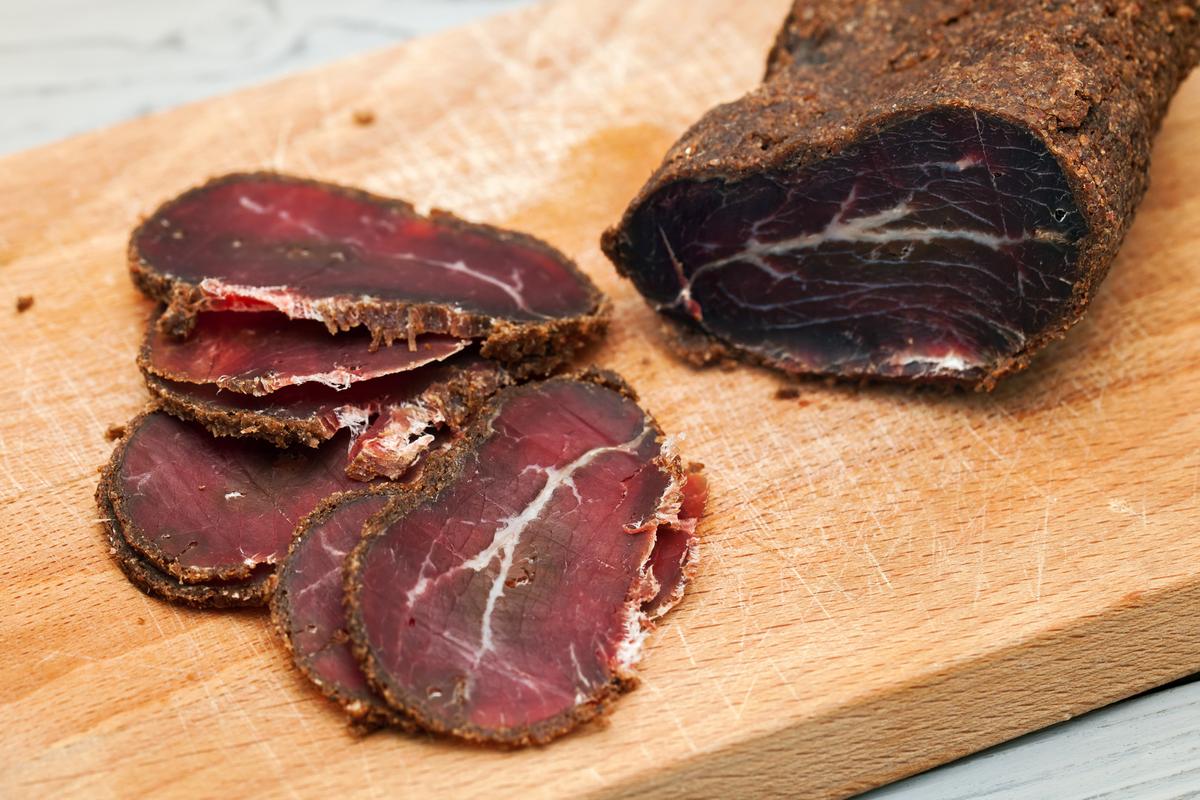
- Sausage products. The most popular Armenian sausage is sujuk. It is made from ground beef and a lot of spices, it tastes spicy. It’s also worth trying basturma, a raw beef tenderloin. Other meat can be used instead of beef.
- Alani. What can sweets lovers taste from Armenian cuisine? One of the most delicious local recipes is dried peaches, to which chopped walnuts with sugar, cinnamon and cardamom are added instead of seeds.
Regardless of the chosen dish, getting to know the Armenian national cuisine always becomes a celebration. There are many things you can buy and taste right at the market — pastries, cheese, traditional sweets. More complex dishes can be ordered in restaurants and cafes, which are numerous in the capital and near famous attractions.


 English
  Russian
  German
  Polish